Indoor Running for Trail and Ultra Runners
Indoor running for trail runners is more common than you’d think, and more effective than most people expect.
We’ve coached hundreds of runners through full winters of indoor training. Some were based in cities with no trails nearby. Others were dealing with snow, injury, or a treadmill-and-nothing-else hotel situation for weeks on end. A few were six months out from their first 100k. None of them loved training indoors. Most of them got to the start line anyway.
Indoor running works. It’s not glamorous and it’s not a perfect substitute for trail miles, but if you approach it with the right plan, you can absolutely build the fitness you need for a mountain race without leaving the building.
The honest truth about indoor training
Here’s the thing coaches don’t always say clearly enough: fitness is fitness. Your aerobic engine doesn’t care whether you built it on a treadmill, a rowing machine, or a turbo trainer. Cardiovascular adaptation responds to effort, duration, and consistency. If you’re putting in the work, your body is getting fitter.
What indoor training cannot fully replicate is leg conditioning. Trail running loads your muscles in specific ways, on uneven surfaces, through descents and lateral movement, across hours of varied terrain. A treadmill belt is flat, predictable, and controlled. That difference matters, especially for ultra distances.
This doesn’t mean indoor training isn’t worth doing. It means you need to plan your return to outdoor running carefully, starting conservatively with terrain and volume, and giving your legs time to adapt again before your A race.
The indoor running toolkit for trail runners
You have more options than just the treadmill.
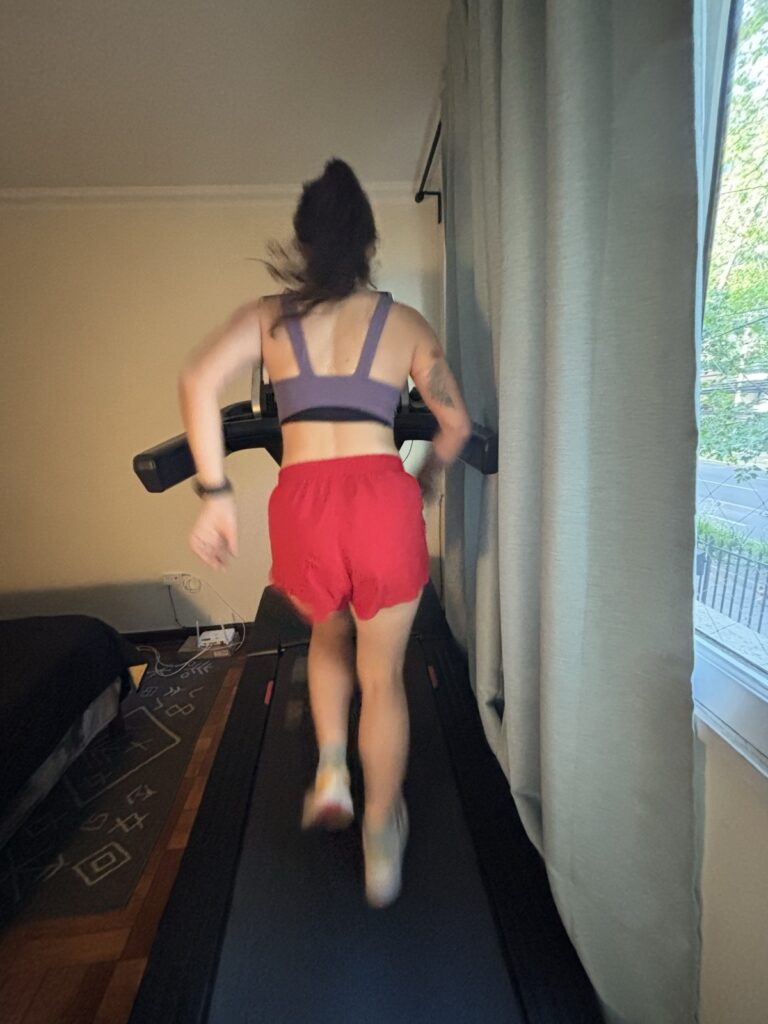
- Treadmill: The most direct substitute for running. Set the incline to at least 1% to better approximate outdoor effort. For longer efforts, vary the incline every 10-15 minutes to simulate rolling terrain and break up the monotony. You can run Vert workouts on a treadmill almost exactly as written.
- Stairmaster: Underrated for trail runners. It targets the exact muscles you use on climbs, builds strength through the posterior chain, and hammers your cardiovascular system without the impact of running. If your race has significant elevation gain and you have a Stairmaster available, use it. For a deeper look at how to structure elevation-based training indoors, Check our hills guide here.
- Strength and plyometrics: Not optional. If you’re spending more time indoors, this is your chance to close the gap on whatever strength work you’ve been skipping. Single-leg exercises, hip work, and plyometrics all carry over directly to trail performance and help keep your legs resilient for when you’re back outside.
- Rowing machine and turbo trainer: Both build genuine aerobic fitness. They’re not trail-specific, but they’re not useless either. If you’re doing a long indoor block and want to protect your legs from too much treadmill volume, mixing in rowing or cycling sessions is a smart call. The fitness transfers. The leg conditioning doesn’t, but you’re covering the engine.

No treadmill? Here’s what works at home
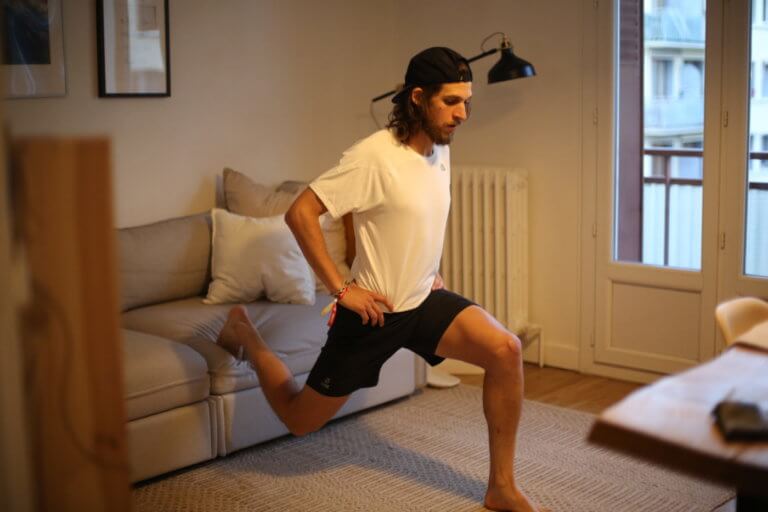
No gym access is not an excuse. Coaches Moisés Jiménez, Kirsten Kortebein, and Max Keith have each been doing these workouts and prescribing them to athletes for years. They’re simple, they require almost no equipment, and they work.
The idea is straightforward: each session is calibrated to roughly equal a run of a given distance at effort. You’re not replacing trail miles, but you’re keeping the engine running.
Jump rope + single leg squat, by Moisés Jiménez 30 minutes of this equals approximately a 4.2 mile run at effort. Equipment: a rope. Alternate between 1 minute easy and 3 minutes hard on the rope, plus 30 seconds of single leg squat on each leg between intervals.
Jumping jacks + burpees, by Kirsten Kortebein 30 minutes of this equals approximately a 3.5 mile run at effort. Equipment: none. Alternate between 2 minutes of jumping jacks and 1 minute of burpees throughout the session.
Heismans + standing mountain climbers, by Max Keith 30 minutes of this equals approximately a 4.2 mile run at effort. Equipment: none. Alternate 1 minute of each exercise throughout the session.
The plan is everything
This is where most indoor training blocks fall apart. Runners hop on the treadmill without a clear structure, do whatever feels right, and end up either undertrained or burnt out by the monotony.
Your indoor training block needs the same structure as your regular training: easy days, quality sessions, a long effort once a week, and enough recovery built in to absorb the work. The specific sessions should still align with your goal race, your time horizon, and the equipment you actually have available.
The runners who make indoor training work are the ones with a plan that accounts for their specific situation. Not a generic treadmill program pulled from the internet, but something built around where they are in their training cycle, how long they’ll be indoors, and what they’re preparing for.
Try VertPro free for 7 days and get a coach-backed adaptive plan that works with your real training environment, whether that’s mountain trails or a hotel treadmill at 6am.
Making the most of treadmill running
A few things that make a real difference:
Run by effort, not pace. Trail pace is meaningless on a treadmill. Use RPE (Rate of Perceived Effort) to guide your sessions instead. Easy should feel easy. Hard should be hard. If you train with Vert, your workouts are already built around effort rather than pace, so this should feel natural.
Use incline to simulate fatigue. Set the treadmill to 5-8% for climb intervals, then drop to 1% for recoveries. It mimics the up-down rhythm of trail running and keeps your muscles working across a wider range than flat-belt running.
Break long runs into blocks. Two hours straight on a treadmill is a mental exercise most people can’t sustain. Break it up: 40 minutes on, 5 minutes off for strength work or plyometrics, back on. You get the volume without losing your mind.
Getting back outside
When you return to trail, don’t go straight back to your previous volume on technical terrain. Your cardiovascular fitness held up indoors. Your leg conditioning needs time to catch up.
Start with easier, flatter trails for the first two to three weeks. Cut your vertical gain in half compared to where you were before your indoor block. Let the specific adaptation come back before you push it.
Most runners who do this right are surprised how quickly they return to form. The fitness is there. The legs just need a few weeks to remember what they’re dealing with.
FAQ:
Can I train for an ultramarathon entirely on a treadmill?
Yes, though it requires careful planning. Your aerobic fitness can be fully developed indoors. The key is managing the transition back to trail running in the final weeks before your race so your legs have time to adapt to uneven terrain.
How much incline should I use on the treadmill for trail training?
Use a minimum of 1% to approximate outdoor running effort. For hill-specific work, 5-10% incline intervals are effective. Vary the incline throughout your runs rather than holding it constant.
How is indoor running different from trail running?
The main difference is leg conditioning. Trail running loads your muscles through uneven terrain, descents, and lateral movement that a treadmill cannot replicate. Aerobic fitness transfers fully from indoor to outdoor training, but plan a gradual return to trail running after any extended indoor block.
What is the best cardio machine for trail runners who can’t run outside?
The Stairmaster is the best non-treadmill option for trail runners, particularly those training for races with significant elevation gain. Rowing machines and turbo trainers are also effective for building aerobic fitness with less leg impact.