A 100k training plan helps you prepare for a race that goes far beyond just running more. You’ve run a 50k. Maybe two. You know what it feels like to be genuinely deep in an effort, to negotiate with yourself somewhere in the back half of a long race, and to cross a finish line having used everything you brought. The 100k is built on that foundation, but it’s a different challenge. If you are still on the fence about stepping up, the ultramarathon guide covers how the distances compare and what each one demands.
If you are deciding whether to step up from 50K to 100K, our 50-mile ultramarathon training plan shows how that intermediate distance changes the build.
Sixty-two miles (100 kilometers). Depending on your pace and the race start time, you’ll likely spend some hours moving with a headlamp. Your nutrition plan has to work for 14 hours, not 6. The training decisions you make in the weeks before your race will show up in your body more clearly than they ever did at shorter distances. The margin for error narrows the longer you go.
This guide focuses on the specific training block: how to structure the weeks that actually prepare you for race day, how to control intensity intelligently, how to use your race profile to shape your training, and what most athletes get wrong that costs them in the back half. This is for athletes who already have a base and are ready to build toward a specific 100k training plan.
100km Training Plan: What Your Training Should Include
A good 100k training plan should help you build the endurance, durability, race-specific strength, fueling habits, and mental control needed to stay steady for 62 miles.
Your plan should include:
– Consistent weekly volume built gradually over time
– Long runs focused on time on feet, terrain, and fueling practice
– Back-to-back long runs to prepare for moving on tired legs
– Race-specific hill, downhill, or flat-effort work based on your course
– Strength training to build durability and protect your joints
– Nutrition and hydration practice during long runs
– Night running practice if your race may go into the dark
– Deload weeks and a proper taper before race day
The goal is not to complete one huge training run. The goal is to stack enough consistent weeks that your body, legs, stomach, and mind are ready for the demands of the full distance.
100km Training Plan Structure by Phase
A simple 100k training structure looks like this:
| Phase | Duration | Focus | What Matters Most |
|---|---|---|---|
| Base preparation | 4 to 8 weeks | Build consistency, aerobic fitness, and durability | Easy volume, long-run comfort, strength work |
| Early specific training | 3 to 4 weeks | Introduce race-specific terrain, effort, and fueling | Hill work, terrain practice, longer runs |
| Peak specific training | 4 to 5 weeks | Prepare for the hardest demands of race day | Back-to-back long runs, night practice, fueling under fatigue |
| Taper | 2 weeks | Recover, stay sharp, and build confidence | Reduce volume, keep short easy runs, sleep well |
You do not need to be logging huge weeks right away. The early work should make you more durable, not exhausted. The biggest race-specific sessions come later, once your body is ready to absorb them.
Weekly Volume Targets for a 100km Training Plan
For most athletes preparing for a 100k, training by time is more useful than training by mileage. A 3-hour mountain run and a 3-hour flat run create very different speeds and distances, but both prepare your body for sustained time on feet.
| Phase | Weekly Moving Time | Main Goal |
|---|---|---|
| Base preparation | 4 to 7 hours | Build consistency, aerobic fitness, and strength |
| Early specific training | 6 to 9 hours | Extend long runs and start matching race terrain |
| Peak specific training | 8 to 12 hours | Build back-to-back durability, fueling practice, and race-specific fatigue |
| Taper | 50 to 70% of peak volume | Absorb the work and arrive fresh |
These are guidelines, not rules. Some athletes prepare well on less if they are consistent, durable, and specific. Others need more time if their race is very mountainous, technical, hot, or likely to take them deep into the night. The point is to build gradually and match the training load to the race you are actually preparing for.
─ Vert Pro · Vert Coaching: Designed and approved by expert coaches.
Have a race date?
Tell us and we’ll build your training plan around it.
How Far Is a 100k? And How Long Will It Take You?
A 100k ultramarathon is 62.1 miles (100 kilometers). In terms of time on feet, you’re looking at anywhere from 9 to 10 hours for a fast runner on a flat course, to 20 or more hours on a technical mountain race with serious elevation. For the majority of 100k finishers, the honest answer lands somewhere between 12 and 18 hours*.
*For a more precise estimate based on your fitness and your specific course, use the Vert Race Time Predictor
That range matters for how you train. If your goal is a 12-hour finish, your training looks different than if you’re targeting 16. And neither of those is better or worse than the other — they just require different preparation. More on that in the training block section.
Train in time, not in miles. Your body does not know the distance. It knows how long it has been moving. A 3-hour long run that replicates your race terrain teaches your body far more than a 20-mile (32km) run at whatever pace feels comfortable that day.
Are You Ready for a 100k?
At minimum, you should have one 50k finish or a consistent history of 4-plus hour adventure runs in mountainous terrain. Ideally, you already have two or more ultras in your legs. That mountain experience matters as much as race experience for athletes who prefer big days outside over organized events.
The 100k is not where you figure out how your body handles ultra distance. It is where you apply what you already know, at a higher level of demand. If you are not confident in your answer to that, run another 50k first. There is no rush.
If you are still figuring out whether you are ready, our 50k training guide is a good place to start.
What Your Base Should Look Like Before Starting the 14-Week Block
The specific training block assumes you are arriving with a base already built. This is not where you build fitness from scratch. It is where you sharpen what you already have and make it race-specific. Showing up underprepared means the early weeks become base building by default, which compresses everything that follows.
Here is what a solid base looks like for a 100k:
- Consistent weekly volume: You should be running 4 to 7 hours per week consistently. The number matters less than the consistency. An athlete who has run 5 hours every week for 3 months is better prepared than one who ran 10 hours two weeks ago and 2 hours the week before.
- Long-run capacity: Your long run should reach around 2 hours comfortably before week one of the block. Not heroically. Not in a way that leaves you flat for two days afterward. Comfortably, at a pace where you could hold a conversation.
- Consistent strength work: Two sessions per week of core and leg strength, done consistently for at least 6 to 8 weeks, gives your body the structural foundation to handle increasing training load.
- Injury-free for at least 6 weeks: Going into a demanding training block carrying a niggle rarely ends well. Resolve it first.
If you are not there yet, that is not a problem. A 6 to 8 week base building period of easy running, progressive long runs, and consistent strength work gets most athletes ready. The race will still be there.
Choosing Your 100k Race
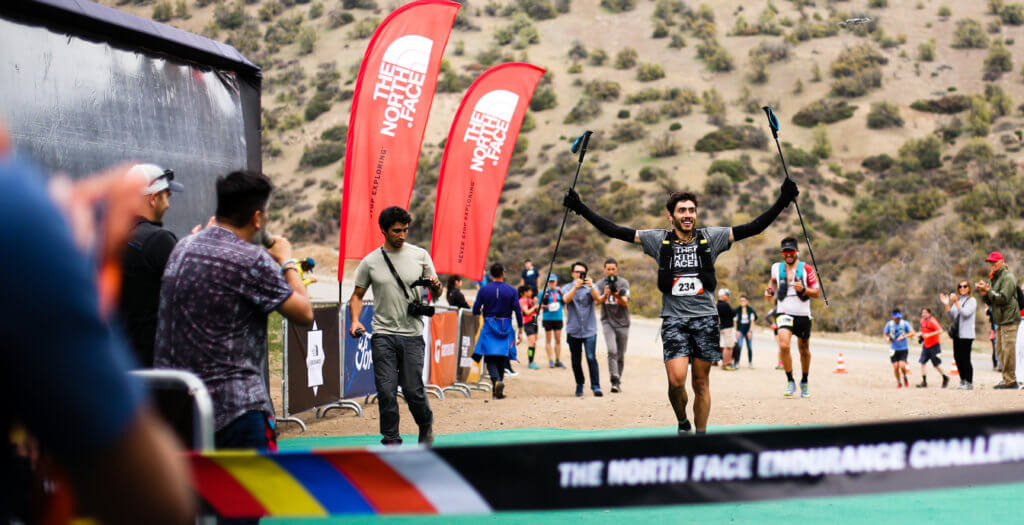
The first thing to understand about a 100k is that the distance is almost the least important variable. Two races can both be called 100k and be completely different events based on terrain, elevation, and technical difficulty. Before you sign up, understand these:
- Total elevation gain and loss. More important than distance for estimating your finish time and shaping your training.
- Terrain type. Runnable fire road, technical singletrack, and scrambling terrain each require different preparation and produce completely different races.
- Cut-off times. Know whether the race’s cut-offs are realistic for your current fitness. This is especially important on your first 100k.
- Crew and pacer access. Some races allow pacers from km 50 (mile 31) onward. Others do not allow them at all. Know this before you plan your race day.
- Start time. The start time combined with your expected finish time tells you how much night running you will actually face. A 6am start at a 14-hour pace is very different from a midday start at the same pace.
A good rule for a first 100k: choose a race close to home. The logistics of this distance (crew, drop bags, night gear, travel fatigue) are complicated enough without adding an overseas trip on top. Save the destination races for when you know the distance well.
Good search tools for finding a 100k race include Ahotu, ITRA, and iRunFar for race reviews and course intelligence.
If you are still choosing race-day footwear, use our trail running shoe finder to match shoes to your 100K distance, elevation, terrain and preferences.
The 100k Training Plan: What Actually Matters
The standard recommendation is 14 weeks. Here is the logic: roughly 10 to 11 weeks of specific training, one deload week mid-block, and a 2-week taper. That structure gives you enough time to build properly, absorb the work, and arrive at the start line fresh rather than just less tired than you were two weeks ago.
If you have more time, use it. Twelve weeks of specific training is better than ten. If you have less, do not try to compress everything. For a 100k, prioritize the sessions that matter most and accept that some volume will be lower than ideal.
Here is what separates a well-prepared 100k athlete from one who gets to km 70 (mile 43) and falls apart:
Intensity Control and Why We Train with RPE
This is the thing most athletes get wrong, especially athletes moving up from 50k who are used to pushing harder and recovering faster. At 100k training volume, running too hard too often does not make you fitter. It makes you tired in a way that compounds week over week until your long runs start feeling worse instead of better.
All Vert.run training plans are prescribed using RPE: Rate of Perceived Exertion on a scale of 1 to 10. RPE 1 is walking pace, RPE 10 is an absolute maximum effort you could not sustain for more than a few seconds. Here is a practical reference for trail runners:
- RPE 3 to 4: easy, fully conversational. You could run for hours at this effort. This is your default long run and recovery run pace.
- RPE 5 to 6: comfortable but engaged. You can talk in short sentences. This is race effort for most 100k athletes in the early and middle sections of the race.
- RPE 7: comfortably hard. Speaking is possible but you would rather not. This is the top of your aerobic quality work.
- RPE 8 to 9: hard. Short sentences only. Used sparingly in specific quality sessions.
- RPE 10: maximum. Almost never prescribed.
Why RPE Transfers Better Than Pace or Heart Rate
The reason we use RPE over pace or heart rate as the primary tool is simple: it transfers directly to race day. You cannot wear a device that tells you exactly how hard to push at km 70 of a mountain race, but you can read your body if you have spent months training that way. Learning to feel your effort accurately is one of the most valuable skills you can develop as an ultrarunner.
Heart rate is a useful secondary tool, particularly in the early weeks of a block when you are calibrating your easy effort or in hot weather when cardiac drift makes perceived effort unreliable. But RPE is the primary reference. Most of your training, roughly 80%, should be at RPE 4 to 5. The remaining 20% is where you do specific quality work, and that quality needs to be earned by the easy running, not stolen from it.
Easy days need to be actually easy. When athletes struggle in the second half of their training blocks, it is almost always because their easy days were closer to RPE 6 than RPE 4. Intensity control is not only about the hard sessions. It is also about protecting the runs that are supposed to be easy.

Match Your Training to Your Race Profile
Your race profile should shape your training terrain from week one. A flat 100k and a mountain 100k are not the same event, and training for them should not look the same.
A useful tool for this is the Mountain Index (MI), which you will find in the Vert.run app. The MI is calculated simply: total elevation gain of your race divided by the total distance. This gives you the vertical meters per kilometer (or feet per mile) your race demands on average.
For example: a 100k with 4,000 meters (13,100 feet) of elevation gain has an MI of 40. That number tells you what your long run terrain should look like. A long run of 30km (18.6 miles) with 1,000 to 1,200 meters (3,300 to 3,900 feet) of gain puts you right in that MI range, making it genuinely specific preparation rather than generic volume.
You do not need to hit your race MI on every run. But the closer you get to race day, the closer your key sessions should match it. Use it to plan, not to obsess.
If you train in a flat city and are preparing for a mountain 100k, read our complete guide on how to train for hills without access to the mountains.
For flat 100k athletes: sustained aerobic effort over time matters more than elevation work. Your quality sessions should focus on tempo efforts and sustained pace at race effort. Hill work is still useful for strength but it is not the priority.
For mountain 100k athletes: your quality sessions are your climbing efforts. These are not generic hill repeats. They are structured to your race profile. Short, punchy efforts if your race has many sharp pitches. Long, sustained climbs if your race has big continuous ascents. The specific structure follows from the course.
Power Hiking: Train What You Will Actually Do on Race Day
Most athletes train by running far more than they will actually run in their 100k. Then they get to race day, start hiking sections they never practiced hiking, and their body has no efficient pattern to fall back on when tired.
Hiking is a skill. Power hiking specifically is a trained movement, not something that happens naturally when you slow down. The more elevation your race has, the more time you will spend hiking. That time needs to be in your training.
What this looks like in practice:
- On your long runs, hike the sections you would hike on race day. If your race has a steep pitch that nobody runs, do not run it in training either. Practice the transition between running and hiking until it is smooth and automatic.
- Include dedicated hiking sessions, particularly if your race has very high elevation. A 2-hour power hiking session on technical terrain is legitimate training, not a day off.
- If you will use poles in the race, train with them. The movement mechanics are different and need to be practiced well before race day.

The more elevation your race has, the more time you will spend hiking. An athlete who can power hike efficiently for hours will usually move faster overall than one who runs too much early, hikes inefficiently later, and blows up around km 60.
Strength Training for a 100k
Strength work is the part of 100k training that most athletes either skip entirely or do inconsistently. It is also one of the clearest predictors of who arrives at the finish line and who drops at km 70. Not because strength makes you faster in the first half. Because it keeps you structurally intact in the second half, when everything is tired and your form starts to break down.
The goal of strength training for a 100k is not aesthetics and it is not general fitness. It is specific: build the quad and glute strength to absorb the impact of long descents, the hip and core stability to maintain good form when fatigued, and the ankle and foot resilience to handle unpredictable terrain for 14-plus hours.
What to focus on:
Quads and glutes. Squats, lunges, step-ups, and single-leg deadlifts. These are the muscles that control your descents and power your climbs. They are also the muscles that give out in the back half of a 100k when an athlete has not trained them specifically. Two sets of 10 to 12 reps of each, twice per week during base building.
Core and hip stability. Plank variations, bird dogs, glute bridges, and lateral band work. These are not glamorous but they are the difference between running with good mechanics at hour 10 and shuffling with your torso collapsing forward. A 20 to 25 minute core session once or twice per week is enough.
Eccentric work for downhill resilience. Slow downhill lunges and step-downs train your quads to absorb impact eccentrically, which is exactly what happens on every downhill step in a mountain 100k. This specific type of work is often absent from generic strength plans and it is the one most relevant to trail running.
How to fit it in: during base building, two full strength sessions per week. As your running volume climbs in the sharpening phase, drop to one session per week but do not eliminate it entirely. The athletes who cut strength work when training gets hard are the ones who regret it on race day.

Managing the Mental Side of a 100k
Every 100k has a moment where the race stops being a physical problem and becomes a mental one. For most athletes it arrives somewhere between km 60 and km 80, often in the dark, often when the body has already given more than it planned to give. How you respond to that moment is largely determined by how much you have thought about it before race day.
The low patch is not a sign something has gone wrong. It is part of the event. Every athlete at every level experiences it. The ones who finish are not the ones who avoided it. They are the ones who knew it was coming and had a plan for moving through it.
A few things that help:
- Know your why before race day. Not a vague answer. A specific one. When you are at km 70 at 2am and your legs hurt and you cannot remember why you signed up for this, a clear and personal reason to keep moving is the difference between continuing and sitting down at an aid station. Write it down before race day if you have to.
- Break the race into sections. Trying to hold the whole 100k in your head at km 65 is overwhelming. The race is not 100k. It is the next aid station. Then the one after that. Athletes who navigate the race in small chunks manage the mental load far better than those trying to calculate how many kilometers are left.
- Practice discomfort in training. Your long runs and back-to-back weekends are not just physical preparation. They are rehearsal for staying calm and continuing to move when you are tired and uncomfortable. Every time you finish a long run in that state, you build evidence that you can keep going. That evidence matters at km 75.
- Have a mantra or a reset phrase. Something short that pulls you back to forward motion when your brain is trying to negotiate an exit. It sounds simple and it works. Many experienced 100k athletes use one without advertising it.
- Accept that the low patch passes. It always does. The athletes who drop at aid stations during a low patch almost always regret it within an hour. If you are not injured and you are still moving, keep moving. The finish line is on the other side of the hard part, not before it.
Deload Weeks: Where the Adaptation Actually Happens
You do not get fitter during the hard weeks. You get fitter during the recovery that follows them. The training stimulus creates the adaptation opportunity. The deload week is when your body actually absorbs it.
In a 14-week block, plan at least one deload week at the midpoint, around week 7. A deload week means cutting volume by 40 to 50% and dropping all intensity work. Not a slightly easier week. A genuinely lighter one.
This will feel wrong. You are mid-block and your instinct says keep pushing. That instinct is exactly why you need the deload. Athletes who skip deload weeks tend to arrive at their taper already fatigued, which means the taper does not do what it is supposed to do.
─ Vert Pro · Vert Coaching: Designed and approved by expert coaches.
Your Vert.run plan builds these sessions around your specific race profile and terrain.
Recovery and Adaptation
The training stimulus is only half of the equation. The adaptation happens during recovery. An athlete who trains hard and recovers well improves. An athlete who trains hard and recovers poorly just accumulates fatigue. At 100k training volume, the difference between those two outcomes is not always obvious until it is too late to fix.
Here are the signals that tell you your training is landing correctly:
- You finish hard sessions feeling challenged but not destroyed. A quality session should leave you tired. It should not leave you unable to walk down stairs the next morning or dreading the next run. If your hard sessions consistently produce that level of damage, the intensity is too high or the recovery between sessions is too low.
- Your easy days feel genuinely easy. RPE 4 to 5 should feel like RPE 4 to 5, not like a heroic effort to hold yourself back. If your easy runs feel hard, you are not recovered from the previous session. That is a signal to back off, not push through.
- Your sleep quality is stable or improving. Overtraining almost always shows up in sleep before it shows up in performance. If you are training hard and sleeping badly, something is wrong. Prioritize sleep as seriously as you prioritize your long runs.
- Your motivation stays relatively consistent. A bad day or a flat week is normal. Two to three consecutive weeks of dreading training, feeling flat, or losing interest in the race is a warning sign. It usually means you need a deload sooner than planned, not more volume.
- Your long runs feel progressively more manageable over the block. Not easier in absolute terms, because the runs are getting longer. But the effort should feel proportional to the distance. If a 3-hour run at week 8 feels harder than a 3-hour run at week 4 felt, your recovery is not keeping up with your training load.
When in doubt, do less. The cost of one easy week in a training block is minimal. The cost of pushing through a warning sign into genuine overtraining can be weeks of setback. Err on the side of recovery.
Back-to-Back Long Runs: The Most Specific 100k Session
A single weekly long run is enough for a 50k. For a 100k training plan, you need to train your body to move on accumulated fatigue. Back-to-back long runs are how you do it.
The structure: a long run on Saturday (3 to 4 hours, MI-matched to your race) followed by a genuine second long run on Sunday (2 to 2.5 hours, RPE 4 to 5). The Sunday run is not a recovery jog. It is a real training run done on genuinely tired legs, and that combination is one of the most specific things you can do to prepare for the back half of a 100k.
Start with smaller back-to-backs early in your block and build from there. Do not do them every week. Alternate with single long run weekends to allow full recovery between the bigger efforts.

Sample 100k Training Week
This is an example of what a peak week might look like for an athlete targeting a 14 to 16 hour finish on a mountain 100k. Adjust volume, RPE targets, and session type to match your race profile and fitness level.
| Day | Session | Purpose |
|---|---|---|
| Monday | Rest or easy walk | Absorb the weekend load |
| Tuesday | Easy run, 60 to 75 minutes | Build aerobic volume without adding stress |
| Wednesday | Race-specific hill or tempo session | Build the key demand of your race profile |
| Thursday | Easy run, 45 to 60 minutes + strength | Maintain volume and durability |
| Friday | Rest or very easy 30 minutes | Prepare for the weekend block |
| Saturday | Long run, 3 to 5 hours | Practice terrain, fueling, gear, and pacing |
| Sunday | Second long run or hike-run, 2 to 3 hours | Build tired-leg durability |
A note on Wednesday’s race-specific session: what this looks like depends entirely on your race. For a mountain course, it might be 6 to 8 sustained climbing efforts of 10 to 20 minutes at RPE 6 to 7. For a flat course, it might be a 60-minute tempo run or a long progression run finishing at race effort. The session structure follows from the race demands, not from a generic template.
Taper and Recovery for a 100k
For a 100k training plan, I recommend at least a 2-week taper. The longer and more demanding your training block, the more important it is to respect the taper fully.
- Week 1 of taper: Reduce volume to 60 to 70% of your peak week. Keep a small amount of short quality work at RPE 6 to maintain sharpness, but avoid anything that requires real recovery.
- Week 2 of taper: Reduce volume to 30 to 40% of peak. Keep runs short and easy. The goal is to stay loose, not to add fitness.
- Race week: Do 2 to 3 short shakeout runs, prioritize rest, and get as much sleep as possible.
You will feel flat, heavy, and anxious during the taper. Your legs will feel wrong and your fitness will feel like it is disappearing. That is the adaptation completing itself. It passes on race day.
Training for Hours with a Headlamp
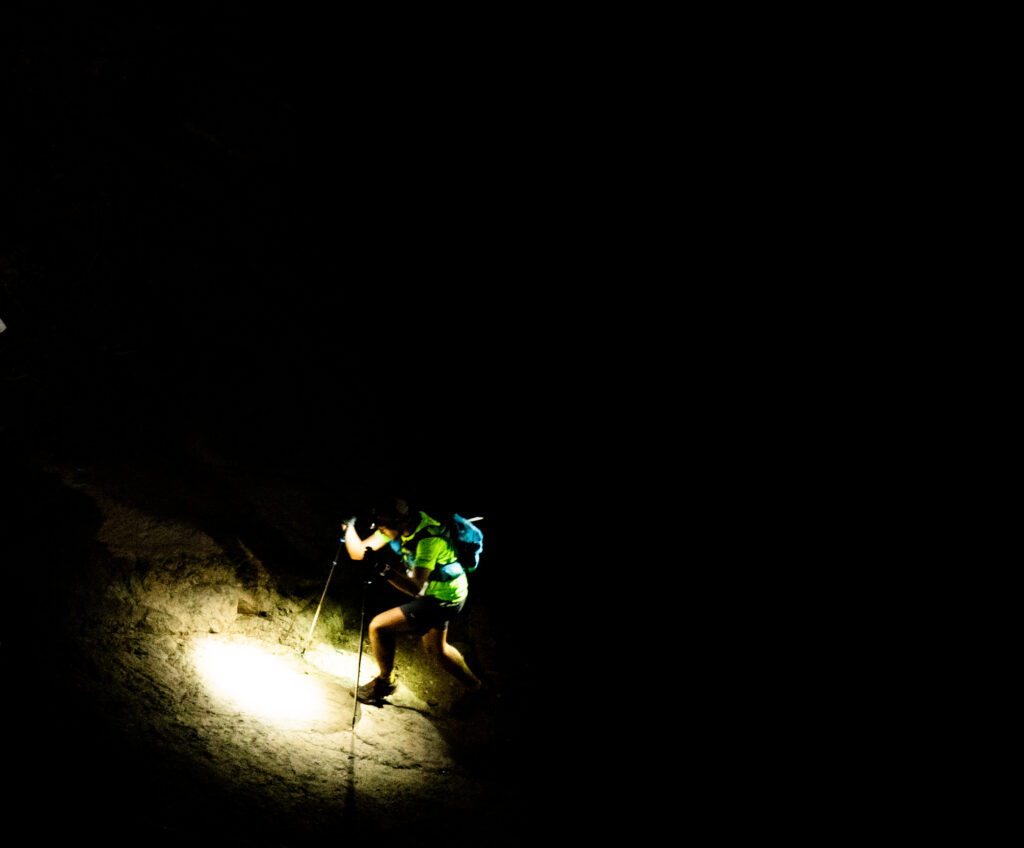
Depending on your pace and the race start time, you will likely spend some hours running with a headlamp. For many 100k athletes this means moving through the darkest hours of the night. It is not a worst-case scenario. It is part of the event. Train for it explicitly.
- Do at least 2 to 3 of your long training runs in low light or darkness during your specific block. Early morning pre-sunrise starts or evening runs into night both work. The goal is to have real experience moving on trails in the dark before it happens in a race.
- Train with the headlamp you will race with. The beam of your specific lamp affects how you read terrain and your depth perception on technical ground. Race day is not the time to figure this out.
- Practice your nutrition at night. Appetite often drops when fatigue and darkness combine. The late hours are where 100k races are frequently decided, and the athletes who fall apart there usually stopped eating an hour or two earlier because they did not feel hungry. Train the habit of eating on schedule even when you do not want to.
- Carry a backup headlamp or spare batteries. A dead headlamp on a technical trail at 2am is a DNF waiting to happen.
Athletes who have trained in the dark know what to expect and keep moving. Athletes who have not are often surprised by how much harder everything feels at 2 a.m. Experience it in training so it feels familiar on race day.
Crew and Pacers
Check your race rules first. Not every 100k allows crew or pacers, and access points vary significantly between races. Where they are allowed, here is how to use them well.
Your crew
Brief your crew before race day. Their job is to move you through aid stations efficiently. Give them a written plan: what you want at each station, your nutrition and hydration targets, any gear changes, and clear guidance on the difference between a low patch and an actual problem. The more prepared they are, the less mental energy you spend managing them when you are deep in the race.
The most important thing your crew can do is keep you moving. Not comfortable. Moving.
Pacers
Many 100k races allow pacers from around km 50 to 60 (mile 31 to 37). A good pacer keeps you moving when your brain is trying to convince you to stop, and handles logistics so you can focus on forward motion. Choose someone who can run the distance at your pace, knows when to push and when to back off, and has real trail experience in the dark.
Going without a pacer is completely fine. Many 100k athletes run solo and the mental discipline of doing so is its own form of race preparation.
Food and Fueling for a 100k
The athletes who fall apart at km 70 (mile 43) usually did not have a mechanical problem. They had a nutritional one. Gut issues, bonking, or nausea from the wrong thing at the wrong time. All of these are preventable with practice, and only practice.
- Target 200 to 300 calories per hour while moving. Find your number on your longest training runs, not on race day.
- Alternate between sports nutrition and real food. Aid stations at longer races have both for a reason. Gels work for 6 hours. For 14 hours, your gut wants variety.
- Salt. Sodium loss compounds over time and in heat. If you are cramping or feeling inexplicably flat in the back half, salt is usually part of the answer.
- Drink to thirst. Overhydration is a real risk in long ultras and more dangerous than mild dehydration.
- Practice your full nutrition strategy on long training runs. Not once. Multiple times. Your gut behaves differently at hour 12 than it does at hour 2.
For a full breakdown of nutrition for ultra distances, read our complete nutrition guide for ultrarunners.
Your 100k Race Day Strategy
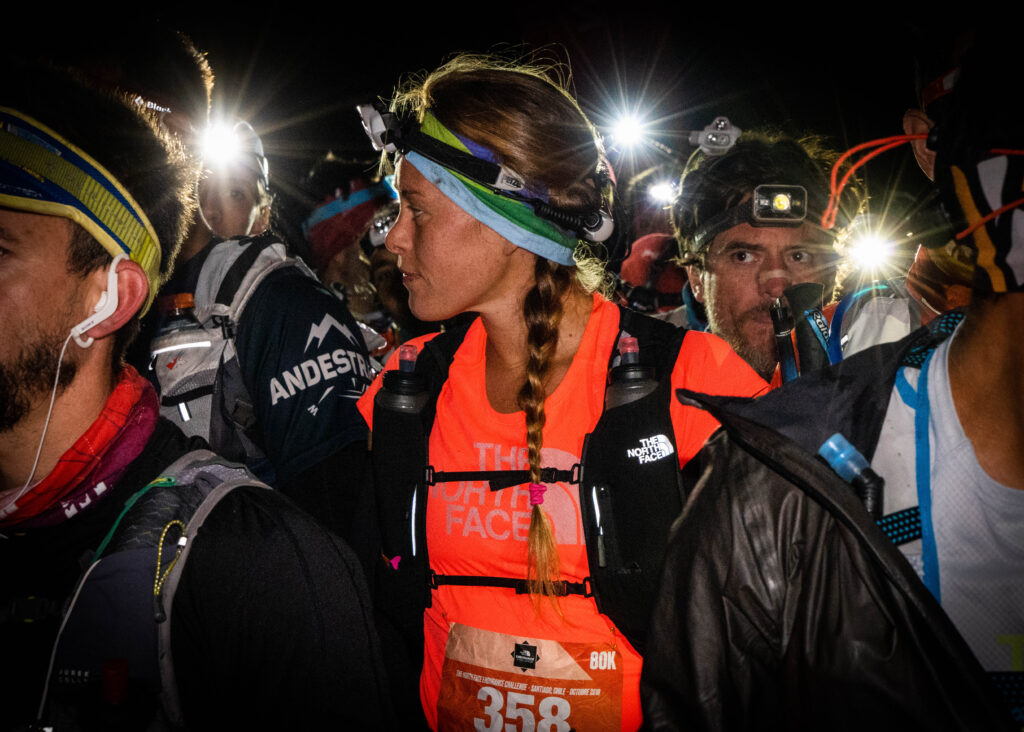
The first 30km (18.6 miles) will feel easy. That is not permission to run fast. It is the trap that ends a lot of 100k races before they really begin. Your job in the opening third is to run well within yourself, stay at RPE 5 to 6, and let people go. Your race does not start at km 1.
A framework that holds up across most 100k conditions:
- Km 0 to 30 (miles 0 to 18.6): conservative. Easier than race effort. Bank energy, not minutes.
- Km 30 to 60 (miles 18.6 to 37.3): settle into rhythm. Keep fueling, keep moving, stay present. This is where the training pays off.
- Km 60 to 80 (miles 37.3 to 49.7): this is the race. The headlamp hours often fall here. Your legs have given you everything they planned to give. Mental strength and the discipline to keep moving at a sustainable RPE is what carries you through.
- Final 20km (12.4 miles): forward motion. At this point, pace is irrelevant. The goal is to keep moving consistently until the finish.
Set an A, B, and C goal before the race. A is your ideal day. B is solid execution. C is finish and learn. In a 100k, something will go wrong. Having all three goals gives you a way to stay mentally engaged when the day stops going perfectly.
Iconic 100k Races Worth Knowing
Even if none of these is your next race, they are worth following. Race films from these events are more useful motivation material than any training post.
Europe-Africa
- CCC, Italy, France & Switzerland.
- Lavaredo Ultra Trail, Italy.
- Transgrancaria, Spain.
- Ultra Trail Cape Town, South Africa.
Asia-Pacific
- Tarawera, New Zealand.
- Ultra Trail Australia, Australia.
- Hong Kong 100, Hong Kong.
Americas
- Canyons, USA.
- Patagonia Run, Argentina.
- Kodiak, USA.
─ Vert Pro · Vert Coaching: Designed and approved by expert coaches.
Train smarter for your 100k.
Vert.run plans adapt to your race, terrain, and schedule.
Frequently Asked Questions
How many weeks do I need to train for a 100km race?
Fourteen weeks is the standard recommendation for a 100k plan: roughly 10 to 11 weeks of specific training, one deload week mid-block, and a 2-week taper.
How many hours per week should a 100km training plan include?
Peak training weeks typically fall in the range of 8 to 12 hours of moving time. Train in time rather than miles or kilometers at this distance. It is a better predictor of race readiness and it is easier to manage around life.
Do I need to have run a 50k before a 100k?
It is highly recommended. At minimum, you should have one 50k finish or a consistent history of 4-plus hour efforts in mountainous terrain. Ideally, you already have two or more ultras in your legs. The 100k is not where you learn how your body handles ultra distance.
What is RPE and why does Vert.run use it?
RPE stands for Rate of Perceived Exertion, measured on a scale of 1 to 10. Vert.run prescribes all training sessions with RPE targets because learning to feel your effort accurately is one of the most valuable skills you can develop as an ultrarunner. You cannot wear a device that tells you exactly how hard to push at km 70 of a race, but you can read your body if you have trained that way. Heart rate is a useful secondary tool for validation, particularly in hot weather, but RPE is the primary reference.
What is the Mountain Index and how do I use it for training?
The Mountain Index (MI) is your race’s total elevation gain divided by its total distance. It gives you the average vertical meters per kilometer (or feet per mile) your race demands. Use it to calibrate your long run terrain. If your race has an MI of 40, a long run with an MI of 30 to 40 is genuinely specific preparation. You will find the MI tool in the Vert.run app.
Will I run in the dark during a 100k?
It depends on your pace and the race start time, but for many athletes the answer is yes. Train for it explicitly: do several long runs in low light or darkness, train with your race headlamp, and practice eating and moving at night. Carry a backup light source on race day.
How long should I taper for a 100k?
Two weeks. First taper week at 60 to 70% of peak volume with some light quality work to maintain sharpness. Second week at 30 to 40%, easy effort only. Race week is mostly rest with 2 to 3 short shakeout runs.
Do I need a crew or pacers for a 100k?
No. Many 100k races are completed without crew or pacers. Where access is allowed, a well-briefed crew is a meaningful advantage in efficiency and morale. Check your specific race rules well in advance.
What should I eat during a 100k?
Target 200 to 300 calories per hour, combining sports nutrition with real food from aid stations. Practice your full nutrition strategy on long training runs multiple times before race day. Your gut behaves differently at hour 12 than at hour 2.
Is the 100k a good stepping stone toward a 100 miler?
Yes, and for most athletes it is the right one. The 100k introduces you to headlamp hours, extended time on feet, and the specific demands of pacing and fueling a very long race, at a scale that is demanding but manageable. If you are thinking about 100 miles eventually, start here. We cover the full progression in our 100 mile training guide.
If you have already finished a 100-miler and are looking further ahead, our 200-mile training plan explains how preparation changes when sleep, overnight running, crew support, foot care, and extended recovery become part of the event.
Ready to Start Your 100k Training Plan?
The 100k rewards athletes who are honest with themselves: about their fitness coming in, about their race profile, about how easy their easy days actually are, and about whether they are doing the specific work this distance demands.
Get the training right and race day becomes more predictable. Not easy, but manageable. And manageable is exactly what you want when you are many hours into a race that started before sunrise.
─ Vert Pro · Vert Coaching: Designed and approved by expert coaches.
Trust the training.
Then trust race day.