Choosing trail running shoes is less about finding the one “best” model and more about matching a shoe to the ground you run on, the time you spend out there and the way you move. A smooth, runnable 20K and a steep, wet 100K can both be trail races, but they ask very different things from your feet.
The quickest way to narrow the field is to start with four questions: What terrain do you run on most? Are you choosing for day-to-day training or a particular race? How long and how vertical is that race? What do you already know you like or dislike in a shoe?
If you want to see how Vert weighs those trade-offs, read our Trail Running Shoe Finder overview. When you are ready for options, use Vert’s trail running shoe finder to get three matches based on terrain, distance, elevation and your preferences.
Quick answer: how should you choose trail running shoes?
Choose trail shoes in this order:
- Match grip to the terrain you actually run on.
- Choose enough protection and cushioning for your distance, elevation and weekly mileage.
- Keep the drop close to what your calves and Achilles are already used to, unless you are making a gradual change.
- Prioritise a secure fit, especially for descents and technical ground.
- Test the shoe in training before trusting it for a long race.
Brand and colour come later. The right shoe is the one that lets you run confidently on your local trails and still feels useful when your race gets long.
Start with the ground, not a shoe list
“Best trail running shoes” is a tempting search, but a list cannot know whether your local trails are dry hardpack, muddy forest, loose scree or rocky mountain singletrack. It cannot know whether you are preparing for a first 50K or racing all day on tired legs.
Terrain should make the first cut.
Hard-packed paths, gravel and fire roads
If most of your running is on smooth dirt, gravel and wide fire roads, you usually do not need the deepest lugs or the stiffest protection. Look for a versatile outsole with moderate lugs, a comfortable upper and enough cushioning for the distance you run. A shoe that feels agile on firmer ground will be more pleasant than an aggressive mud shoe that constantly feels blocky.
Road shoes can work for short runs on dry, non-technical paths. Once loose surfaces, wet roots, rocks or steep descents become regular, a trail-specific outsole and more secure upper start to matter.
Mixed trails
Mixed terrain is where most runners want a genuine all-rounder. Medium lugs, dependable rubber, moderate cushioning and a secure heel are usually more useful than extreme features. You want enough grip for a muddy corner or loose descent without turning every hard-packed kilometre into work.
This is also the category where a shoe’s fit matters most. If it feels vague when you change direction or slide forward on a descent, it will not become more reassuring after two hours.
Technical, rocky and steep trails
Technical trails reward precision. Prioritise reliable grip, a stable platform, toe protection and a fit that keeps your foot from moving inside the shoe. A rock plate or firmer forefoot can help on sharp ground, but the point is not to make the shoe armoured. It is to protect your feet without losing the ability to feel where you are placing them.
Very high, soft cushioning can feel great on smooth ground but can make some runners feel less connected on uneven terrain. If you are new to technical running, a moderate stack and secure upper are often a safer starting point than the tallest shoe on the wall.
Mud, wet roots and soft ground
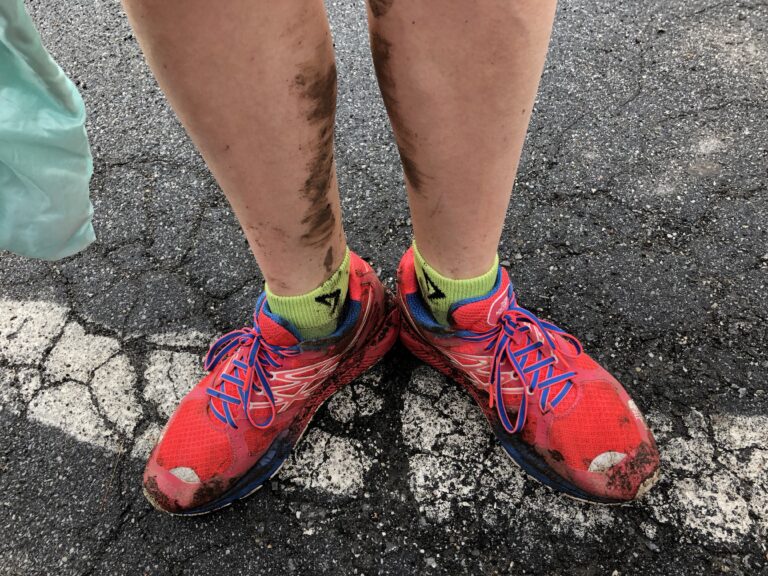
Wet ground needs more bite. Deep, well-spaced lugs shed mud better than shallow, closely packed tread. The trade-off is that deep lugs can feel stiff or unstable on hard surfaces, so choose them when soft, muddy or loose terrain is genuinely a regular part of your running.
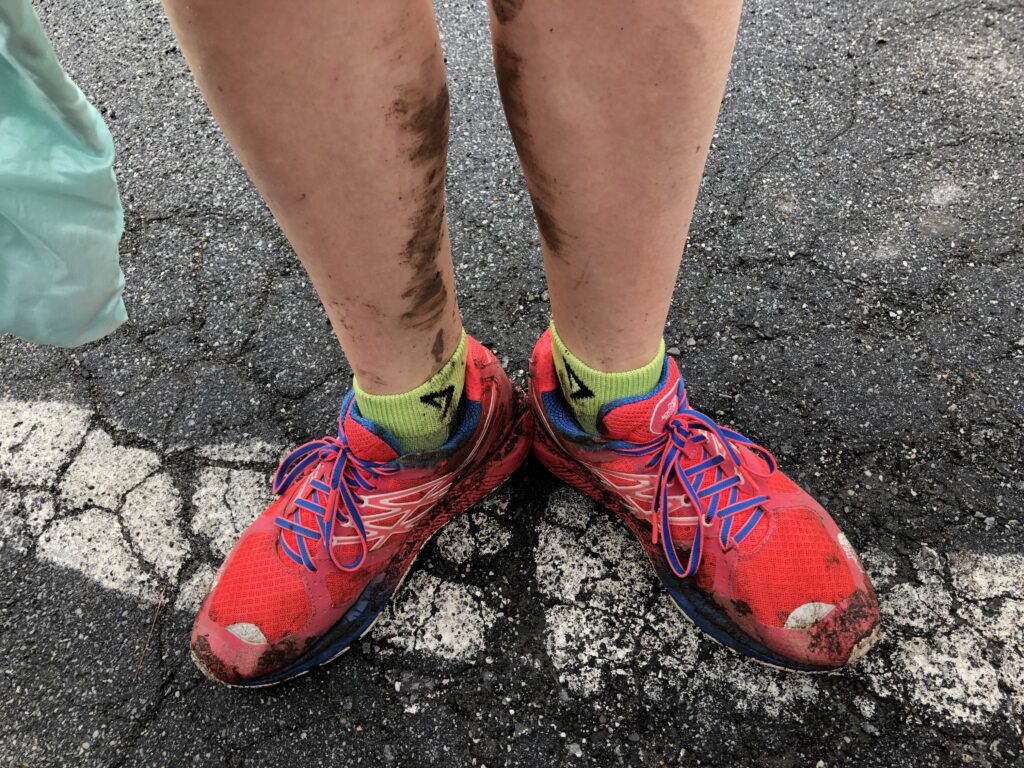
Waterproof uppers are not automatically the answer. They can keep water out briefly, but they also hold heat and dry slowly once water gets in from the top. For most runners, a breathable upper and good socks are more useful than treating waterproofing as a default.
Then decide what job the shoe needs to do
A daily trainer, a short technical race shoe and a long ultra shoe do not have to be the same thing.
Choosing a shoe for everyday trail training
For regular training, durability and comfort usually beat marginal weight savings. A shoe that is slightly more protective, stable and durable can make high-mileage weeks easier to absorb. Consider the terrain you run most often, not the most dramatic route you take once a month.
If you are just getting started, read our beginner trail-shoe guide first. It covers when road shoes are still enough and when trail shoes begin to make a meaningful difference.
─ Find trail shoes that match your route
Choose for the ground.
Then trust every step.
Get three personalised trail-shoe matches based on your terrain, race distance, elevation and preferences.
Choosing a shoe for race day
For a race, start with the course: distance, elevation, technicality, likely weather and how long you expect to be on your feet. Longer races usually increase the value of cushioning, durability and space for foot swelling. Steeper, more technical courses increase the value of grip, protection and a locked-in fit.
Do not buy a race shoe only because it is light. A few grams matter far less than being able to descend confidently after several hours or avoid a shoe that rubs once your feet swell.
For a first 50K, use the same principle you use for your 50K training plan: choose the option that lets you train consistently and arrive healthy. For a 100K, make race specificity more important. Terrain, elevation and the length of your expected day should all shape the decision. Our 100K training guide explains why two races at the same distance can require very different preparation.

What each shoe feature actually changes
Shoe specifications only become useful when you know the problem they solve.
Grip and lug depth
Lugs are the raised parts of the outsole. Shallow lugs work well on hardpack and gravel. Medium lugs are the versatile choice for mixed trails. Deep lugs are for mud, loose ground and genuinely soft terrain.
Do not choose the deepest lug by default. On dry rock and hard dirt, overly aggressive tread can feel clumsy. Match it to the worst terrain you regularly run, not an unlikely fantasy route.
Cushioning and stack height
More cushioning can reduce the beating your feet take during long runs and can be useful for long-distance races or high weekly mileage. Less cushioning can give you more ground feel and a more precise sense of technical terrain.
Neither is universally better. Think about the duration of your runs, your comfort on uneven ground and whether you tend to finish long days with sore feet or unstable ankles. For long ultra preparation, practice your longest runs in the cushioning level you expect to race in.
Protection
Toe bumpers, firmer midsoles and rock plates protect your feet from sharp rocks and roots. They are especially useful when the ground is rough enough that every misplaced step becomes tiring.
Protection is a spectrum. A stiff shoe can be reassuring on rocky trails but less flexible on smoother routes. Choose the amount of protection your terrain earns.
Heel-to-toe drop
Drop is the height difference between heel and forefoot. The important question is not whether a low-drop shoe is fashionable. It is whether your calves and Achilles are accustomed to it.
If you currently run comfortably in a moderate-drop road shoe, your first trail shoe does not need to force a dramatic change. Move gradually if you want to try a lower drop, and avoid treating a shoe choice as a cure for pain or an injury. Persistent pain deserves a qualified clinician, not a product recommendation.
Weight and upper
Lighter shoes can feel lively, but long races expose the trade-offs. A light upper may drain well and feel quick, while a more structured upper may hold your foot more securely on side slopes and descents. The right answer depends on terrain and fit.
On descents, your toes should not repeatedly hit the front of the shoe. A little room for swelling is useful, but your heel and midfoot should still feel secure. Try shoes with the socks you run in and use a downhill test where possible.
Test the shoe before you commit
A shop try-on is only the first filter. Walk downhill if you can, stand on one foot, make a few controlled lateral movements and pay attention to whether your heel lifts or your toes slide forward. If the store cannot offer a slope, use the return policy to test the shoe gently and keep it clean until you are sure.
For a long race, build confidence in stages. Use the shoe first on an easy local run, then on terrain that resembles your race, then on a longer run when your feet are likely to swell. Test your usual socks, lacing, hydration pack and any gaiters or poles you plan to use. A shoe that feels good for twenty minutes can reveal a pressure point after two hours, especially on descending terrain.
When one pair is enough and when it is not
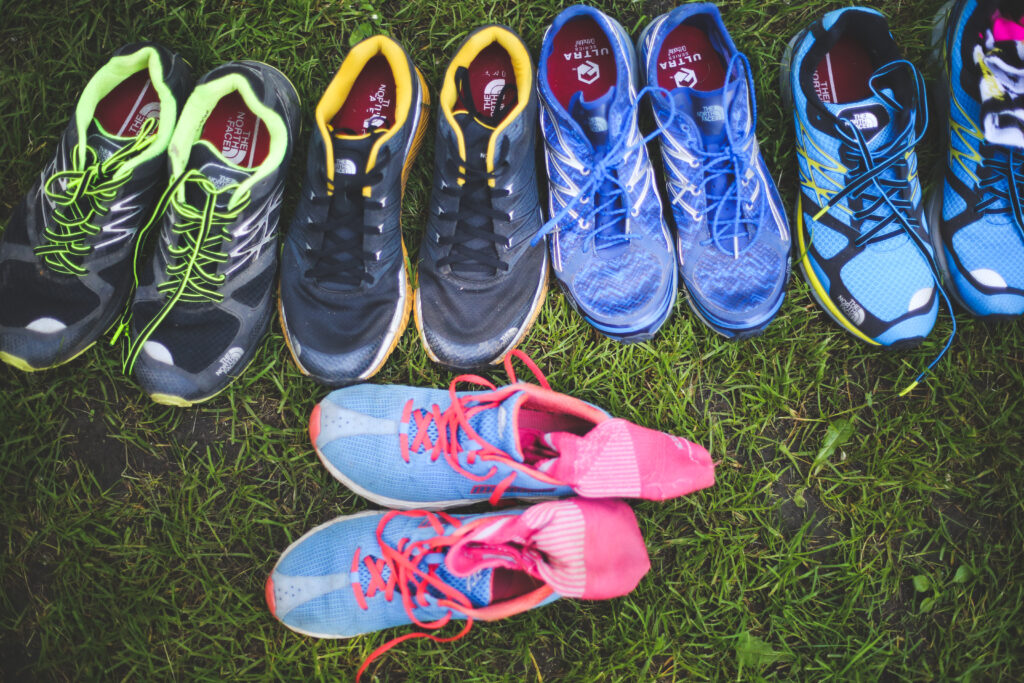
One versatile pair is enough for many runners. If your training terrain and race terrain are broadly similar, consistency is often more valuable than a complicated shoe rotation. Add a second pair only when it solves a clear problem: a more protective option for a long technical race, a deeper-lug option for a wet season, or a durable everyday trainer that lets you save a lighter race shoe for key sessions.
A practical trail-shoe checklist
Before buying, write down:
- the surface you run on most often;
- the wettest or most technical conditions you regularly face;
- your longest usual run and your goal race distance;
- approximate elevation gain and whether descents are steep or technical;
- whether you need a daily trainer, race-day shoe or one versatile pair;
- your current shoe’s drop, fit and any feature you would not repeat;
- whether your feet tend to swell on long runs.
Take that list to a specialist store, or put it into the Trail Running Shoe Finder. The tool is most useful when you answer for the terrain you truly run, rather than the terrain you hope to run one day.
How to use your three shoe matches
The Finder gives you three ranked matches, not a declaration that there is one perfect shoe for every run. Read the result as a shortlist.
Start with the terrain label. Does it reflect the surface you described? Then check cushion, drop and weight against the length of your runs and the shoes you have used successfully before. Finally, read the reason each shoe was selected. If one recommendation is better for race-day protection and another for day-to-day training, that is useful information, not a problem with the result.
Try on a shoe before committing to a long race if you can. A recommendation can narrow the field, but your foot shape and your response to the shoe still decide the final choice.
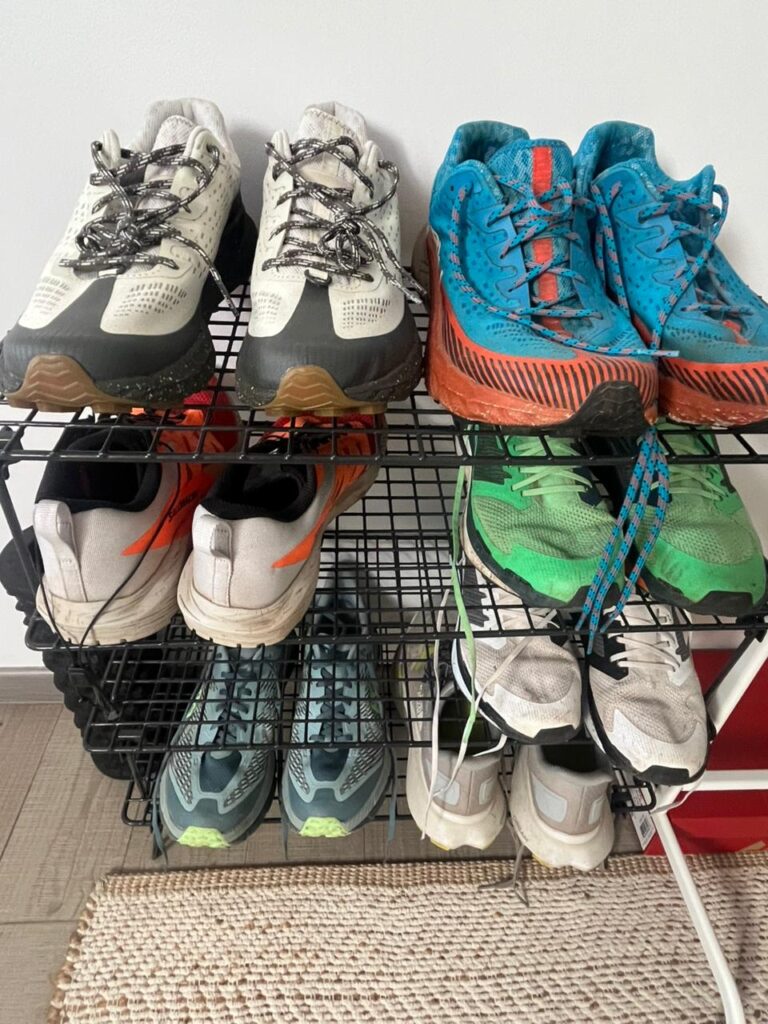
Three common mistakes
Buying for a race you are not actually running
It is easy to choose the most aggressive shoe because it looks ready for an alpine adventure. If your weekly training is mostly dry hardpack and forest trails, that shoe may be unnecessarily uncomfortable. Choose for your real training terrain first, then make a race-specific change only when the course truly demands it.
Changing everything just before race day
New shoes, lower drop, different socks and new lacing all at once is a poor race-week experiment. Test one variable at a time in training. Your long runs are the place to learn what happens when your feet swell, your quads are tired and the ground gets rough.
Treating a shoe as an injury solution
Shoes can influence comfort and confidence, but they do not diagnose or treat injury. If Achilles pain, foot pain or repeated instability is changing how you run, get individual advice from a qualified professional. Use shoe preferences as one part of a sensible return to training, not the whole plan.
Find a shoe, then prepare for the run ahead
The right shoe helps you enjoy the trail in front of you. Training prepares you for the hours that follow.
Once you have a race in mind, use the Race Time Predictor to set a realistic finish-time expectation, and build the training around your actual course. If you want a plan shaped around your race, terrain and schedule, start your free VertPro trial.
Frequently asked questions
Do I need trail shoes to start trail running?
Not always. Road shoes are usually fine for short runs on smooth, dry dirt or gravel. Trail shoes become more useful when loose ground, wet roots, rocks, steep descents or regular singletrack make grip, protection and a secure fit important.
What trail shoes are best for beginners?
For most beginners, a versatile shoe with medium lugs, moderate cushioning, a secure fit and a drop close to what they already run in is a better start than an extreme mud shoe, maximal shoe or zero-drop model. Match the shoe to your local terrain.
How much grip do I need in trail running shoes?
Use shallow lugs for hardpack and gravel, medium lugs for mixed trails, and deeper lugs for frequent mud, loose ground and soft terrain. More grip is not always better on firm, dry surfaces.
Should I use different trail shoes for training and racing?
Not necessarily. One versatile pair can work well. A separate race shoe becomes useful when your event is much longer, steeper, more technical or wetter than your normal training terrain, or when you need more cushioning, protection or precision than your daily pair provides.
Should I size up for trail running shoes?
Many runners need some extra room for foot swelling on long runs, especially when descending. The shoe should still hold your heel and midfoot securely. Try it with your running socks and test it downhill before relying on it for a long event.
Can a shoe finder tell me what will prevent injury?
No. A shoe finder can help match features to terrain, distance and preferences, but it cannot diagnose injury or prescribe treatment. Seek qualified medical or physiotherapy advice for pain or injury.
─ FIND YOUR NEXT TRAIL SHOE
Make your next shoe match the run ahead.
Tell us where and what you are running, and get three trail-shoe matches built around your route and goals.