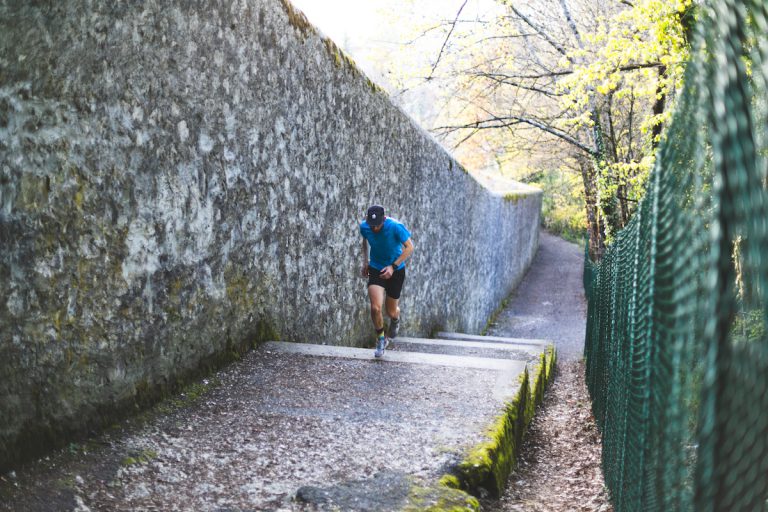
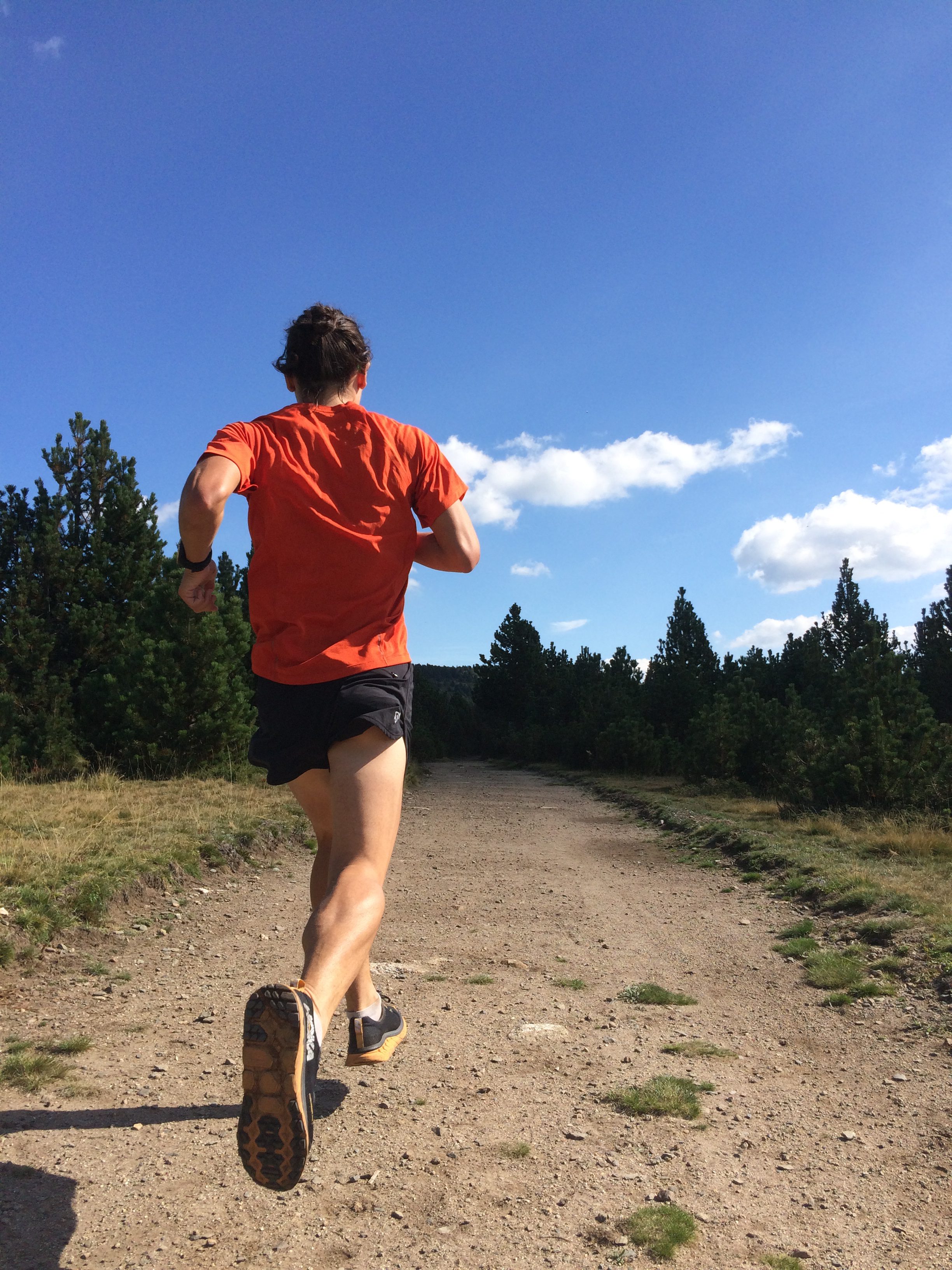
Running strides are short, controlled accelerations that help runners practice efficient, relaxed speed. They are not sprints, and they should not leave you exhausted. For trail runners, strides are a simple way to keep your legs responsive during a long aerobic build without adding a hard workout.
Use them after an easy run, before a race, or before a quality session when you want to wake up your legs. The goal is smooth mechanics and a little speed exposure, not proving how fast you can run.
Quick answer: how do you do running strides?
After an easy warm-up, choose a flat, predictable surface. Run 4 to 6 relaxed accelerations of about 15 to 20 seconds. Start easy, gradually build toward roughly 85 to 90 percent of your top speed, then ease off. Walk or jog until you feel recovered before the next repetition.
You should finish feeling sharper, not drained. If your form starts to tighten or your speed drops, stop the set.

What are running strides?
A stride is a short acceleration with a gradual build-up, a few seconds of quick but controlled running, and an easy deceleration. Most strides last 10 to 30 seconds. Some runners prefer to mark a short distance instead, but time is usually easier to control.
The key difference is intent. A stride is a technique and coordination drill with a speed element. You are not trying to hit an all-out pace or create a large lactate workout. Think tall posture, quick light steps, relaxed shoulders, and a pace you can control.
For trail runners, strides help preserve the turnover that can disappear during a big block of climbing, long easy miles, or technical terrain. They also give you a low-risk chance to notice whether your legs feel fresh, flat, or unusually tight.
How to do running strides correctly
1. Warm up first
Do not start strides cold. Add them after 15 to 20 minutes of easy running, or at the end of an easy run when your legs are already loose. Before a race or workout, use a longer progressive warm-up that matches your normal routine.
2. Choose the right surface
For most trail runners, the best place for strides is a flat, smooth stretch of road, track, compact dirt, or grass with reliable footing. Avoid technical singletrack, steep downhills, blind corners, traffic, and crowded paths. The goal is clean running mechanics, not trail skill practice.
3. Build speed gradually
Start each repetition at an easy jog. Over the first several seconds, smoothly accelerate. Reach a quick but relaxed speed around 85 to 90 percent of maximum, hold that feeling briefly, then gradually slow down. You should be able to stay coordinated the whole time.
4. Recover fully enough to stay smooth
Walk or jog easily between repetitions. Most runners need about 60 to 90 seconds, sometimes a little more after a hillier run or in hot conditions. Do not rush the recovery just to turn strides into an interval session.
5. Stop while the quality is good
Four good strides are more useful than eight sloppy ones. End the set if you feel your shoulders rising, your feet getting heavy, or your form becoming forced.
─ Vert Pro · Vert Coaching: Designed and approved by expert coaches.
Trust the training.
Then trust race day.
A coach-backed coaching experience that adapts to you in real time, helping you arrive at the start line feeling confident, prepared, and ready for what’s ahead.
A simple stride workout for trail runners
Use this as your default version:
- Run easy for 15 to 20 minutes.
- Complete 4 strides of 15 seconds, with 60 to 90 seconds of easy walk or jog recovery.
- As you get comfortable, build to 6 strides of 20 seconds.
- Cool down or continue the rest of your easy run.
If you already run regularly and recover well, this can fit after one or two easy runs each week. If you are new to speed work, start with four short strides once per week for two or three weeks before adding more.
How often should you do strides?
For most trail runners, one or two stride sessions per week is enough. They work best when they support the rest of your training rather than compete with it.
Where you are in training | A practical stride option |
Building easy aerobic mileage | 4 to 6 strides after one easy run each week |
Preparing for a trail marathon or 50K | 4 to 6 strides after one or two easy runs, if recovery is good |
Before a quality workout or race | 3 to 4 shorter strides after your warm-up |
Tired, sore, or returning from injury | Skip them or keep the session very short and easy |
If you are following a structured trail marathon training plan or 50K training plan, use strides to stay coordinated during easy weeks and to prepare for quality sessions. They should not replace your hill work, long run, or recovery days.
Strides vs. sprints: what is the difference?
Strides and sprints are not the same workout.
- Strides are relaxed, gradual accelerations. They usually finish below all-out speed, include generous recovery, and emphasize form.
- Sprints are more aggressive and can place much more stress on your calves, hamstrings, and nervous system. They need a clear reason in your plan and a more deliberate progression.
If you are unsure which one your training plan calls for, start with strides. A good stride session should make the next day of training feel normal, not leave you with lingering soreness.
How trail runners should use strides
Trail running adds a small complication: your usual routes may not offer a safe, flat place to run quickly. That is not a reason to force strides down technical terrain.
Use a road, track, smooth dirt path, or a wide gentle field near your run. Keeping the surface simple lets you focus on posture, rhythm, and foot placement. Save technical descents and uneven terrain for the skills they actually train.
Strides are especially useful when a trail-running block is heavy on climbing and slower uphill movement. A few relaxed accelerations can remind your body how to turn over without adding a full speed workout. If hills are the limiting part of your training, pair them with a separate hill-training plan for runners without mountains rather than trying to turn strides into hill repeats.
When should you skip strides?
Skip strides when the risk is higher than the benefit:
- You have a sharp pain, a new niggle, or unusual soreness.
- You are very fatigued from a race, a long run, travel, poor sleep, or heat.
- The only available surface is slippery, technical, crowded, or poorly lit.
- You are returning from an injury and do not yet have clearance for faster running.
That is not lost training. Strides work because they are a small, repeatable dose. Missing one session is always better than forcing a bad one.
Common mistakes with running strides
The most common mistake is treating every repetition like a sprint. Other easy ways to lose the point of strides include starting cold, using too little recovery, running them on technical terrain, and adding too many repetitions when you are already tired.
Keep the cue simple: smooth acceleration, relaxed speed, full-enough recovery. If you can finish the set feeling a little more springy than when you began, you did it right.
Put strides into your training plan
Strides are a small tool, but they work best when they fit the bigger picture. Your long run, climbing, recovery, and race goal should decide where they go. If you are building toward a longer event, use the 100K training plan or talk with a Vert coach about where faster running belongs in your week.
Want a plan that places strides and harder sessions around your trail-race goal? Start your free Vert trial.
FAQ
What are strides in running?
Strides are short, relaxed accelerations, usually 10 to 30 seconds long. You gradually build to a quick, controlled speed, then ease off. They improve coordination and running economy without becoming an all-out sprint workout.
How fast should I run strides?
Most runners should build to about 85 to 90 percent of maximum speed. The right pace feels quick but controlled, with relaxed shoulders and smooth mechanics. If you are straining or losing form, slow down.
How long should running strides be?
Start with 10 to 15 seconds. Most runners can build to 15 to 20 seconds, and some experienced runners use up to 30 seconds. Keep the duration short enough that the repetition stays relaxed.
How much recovery should I take between strides?
Walk or jog easily until you feel ready to repeat the same smooth effort. For many runners, that is about 60 to 90 seconds. The recovery is part of the workout, not wasted time.
How often should trail runners do strides?
One or two short stride sessions each week is enough for most trail runners. Add them after easy runs or as part of a race or workout warm-up when you are recovered and have a safe surface.
Are strides the same as sprints?
No. Strides are gradual and controlled, usually below maximum speed. Sprints are harder, more aggressive efforts that need more recovery and a more specific place in a training plan.
─ Vert Pro · Vert Coaching: Designed and approved by expert coaches.
Trust the training.
Then trust race day.
A coach-backed coaching experience that adapts to you in real time, helping you arrive at the start line feeling confident, prepared, and ready for what’s ahead.