
How to Balance Work, Family, and Stress While Still Making Progress
If there’s one thing I’ve learned, both as a coach and as an athlete, it’s this: the best training plan for busy athletes isn’t the most perfect one. It’s the one that fits your life.
Most of the athletes I work with aren’t professional runners. They’re balancing careers, families, travel, stress, and everything in between. And yet, they still want to train for meaningful goals, whether that’s finishing their first trail race or competing at a high level.
The challenge isn’t just how to train. It’s how to train consistently in a real, unpredictable life. Here’s how I think about it.
How Do You Build a Training Plan Around a Busy Life?
A common mistake is building a training plan in isolation, then trying to force your life to fit around it. That rarely works. Instead, flip it:
- When are your busiest workdays?
- When do you have family commitments?
- When do you realistically have energy, not just time?
From there, build your training around your actual week, not your ideal one. Training must be sustainable to be effective. A “perfect” 6-day plan you can’t follow is far less valuable than a 3-4 day plan you execute consistently.
What’s the Minimum Training Needed to Make Progress?
You don’t need to do everything. You need to do the right things consistently. For most busy athletes, that means prioritizing:
- 1 long run per week
- 1 quality session (tempo, hills, or intervals)
- 1-2 easy aerobic runs
- 1-2 strength sessions (short and focused)
That’s it. If life gets hectic, strip it down even further:
- Keep the long run
- Keep one short session
- Let everything else be flexible
Progress doesn’t come from doing more. It comes from doing enough, consistently.

Does Life Stress Count as Training Stress?
Training stress is only one piece of the puzzle. Work stress, poor sleep, travel, emotional load — your body doesn’t separate these. It all adds up.
This is one of the biggest gaps I see in athletes: they push through training on top of high life stress instead of adjusting. Instead:
- Shorten or skip sessions when stress is high
- Replace a hard workout with an easy run or walk
- Prioritize sleep over squeezing in miles
This isn’t weakness. It’s smart training. In most cases, the best decision is doing less so you can keep going long term.
─ Vert Pro · Vert Coaching: Designed and approved by expert coaches.
Short on time?
Vert builds your training week around your life, not the other way around
How Do You Stay Consistent When Your Schedule Changes?
Rigid plans break. Flexible ones adapt. Instead of assigning fixed days:
- Think in training blocks (e.g., 3 key sessions per week)
- Move workouts based on your schedule
- Swap days when needed without guilt
Example: if Tuesday’s workout doesn’t happen, move it to Wednesday. If the weekend gets busy, shift the long run to Friday.
The goal isn’t perfection. It’s continuity.
How Do You Keep Running From Becoming Another Stressor?
Running shouldn’t become another source of stress. In fact, for many athletes, it’s one of the few spaces where they can clear their mind, reconnect with themselves, and reset from the demands of life.
If training starts to feel like pressure, step back. Ask: what do I need right now? What would feel good, not just productive?
Sometimes that’s a hard session. Sometimes it’s a 30-minute easy run. Sometimes it’s rest.
Why Strength Training Matters More When Time Is Tight
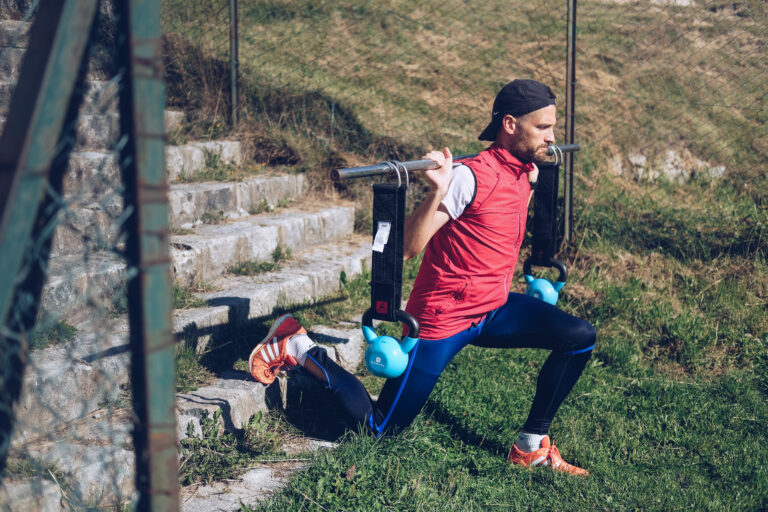
When time is limited, strength training becomes even more valuable, particularly if you’re building toward a 50k or beyond. Two short sessions per week (20-30 minutes) can:
- Reduce injury risk
- Improve efficiency
- Support long-term consistency
Focus on:
- Single-leg strength
- Core stability
- Posterior chain (glutes, hamstrings)
This is one of the highest-return investments a busy athlete can make.
How Should Busy Athletes Approach Recovery?
Recovery isn’t what you do when you have time — it’s part of the plan. For busy athletes, this means:
- Prioritizing sleep when possible
- Building in easier weeks
- Taking full rest days without guilt
This is where adaptation happens. Resting is training.
Why Consistency Over Months Beats Intensity Over Weeks
The biggest shift is mental. Instead of thinking “how much can I do this week?”, think “how can I keep showing up over the next 6-12 months?”
Consistency over time beats short bursts of intensity every time.

Final Thought
You don’t need perfect conditions to train well. You need awareness, flexibility, consistency, and a plan that respects your life.
Because at the end of the day, the goal isn’t just to become a better runner. It’s to build a training approach that fits who you are, and allows you to keep growing, year after year.
─ Vert Pro · Vert Coaching: Designed and approved by expert coaches.
Trust the training.
Then trust race day.