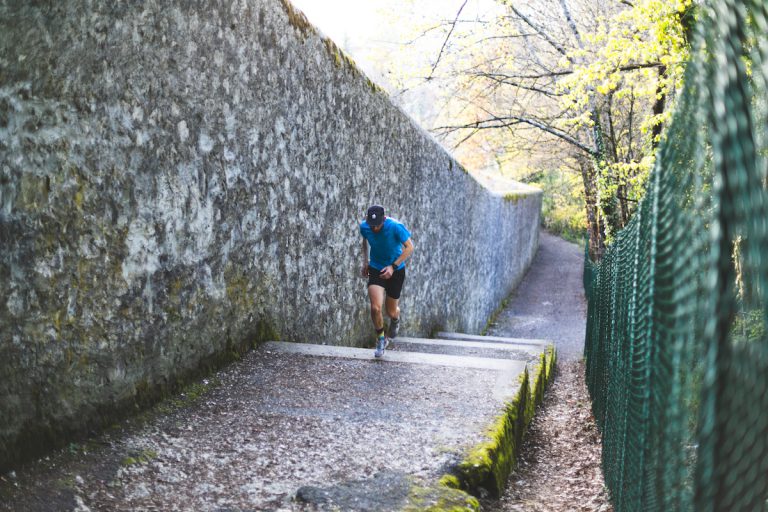
A backyard ultra training plan is different from a normal ultramarathon plan. You are not training for a fixed finish line, a predictable finishing time, or one final push to the end. You are training to complete one loop every hour, recover quickly, reset mentally, and do it again for as long as you can.
If you have spent enough time around ultrarunning, you have probably heard someone talk about backyard ultras. Maybe you have watched race livestreams where athletes continue looping through the night for 24, 36, or even 60-plus hours. Maybe you have wondered how people keep going long after a traditional ultra would already be over. Or maybe you are considering trying one yourself.
As a coach, I am fascinated by backyard ultras because they challenge almost every assumption we usually make about racing. There is no fixed distance. No guaranteed finish time. No pacing strategy built around a known endpoint. Instead, the format rewards patience, consistency, restraint, adaptability, and mental resilience.
A backyard ultra is not simply about who is fastest. It is usually about who can remain steady the longest. That changes how you should train.
What Is a Backyard Ultra?
In the traditional backyard ultra format, runners complete a 4.167-mile loop, or 6.706 kilometers, every hour on the hour. The distance is not random: 24 completed loops equals 100 miles.
The basic rules are simple:
- Runners complete one 4.167-mile loop every hour.
- A new loop starts at the top of each hour.
- If you fail to start the next loop, you are out.
- If you do not complete the loop within the hour, you are out.
- The last runner standing wins.
That is it. But those simple rules create a completely different physiological and psychological challenge than a standard ultra.
Unlike a 50k, 100k, or 100 miler, there is no known finish line. You cannot simply push through one hard section and count down the remaining miles. Recovery becomes part of the race itself. Efficiency matters more than heroics. Small mistakes repeat every hour until they become big problems.
That is why a backyard ultra training plan needs to prepare more than your legs.
Backyard Ultra Training Plan: What Your Training Should Include
A good backyard ultra training plan should help you build the aerobic fitness, durability, fueling habits, loop efficiency, and mental control needed to repeat steady efforts for many hours.
Your plan should include:
- Consistent weekly volume built gradually over time
- Long runs focused on time on feet, not just mileage
- Back-to-back long efforts to practice moving on tired legs
- Backyard-specific loop sessions that include stopping, refueling, and restarting
- Strength training to build durability and protect your joints
- Nutrition and hydration practice during long sessions
- Mental training for monotony, uncertainty, and fatigue
- Night or early-morning running if your goal may take you into the dark
- Deload weeks and a short taper before race day
The goal is not to complete one huge training run. The goal is to stack enough consistent weeks that your body, stomach, and mind are ready to keep repeating the process.

Backyard Ultra Training Plan Structure by Phase
A simple backyard ultra training structure can look like this:
Phase | Duration | Focus | What Matters Most |
|---|---|---|---|
Base building | 4 to 8 weeks | Build aerobic fitness and durability | Easy volume, strength work, long-run comfort |
Specific training | 4 to 6 weeks | Build time on feet and fatigue resistance | Back-to-back long runs, steady pacing, fueling practice |
Backyard-specific training | 3 to 4 weeks | Practice the race format | Loop sessions, transitions, nutrition timing, restart discipline |
Taper | 1 to 2 weeks | Recover and arrive fresh | Reduce volume, keep short easy runs, sleep well |
These phases can be adjusted based on your starting point and your goal. An athlete trying to complete 12 yards needs a different build than an athlete trying to run through the second night. The structure stays similar. The volume and specificity change.
─ Vert Pro · Vert Coaching: Designed and approved by expert coaches.
Training for a backyard ultra
Vert builds your plan around the loops, the fatigue, and the life you still have to live.
Weekly Volume and Time-on-Feet Targets by Training Phase
For backyard ultras, training by time is usually more useful than training by mileage. A 5-hour steady effort, a long hike-run combination, or a backyard-specific loop session may build more relevant fitness than chasing a specific weekly mileage number.
Phase | Weekly Moving Time | Main Goal |
|---|---|---|
Base building | 4 to 7 hours | Build consistency, easy aerobic fitness, and strength |
Specific training | 6 to 10 hours | Extend long runs and build fatigue resistance |
Peak backyard-specific training | 8 to 12 hours | Practice loops, transitions, fueling, and moving on tired legs |
Taper | 50 to 70% of peak volume | Absorb the work and arrive fresh |
These are guidelines, not rules. Some athletes prepare well on less if they are consistent and durable. Others need more total time because their goal is longer, their course is more technical, or they are preparing for 24-plus hours. Match the volume to your goal and build gradually.
The Core Principle: Train for Sustainability
The first thing I tell athletes preparing for a backyard ultra is this: you are not training to run your fastest hour. You are training to make hour 20, hour 28, or hour 36 feel manageable.
That mindset changes everything. In many endurance races, athletes can survive occasional aggressive pacing or emotional surges. Backyard ultras punish that behavior because every mistake compounds.
Every small error repeats:
- Going out too hard early
- Overheating
- Under-fueling
- Sitting too long between loops
- Changing gear too slowly
- Getting emotionally high or low after one loop
The runners who succeed are often the ones who stay calm, controlled, and patient. This is less about proving fitness and more about preserving it.
Build a Strong Aerobic Engine
The backbone of any successful backyard ultra athlete is aerobic efficiency. Because the pace is moderate compared with shorter ultras, runners who stay relaxed and economical early have a major advantage later.
Most of your training should be easy enough to control. Think conversational effort, relaxed breathing, and runs that finish with something left in the tank. You do not need to hammer workouts every week. In fact, many athletes preparing for backyard ultras benefit from slightly less intensity than they might use for a shorter trail race.
That does not mean intensity disappears entirely. Hill work, tempo efforts, and moderate sustained efforts can still have a place. But the primary goal is durability and efficiency, not peak speed.
If you are still building toward your first ultra, start with the 50k training guide before jumping into a backyard-specific build. If you already have ultra experience and want a fixed-distance goal before or after your backyard race, the 100k training plan and 100-mile training guide are useful next steps.
Practice Backyard-Specific Loop Sessions
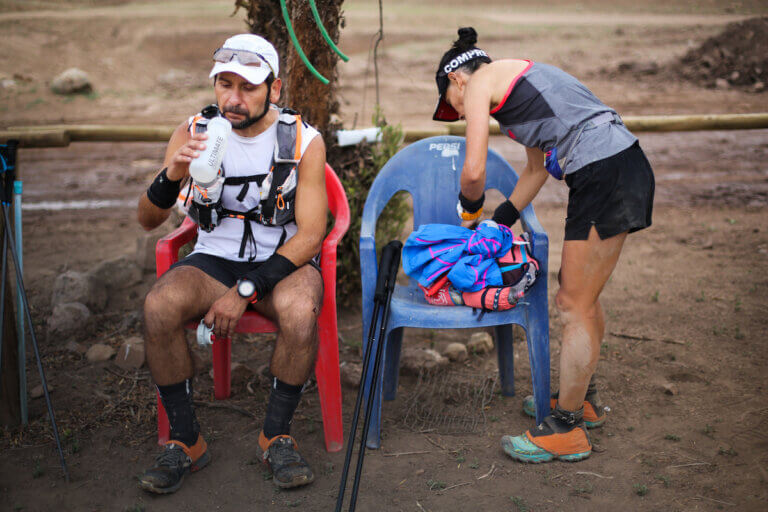
One of the biggest mistakes runners make is training only the running part of a backyard ultra. The race is not just the loop. It is the loop, the stop, the reset, and the restart.
That means you should practice the format before race day.
Session | How It Works | Purpose |
|---|---|---|
3-yard practice | Complete 3 loops on the hour | Learn the rhythm without major fatigue |
4 to 6-yard practice | Complete 4 to 6 hourly loops | Practice fueling, transitions, and patience |
Night or early-start loop session | Begin before sunrise or finish after dark | Build familiarity with low-light running |
Long simulation day | Combine easy loops, hiking, fueling, and gear changes | Rehearse race-day systems under fatigue |
You do not need to do these sessions every week. They are specific workouts, not normal long runs. Use them carefully during the final 6 to 8 weeks of training so you arrive prepared but not exhausted.
Loop Recovery Is a Trainable Skill
Recovery between loops is one of the most overlooked parts of backyard ultra training. Most runners focus on how fast they can complete the loop. That matters, but what you do after the loop matters just as much.
Between loops you are managing:
- Hydration
- Calories
- Body temperature
- Bathroom breaks
- Clothing changes
- Foot care
- Mental reset
- Getting back to the start on time
A good transition should feel boring and automatic. Finish the loop, get what you need, solve one or two small problems, and get ready to start again. If you spend every break making decisions, you will waste mental energy you need later.
For many runners, finishing each loop with roughly 10 to 15 minutes before the next start is a useful range. Too little time creates stress. Too much time can make you stiff, cold, or mentally checked out. Practice enough to learn what works for you.

Back-to-Back Long Runs and Time on Feet
Back-to-back long efforts are useful for backyard ultra preparation because they teach your body and mind how to continue moving while carrying fatigue.
Examples include:
- Saturday: 4 to 6 hours easy
- Sunday: 2 to 4 hours steady
- Long hike plus run combinations
- Multiple moderate sessions across consecutive days
The goal is not to destroy yourself. The goal is to normalize movement while tired. This becomes critical in a backyard ultra where loop 20 is often less about fitness and more about your ability to remain functional while fatigued.
Mileage can become misleading here. What matters more is total movement time, fatigue accumulation, durability, and fueling under fatigue. Hiking can be valuable too. Long hikes build muscular endurance, connective tissue durability, mental patience, and low-intensity aerobic conditioning without the same recovery cost as high-volume running.
Nutrition for a Backyard Ultra
Fueling in a backyard ultra is difficult because you do not know how long you will be out there. You cannot simply survive to a known finish line. You need sustainable fueling.
Early under-fueling creates major problems later. A small deficit at hour 4 can become a race-ending problem at hour 16.
In training, practice:
- Fueling early
- Fueling every loop
- Drinking consistently without over-drinking
- Alternating sweet and salty foods
- Using liquid calories when solid food becomes difficult
- Eating when you are tired and not especially hungry
Many athletes start by aiming for roughly 150 to 250 calories per hour, then adjust based on body size, effort, temperature, and gut tolerance. Some runners need more. Some need less. The important thing is not the exact number on paper. The important thing is finding a repeatable strategy before race day.
Use the Vert Nutrition Planner to estimate your fueling needs before your longest backyard-specific sessions. Then test that plan in training, because your gut behaves differently at hour 12 than it does at hour 2.

Mental Preparation: Stay Small
In my opinion, mental preparation is under-discussed in backyard ultras. Eventually, almost everyone becomes physically uncomfortable. The real separator is often psychological.
You are dealing with monotony, uncertainty, sleep deprivation, comparison to other runners, and the absence of a defined finish line. The brain likes certainty. Backyard ultras remove it.
The best mental strategy is to stay small.
Do not think about how many hours you have left. Do not try to solve the entire race. Focus on the current loop. Then the next one. Then the next one.
Backyard ultras reward athletes who can stay emotionally neutral. A low moment is not the end. A good moment does not mean the race is solved. Both pass. Calmness becomes a skill.
Training can help. Repetitive loops, treadmill runs, solo efforts without music, and long easy sessions all build emotional durability. These sessions are not glamorous, but they teach you to stay with the process when nothing exciting is happening.
─ Vert Pro · Vert Coaching: Designed and approved by expert coaches.
Trust the training.
Then trust race day.
Strength Training for Backyard Ultras
Strength training matters for backyard ultras because your body is absorbing repetitive load for a long time. You do not need maximal power. You need resilience.
Focus on:
- Single-leg strength
- Glute strength
- Posterior chain work
- Calf durability
- Core stability
- Foot and ankle resilience
Good exercises include step-ups, split squats, deadlifts, calf raises, carries, planks, and lateral band work. Two sessions per week during base building can make a major difference. As your long runs and loop sessions get bigger, one weekly maintenance session may be enough.
The goal is not soreness. The goal is durability, injury prevention, and maintaining running economy deep into the event.

Sleep Deprivation and Night Running
Once a backyard ultra moves deep into the night, sleep deprivation becomes part of the challenge. It affects mood, decision making, coordination, appetite, and pacing.
You cannot perfectly simulate this in training, and you should not try to exhaust yourself just to prove a point. But you can reduce the psychological shock of functioning while tired.
Useful options include:
- Early-morning long runs that start before sunrise
- Evening runs that finish in the dark
- Occasional overnight or very early-start efforts for experienced athletes
- Backyard-specific loop sessions that include low-light transitions
If your goal is 24 hours or more, practice with the headlamp, clothing, and food setup you plan to use on race day. Do not discover at 2 a.m. that your headlamp bounces, your jacket traps heat, or your stomach rejects the food you packed.
Sample Backyard Ultra Training Week
This is an example of what a backyard-specific week might look like for an athlete with a solid base. Adjust the volume based on your experience, goal, and recovery.
Day | Session | Purpose
|
|---|---|---|
Monday | Rest or easy walk | Absorb the weekend load |
Tuesday | Easy run, 45 to 75 minutes | Build low-stress aerobic volume |
Wednesday | Strength and mobility | Maintain durability without extra impact |
Thursday | Moderate steady run or hill work | Build strength and controlled effort |
Friday | Rest or short easy run | Recover before the weekend |
Saturday | Backyard-specific loop session or long easy run | Practice pacing, fueling, transitions, and time on feet |
Sunday | Easy run, hike, or second long effort | Build fatigue resistance without forcing intensity |
The exact structure depends on your goal. If you are aiming for your first 8 to 12 yards, the weekend may be a controlled long run and one easy recovery day. If you are aiming for 24-plus hours, you may need more specific loop practice and bigger back-to-back weekends.
Use the Vert Race Time Predictor if your backyard ultra is part of a bigger season that includes fixed-distance races like a 50k, 100k, or 100 miler. For the backyard itself, your goal is better defined in yards or hours than in a predicted finish time.
Common Backyard Ultra Mistakes
Starting too fast
This is the biggest mistake. The early loops should feel almost too easy. The goal is efficiency, not speed.
Sitting too long between loops
Rest is useful. Getting too comfortable is not. If you sit too long, restarting becomes physically and mentally harder.
Underestimating nutrition
Minor fueling mistakes become major problems after 12-plus hours. Practice your plan before race day.
Thinking too far ahead
Backyard ultras become overwhelming when athletes mentally project too far into the future. Stay with the current loop.
Changing too many things on race day
New foods, new shoes, new socks, new headlamps, and new routines all create risk. Race day should feel familiar.
How Do You Know You Are Ready?
No training session fully replicates a backyard ultra. But athletes are usually ready when:
- Easy pacing feels natural
- Fueling is consistent
- Long runs feel manageable emotionally
- They recover well from volume
- They understand their loop rhythm
- They can stay patient when the effort feels boring
- They can solve small problems without panicking
The biggest sign is this: you stop feeling the need to prove your fitness every session. Experienced backyard runners are often surprisingly calm. They know the event is about restraint.

Final Thoughts
Backyard ultras reveal a lot about a runner. Not just fitness, but habits, patience, mindset, decision making, and self-control. That is what makes the format so compelling.
If you are preparing for one, remember that you do not need perfect training. You need consistency, durability, emotional steadiness, smart pacing, and sustainable fueling.
Most of all, you need patience. Backyard ultras are rarely won by the athlete trying hardest in the first few hours. They are usually won by the athlete who can stay calm the longest.
Frequently Asked Questions
How many miles per week should I run for a backyard ultra?
There is no perfect mileage number. Most athletes benefit more from consistent aerobic training, long time-on-feet sessions, and specific loop practice than from obsessing over weekly mileage.
How long should a backyard ultra training plan be?
Most runners should give themselves at least 12 to 16 weeks, assuming they already have a running base. If you are new to ultras, coming back from injury, or aiming for 24-plus hours, give yourself more time.
Should I train with loops?
Yes. Practicing repetitive loops helps mentally and logistically. It teaches pacing discipline, transition efficiency, fueling timing, and the habit of restarting every hour.
Are treadmill runs useful for backyard ultras?
Yes. Treadmill runs can build patience, steady pacing, and mental resilience. They are not a replacement for outdoor long runs, but they can be useful when training for repetitive effort and boredom tolerance.
How important is strength training?
Very important. Backyard ultras place repetitive stress on the body for many hours. Strength training helps protect your hips, knees, calves, feet, and lower back as fatigue builds.
Should I practice running at night?
If your goal may take you into the night, yes. Practice with your headlamp, clothing, and fueling setup before race day. You do not need to exhaust yourself overnight, but you should reduce the surprise of moving in the dark while tired.
What should I eat during a backyard ultra?
Use a mix of simple carbohydrates, liquid calories, salty foods, sweet foods, and real food that you have tested in training. Start with a realistic hourly fueling target, then adjust based on your stomach, the weather, and how long you expect to continue.
What is the best pacing strategy?
Usually slower than you think. The goal is to finish each loop comfortably, leave enough time to reset, and avoid creating unnecessary damage early. You are preserving energy for later hours.
Can beginners do backyard ultras?
Yes, but they should build aerobic fitness, pacing discipline, and fueling habits first. A backyard ultra can be beginner-friendly in format, but it is still demanding if you keep going for many hours.
Is a backyard ultra good training for a 100k or 100 miler?
It can be. Backyard ultras build time on feet, fueling discipline, patience, and mental resilience. If you are using one as part of a longer season, connect it to your fixed-distance goals with a clear recovery window afterward.
Steve Krenn
Vert.run
UESCA Certified Ultra Running Coach
─ Vert Pro · Vert Coaching: Designed and approved by expert coaches.
One more loop starts in training.
Build the pacing, fueling, and durability to keep showing up on the hour.