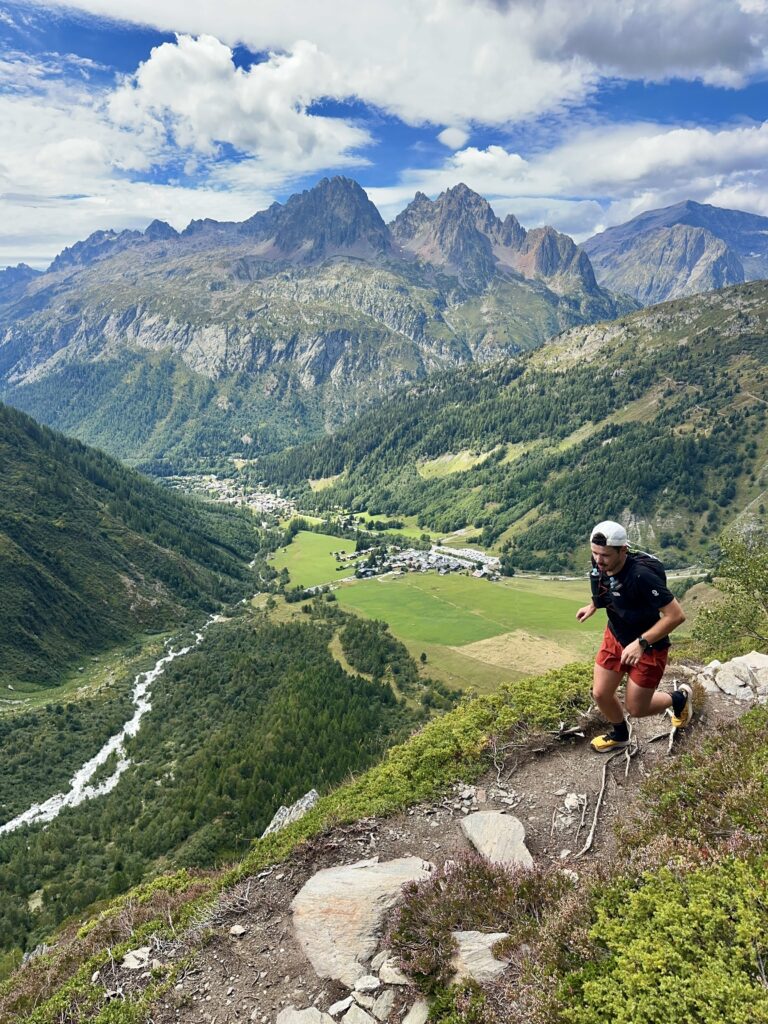
Trail running does not have to start with mountains, technical singletrack, expensive gear, or a race on the calendar. Most runners start much more simply: one easy trail, one relaxed effort, and the willingness to slow down when the terrain asks for it.
If you are coming from road running, the first adjustment is not fitness. It is expectation. Trails are slower. Hills are allowed to be walked. Pace matters less than effort. A short run can feel harder than it looks on paper because every step asks for a little more balance, strength, and attention.
That is normal. It is also the point.
The best way to start trail running is to make the first few weeks easy enough that you want to come back. Choose simple terrain, run by effort, walk early on climbs, keep your first trail runs short, and build gradually. Once you have a rhythm, a beginner trail running plan can help you turn that first curiosity into consistent training.
When you are ready to choose a next goal, use our trail running training plan finder to choose a route that fits your current experience and the distance you want to build toward.
Quick answer: how to start trail running
If you are new to trail running, start with these five steps:
- Choose an easy first trail. Look for a park path, dirt road, gravel loop, or rolling trail with clear footing.
- Run by effort, not pace. Your trail pace will usually be slower than your road pace, especially on hills or uneven ground.
- Walk the climbs before you need to. Power hiking is part of trail running, not a sign that you are doing it wrong.
- Keep the first run short. Start with 20 to 40 minutes, depending on your current fitness.
- Repeat once per week at first. Let your ankles, calves, hips, and attention adapt before adding more trail volume.
You do not need to master trail running before you begin. You need a safe route, comfortable effort, and a simple plan for building confidence one run at a time.
Start here based on your background
Not every beginner is starting from the same place. A road runner, a hiker, and someone who is new to running all need a different first step.
If you are already a road runner, keep most of your weekly running familiar at first. Add one easy trail run per week and make it shorter than your normal road run. Your heart and lungs may be ready for more, but your calves, ankles, quads, and stabilizing muscles still need time to adapt to uneven ground.
If you are new to running, start with run-walk trail sessions. You might run for one or two minutes, walk for one or two minutes, and repeat for 20 to 30 minutes. That still counts. The goal is to build the habit and learn how easy trail effort feels before adding distance.
If you already hike, you have an advantage. You probably understand terrain, weather, route choice, and time on feet. Your first step is to add short, relaxed running segments on easier sections of trail while continuing to hike climbs or technical sections.
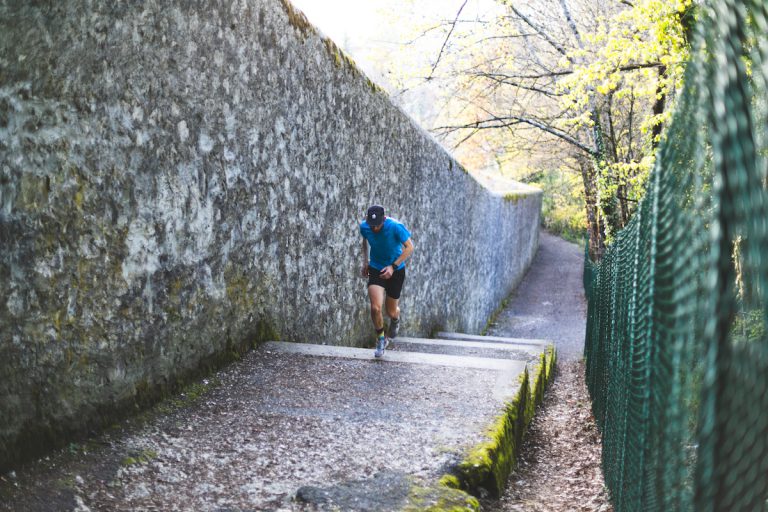
If you live somewhere flat, do not wait for mountains. Start with dirt paths, parks, gravel roads, stairs, bridges, short slopes, or treadmill incline. Trail running is not only about elevation. It is also about changing surfaces, effort control, strength, and confidence away from pavement.
New to trail running and want more support?
Vert Basecamp is a 12-week guided trail-running group with live coaching, a training app, and a small group starting together.
What makes trail running different from road running?
Trail running is still running, but the surface changes the job.
On roads, you can often settle into a rhythm and hold a steady pace. On trails, the terrain breaks that rhythm. A climb may slow you to a hike. A rocky section may ask you to shorten your stride. A downhill may feel easy aerobically but demanding on your quads. Even a flat dirt path can feel different because the surface is softer or less predictable than pavement.
For beginners, the biggest differences are:
- Pace is less useful. Effort, breathing, and control matter more.
- Your stride changes constantly. Shorter steps are usually better on uneven ground.
- Hills are part of the sport. Walking steep climbs is normal, even for experienced trail and ultra runners.
- Downhills require patience. Fast downhill running can beat up your legs before your fitness is ready.
- Trail runs use more stabilizing muscles. Feet, calves, hips, glutes, and core all work harder.
- Focus matters. You have to scan the trail and choose where to place your feet.
This is why a 30-minute trail run can feel more demanding than a 30-minute road run. You are not losing fitness. You are learning a new version of running.
How to choose your first trail
Your first trail should help you succeed. Do not start with the steepest, rockiest, most technical route near you just because it looks exciting.
A good first trail has:
- Clear footing
- Low to moderate elevation gain
- A short loop or easy out-and-back
- Good daylight visibility
- Phone reception or a familiar location
- A simple exit if you feel tired
City parks, fire roads, gravel paths, mellow forest trails, canal paths, and rolling dirt loops are all good options. If you live somewhere flat, that is fine. You can still start trail running on softer surfaces and add hills later.
For the first few runs, avoid routes where the main challenge is exposure, navigation, heat, altitude, or very technical terrain. You can build toward those things. The goal at the beginning is to learn how trail effort feels without stacking too many new demands at once.
If you are not sure where to go, ask a local running store, trail group, park office, or experienced runner for a beginner-friendly route. A good first trail should feel slightly adventurous, not stressful.
─ Vert Pro · Vert Coaching: Designed and approved by expert coaches.
If you want structure after your first few runs, use Vert’s beginner trail running plan to build consistency without guessing what to do each week
What to do on your first trail run
Your first trail run should be simple enough that you can pay attention to the terrain instead of worrying about the workout.
Before you go:
- Choose a route you can explain in one sentence.
- Check the weather and daylight.
- Tell someone where you are going if the trail is remote.
- Carry your phone.
- Bring water if it is hot, the run is longer than 45 minutes, or you are not sure how long the route will take.
- Start with shoes and clothing you already trust.
During the run:
- Start easier than you think you need to.
- Look a few steps ahead instead of straight down at your feet.
- Shorten your stride on rough or narrow sections.
- Walk hills before your breathing gets out of control.
- Slow down on downhills until you feel coordinated.
- Stop before the run turns into a survival effort.
After the run:
- Notice what felt different from road running.
- Check whether your calves, quads, feet, or ankles feel unusually sore the next day.
- Repeat a similar route before making the next trail run longer or harder.
The first run is not a test. It is a baseline.
How to pace your first trail runs
The easiest mistake is trying to run your road pace on trails.
Trail pace is slower because the terrain is doing more work. You might be running uphill, stepping around rocks, moving through mud, turning often, or descending with more control. If you judge the run by pace alone, you may think you are underperforming. If you judge it by effort, you will train much smarter.
Use a simple effort scale:
- Easy effort: you can talk in full sentences.
- Moderate effort: you can speak in short phrases.
- Hard effort: you are breathing heavily and do not want to talk.
Most beginner trail runs should stay in the easy range. If your breathing gets hard on a climb, walk. If a downhill feels too fast to control, slow down. If the footing gets rocky, shorten your stride and look a few steps ahead.
For the first month, leave your ego at the trailhead. The goal is not to prove that you can run every step. The goal is to finish feeling like you could do it again.
Hills, walking, and downhills
Hills are one of the reasons trail running feels different, and they are also one of the reasons it builds so much strength.
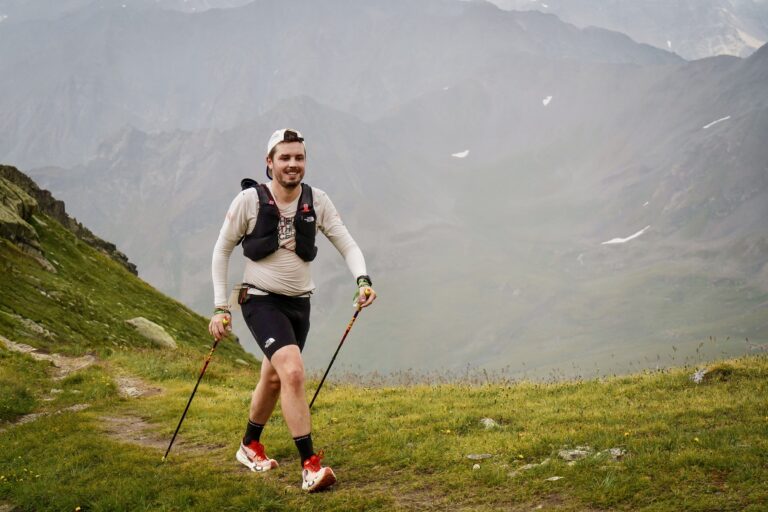
When you are new, do not wait until a climb forces you to walk. Start hiking early on steeper hills. Keep your effort steady, lean slightly from the ankles, use short steps, and keep your hands relaxed. If the climb is long, think in effort rather than speed.
Walking hills is not a beginner shortcut. It is a trail-running skill. In longer trail races and ultramarathons, smart runners hike to save energy, protect their legs, and keep effort under control.
Downhills need the same respect. It is tempting to let gravity pull you fast, but your quads, calves, ankles, and feet may not be ready for aggressive descending. Start with short, quick steps. Keep your eyes scanning ahead rather than staring at your shoes. Stay relaxed, but do not bomb down technical terrain before you have control.
If you do not have hills nearby, use what you have. Bridges, short slopes, stairs, treadmill incline, parking-garage ramps, and strength work can all help you prepare. For a deeper guide, read Vert’s hill-training article for runners without mountain access.

Gear basics: what you need and what can wait
You do not need a full trail kit before your first run.
For a short beginner trail run on mellow terrain, start with:
- Comfortable running shoes
- Clothes that handle sweat
- Water if the run is long, hot, or remote
- A phone
- A route you understand
- Weather-appropriate layers
Trail shoes are helpful, but they are not always required on day one. If your first trail is smooth, dry, and not too steep, road shoes can work. Trail shoes become more important when the route is muddy, rocky, loose, steep, or long enough that grip and protection matter.
When you are ready to choose your first pair, focus on fit, grip, comfort, and the terrain you actually run. Do not buy the most aggressive shoe just because it looks serious. You can use this guide when you are ready.
Other gear can wait until your runs get longer or more remote. Hydration vests, poles, headlamps, GPS watches, and emergency layers all have a place, but they should solve real problems. Start simple, then add gear as your routes demand it.
A four-week beginner trail running progression
Your first month should feel almost too manageable. That is how you build consistency.
Here is a simple four-week progression for a runner who already has some running or fitness background. If you are brand new to running, use the same structure but make the trail sessions run-walk.
Week 1:
- One easy trail run, 20 to 40 minutes.
- Keep the route simple.
- Walk every climb that raises your breathing above conversational effort.
- Keep the rest of your week familiar.
Week 2:
- One easy trail run, 25 to 45 minutes.
- Repeat a similar route or terrain type.
- Practice short, controlled steps on downhills.
- Add one short strength session if you are not already doing strength work.
Week 3:
- One trail run, 30 to 50 minutes.
- Add a few rolling hills if week 1 and week 2 felt comfortable.
- Keep effort easy even if pace is much slower than your road pace.
- Notice how your legs feel the next day before adding more.
Week 4:
- One longer trail run or hike-run, 40 to 60 minutes.
- Choose a route with one new challenge: a little more elevation, a slightly longer loop, or a more technical section. Do not add all three at once.
- Finish feeling like you could repeat the effort next week.
If you are already a road runner, resist the urge to replace every road run with trails at once. Start with one trail day per week. Then add more trail time as your body adapts.
If this progression feels easy, that is good. Trail running rewards patience. You can build volume, climbing, technical terrain, and race-specific workouts later.
Common beginner trail running mistakes
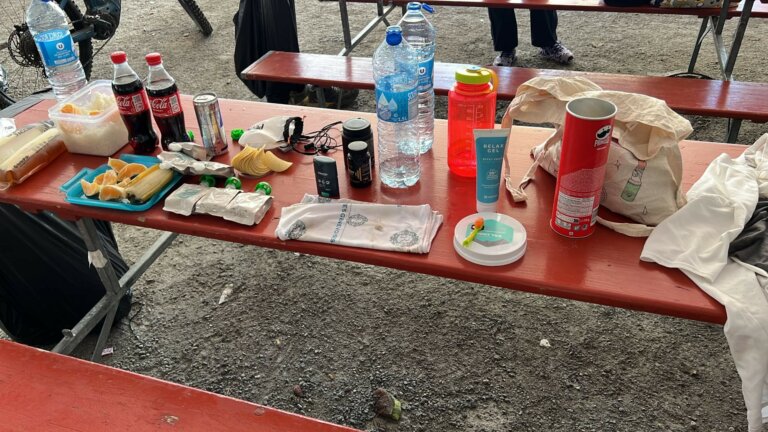
The most common trail-running mistakes are not dramatic. They are small decisions that add up too quickly.
Starting on terrain that is too technical. Pick a trail that lets you relax and learn. You can build toward more technical terrain later.
Running every climb. Hiking is part of the sport. If running a climb spikes your effort, walk before the run turns into a struggle.
Chasing road pace. Trail pace is not road pace. Use effort and control instead.
Doing too much too soon. Trails load your calves, ankles, hips, and quads differently. Add trail volume gradually.
Ignoring downhills. Downhill running can create a lot of muscle damage. Start controlled and build confidence.
Buying gear before building habits. Shoes matter, but consistency matters more. Start with what you need for your route.
Forgetting safety basics. Tell someone where you are going, check the weather, carry water when needed, and know the route before you start.
Skipping strength work. Trail running rewards strong hips, glutes, calves, feet, and core. Even short strength sessions can help you feel more stable.
When to use a beginner trail running plan
You can start trail running without a plan. But once you want to run consistently, build toward a race, or stop guessing week to week, a plan helps.
A good beginner trail running plan should:
- Build gradually
- Include easy days
- Use effort instead of rigid pace targets
- Prepare you for hills
- Leave room for recovery
- Include strength or mobility
- Match your current fitness
- Give you a clear next step
The plan should not make you feel like you have to become an ultrarunner immediately. A good start might be a local trail 5k, a comfortable weekend trail loop, a first trail race, or simply feeling confident off road.
If you eventually want to train for your first ultra, the same principles carry forward: patience, consistency, effort control, hill skills, fueling practice, and a plan that matches the terrain. When you are ready to think beyond beginner trail runs, Vert’s 50k guide is a natural next step.
If you want individual guidance, Vert’s coaches can help you choose the right starting point and build from there.
When are you ready for your first trail race?
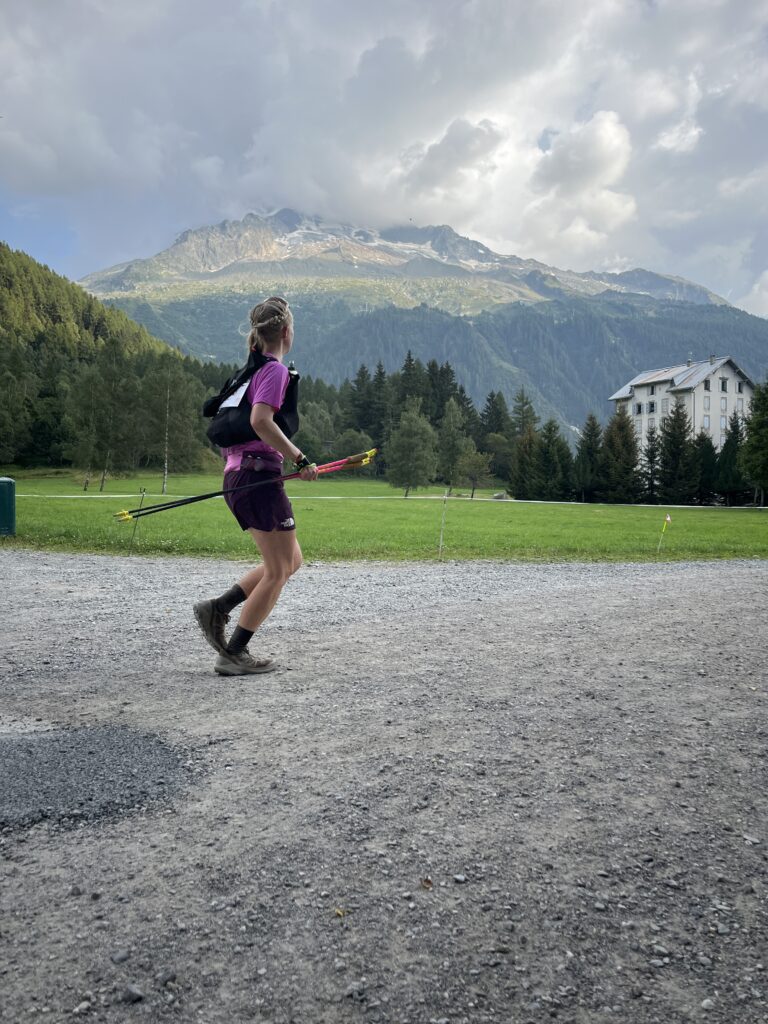
You do not need to race to be a trail runner. But a small local race can give your training a clear direction once you feel comfortable on the trails.
You may be ready for a first trail race when:
- You can run or hike-run for 45 to 75 minutes without feeling wrecked.
- You have practiced running on similar terrain to the race.
- You know how to keep your effort easy on climbs.
- You can handle downhills without feeling out of control.
- You understand the basic gear and water needs for the route.
- You are excited by the challenge, not only pressured by it.
For many runners, a local trail 5k, 10k, or short hill race is a better first step than jumping straight into an ultra. If your long-term goal is a 50k, build gradually. Learn trails first, then extend the distance.
When that longer goal starts to feel realistic, use Vert’s 50k guide to understand what the next training phase looks like.
Final thoughts
Trail running starts smaller than most people think.
You do not need to run up a mountain. You do not need to buy every piece of gear. You do not need to hit your road pace. You do not need to run every climb.
Start with one easy trail. Keep the effort relaxed. Walk when the terrain asks for it. Repeat until the trail feels less unfamiliar. Then build.
That is how you become a trail runner.
Ready for more structure?
FAQ
How should a beginner start trail running?
Start with one short, easy trail run per week on non-technical terrain. Run by effort instead of pace, walk steep hills, and keep the rest of your week familiar while your body adapts.
Do I need trail running shoes to start?
You can start on smooth, dry trails with road shoes. Trail shoes become more useful when the route is muddy, rocky, steep, or long enough that grip and foot protection matter.
How often should beginners trail run?
Most beginners should start with one trail run per week, then build toward two or three trail runs as fitness, strength, and confidence improve.
Why is trail running slower than road running?
Trail running is slower because hills, turns, rocks, roots, and softer surfaces require more balance and strength. Effort is a better guide than pace on trails.
Can I start trail running without mountains?
Yes. Start with parks, dirt paths, rolling trails, stairs, treadmill incline, or short hill repeats. You can build trail-specific strength before training in bigger mountains.
─ Vert Pro · Vert Coaching: Designed and approved by expert coaches.
Trust the training.
Then trust race day.