RPE in trail running stands for Rate of Perceived Exertion. It is a scale from 1 to 10 that measures how hard your body is working during a run, based on how you feel rather than what a device tells you. At Vert.run, we use RPE in every training plan because it is the most honest measure of effort available to a trail runner — more useful, in most cases, than pace or heart rate.
You may also see it called Perceived Effort. They refer to the same thing.
Why Pace Does Not Work on Trails
On a road, pace is a reliable training tool. A 5-minute kilometer at threshold is a 5-minute kilometer at threshold. You can build a plan around it.
On a trail, that relationship breaks down. A steep climb slows your pace dramatically while your effort can be extremely high. A fast descent can feel almost effortless while your legs absorb a significant amount of impact. Weather, altitude, heat, and fatigue all shift what a given pace actually costs you on a given day.
RPE cuts through all of that. A 7 out of 10 effort on a climb is the same training signal as a 7 out of 10 on flat ground, even if the paces look nothing alike. That consistency is why coaches use it.
RPE in Trail Running: The Scale Explained
How to Use RPE in Your Training
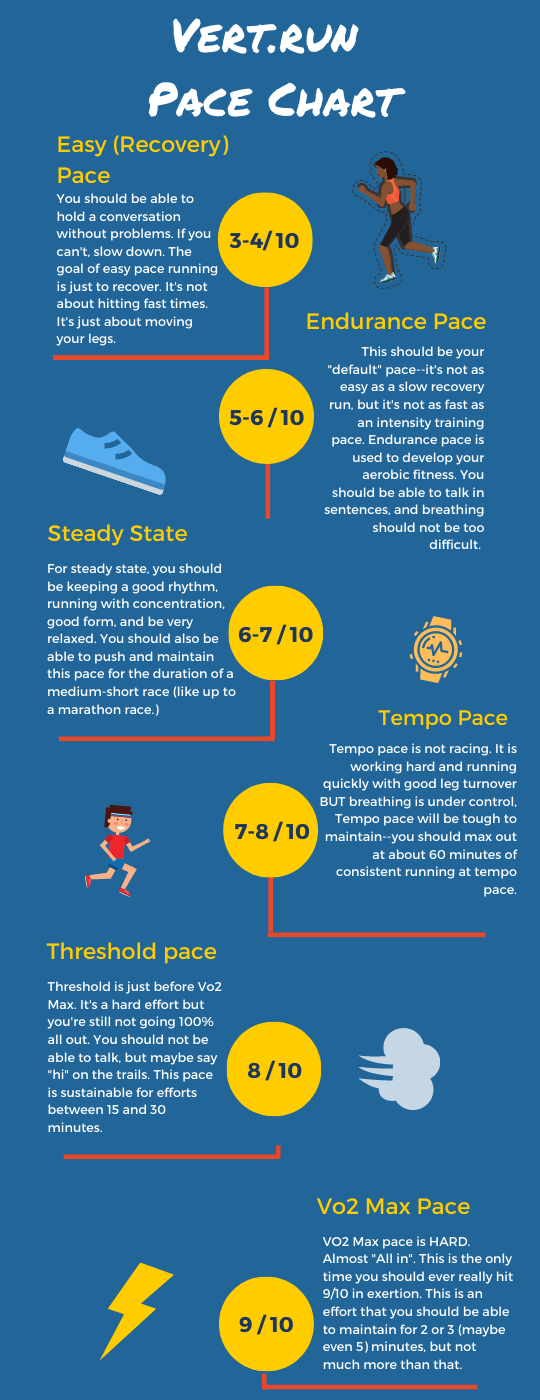
Every session in a Vert.run training plan is assigned an RPE target. Here is what those targets mean in practice.
RPE 4 to 5 — Easy runs and long runs. This should feel genuinely comfortable. If you are breathing hard or cannot hold a full conversation, you are going too fast. Most ultra runners train too hard on their easy days. Keeping easy runs easy is one of the highest-leverage habits you can build.
RPE 6 to 7 — Steady and race-pace efforts. This is the range where you are working but still controlled. For most trail ultramarathons, your target race effort lives somewhere around RPE 6 to 7 on average, with climbs pushing higher and descents dropping lower.
RPE 7 to 8 — Tempo runs and hill intervals. These sessions build specific fitness. They require focus and should be followed by easy recovery days. You will know you hit the right effort if you feel pleasantly tired, not wrecked.
RPE 8 to 9 — Hard intervals. Used sparingly in trail and ultra training. The recovery cost is high, so these sessions need to be deliberate and placed carefully in a training block.
One practical tip: check your RPE at the start of every long run. If you feel like it is a 6 before the first hour is done, you are already going too hard. A long run that starts at RPE 4 and finishes at RPE 6 from natural fatigue is a well-executed long run.
RPE Across Ultra Distances
The longer the race, the lower your average RPE needs to be to finish well. This is one of the most important lessons for runners moving up in distance.
A 50k runner who averages RPE 7 in the first third of a race will often finish. A 100-mile runner who does the same will almost always pay for it somewhere between hours 15 and 25.
Learning to start conservative and build is a skill. It takes practice in training, not just discipline on race day. That is why long runs at RPE 4 to 5 are not just about fitness — they teach you what a sustainable effort actually feels like over time.
For a specific fueling and pacing plan matched to your target race and distance, use the Vert.run Trail Race Time Predictor.
─ Vert Pro · Vert Coaching: Designed and approved by expert coaches.
Trust the training.
Then trust race day.
Frequently Asked Questions
What is RPE in trail running?
RPE stands for Rate of Perceived Exertion. It is a scale from 1 to 10 that measures how hard your body is working based on feel. In trail running, RPE is more useful than pace because terrain and elevation constantly change the effort behind any given speed.
What is a good RPE for easy runs?
Easy runs should feel like an RPE of 4 to 5. You should be able to hold a full conversation without effort. On hilly terrain, your pace will slow on climbs — that is fine as long as your perceived effort stays in the same range.
What RPE should I race a 50k at?
Most runners average an RPE of 6 to 7 across a 50k. Climbs will push effort higher, descents will bring it lower. Starting above RPE 7 in the first third of a race is one of the most common reasons runners struggle in the final hours.
Is RPE the same as Perceived Effort?
Yes. Perceived Effort and Rate of Perceived Exertion refer to the same concept: a subjective measure of how hard your body is working, rated on a scale. Vert.run training plans use both terms to mean the same thing.
Why do trail runners use RPE instead of pace?
Pace changes constantly on trails because of hills, technical terrain, altitude, heat, and fatigue. RPE gives you a consistent read on effort regardless of what the terrain is doing to your speed. It is the same reason coaches have used it for decades across every endurance sport.
What RPE should long runs be?
Long runs in ultra training should sit at RPE 4 to 5. They should feel genuinely easy, especially in the first half. Running long runs too hard accumulates fatigue across the week and limits the quality of harder sessions.