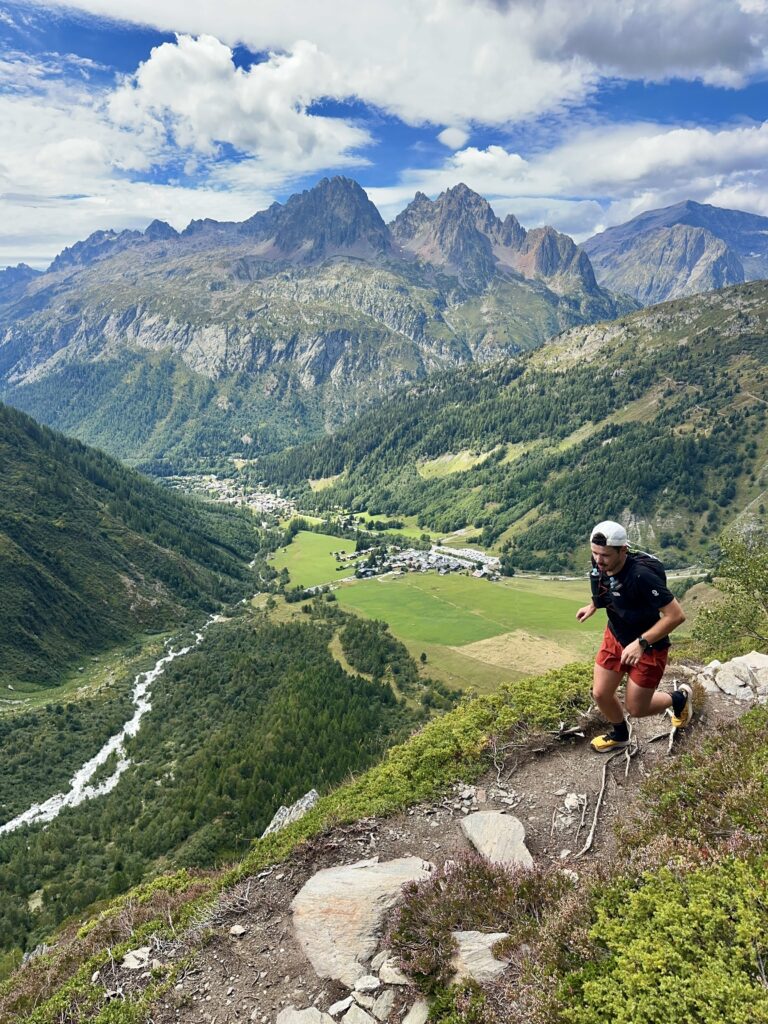
You didn’t miss your pace target. You were running uphill.
How much elevation should you train for an ultra? There is no single number that works for everyone. It depends on the race, the terrain you have nearby, and where you are in your training.
It means you were running uphill.
On roads, pace can be a useful way to judge a session. On trails, the relationship between pace and effort changes constantly. A climb gets steeper. The surface gets loose. A technical descent asks more of your legs even when your heart rate comes down. Heat, altitude and fatigue all change what a kilometre costs.
That is why trail runners need more than a pace target and a total weekly elevation number. They need a way to see whether their training is becoming specific to the race they actually want to run.
At Vert.run, we use the Mountain Index for that.
The Mountain Index helps you compare the elevation density of your next A-goal race with the running you are doing each week. It does not tell you to find exactly 400 metres of climbing in today’s hill repeats. It gives you a useful range to work toward over time, so you can prepare for the mountains without turning every session into a numbers game.
─ Vert Pro · Vert Coaching: Designed and approved by expert coaches.
Have a race?
Tell us and we’ll build your training plan around it.
How Much Elevation Should You Train for an Ultra?
There is no honest universal answer such as “run 2,000 metres of vert every week.” The right amount depends on the race’s distance and climbing, your current training base, the terrain you can access, and where you are in the training block.
Start by looking at your race’s elevation relative to its distance, not its total climbing alone. Then use your key running sessions, especially long runs and real hill days, to move toward that kind of terrain over the course of the build.
You do not need to match the race every day. You do not need to force a fixed amount of climbing into every hill session. The aim is to spend enough time preparing for the demands ahead while still recovering well enough to train consistently.
What is the Mountain Index?
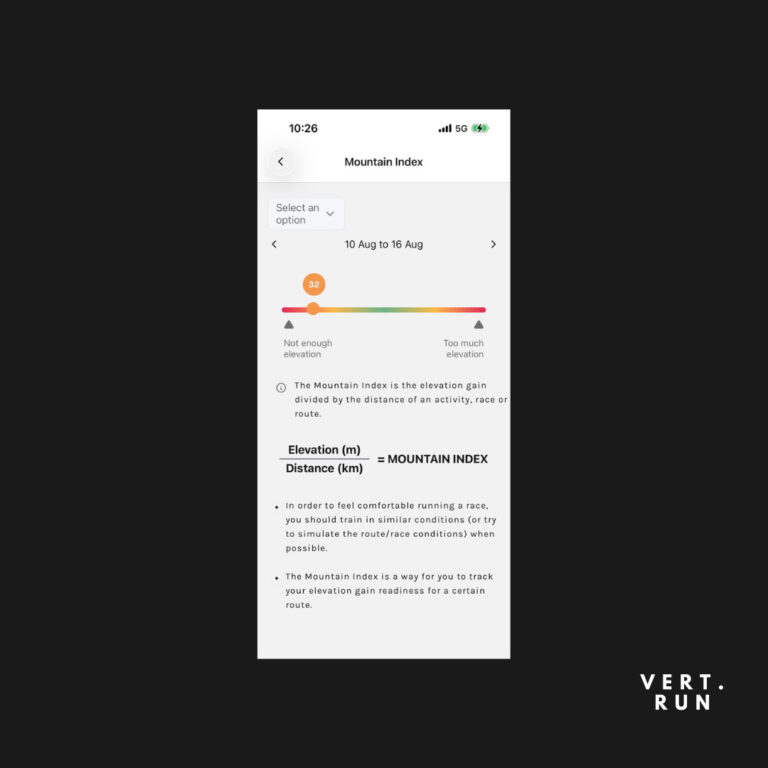
The Mountain Index, or MI, is simple:
Elevation gain ÷ distance = Mountain Index
It is expressed as metres of climbing per kilometre. A 50K with 3,000 metres of ascent has a Mountain Index of 60. A 100K with 4,000 metres of ascent has an MI of 40.
That one number does not tell you everything about a course. It cannot fully capture technical footing, altitude, heat, long descents or how sustained the climbs are. But it gives you a far more useful starting point than distance alone.
A runnable 50K and a mountain 50K may share the same distance, yet ask very different things of your body. The first may reward steady running. The second may require climbing strength, hiking economy, durable quads and the patience to move well for hours at a slower average pace.
The Mountain Index makes that difference visible.
How the Mountain Index works in Vert
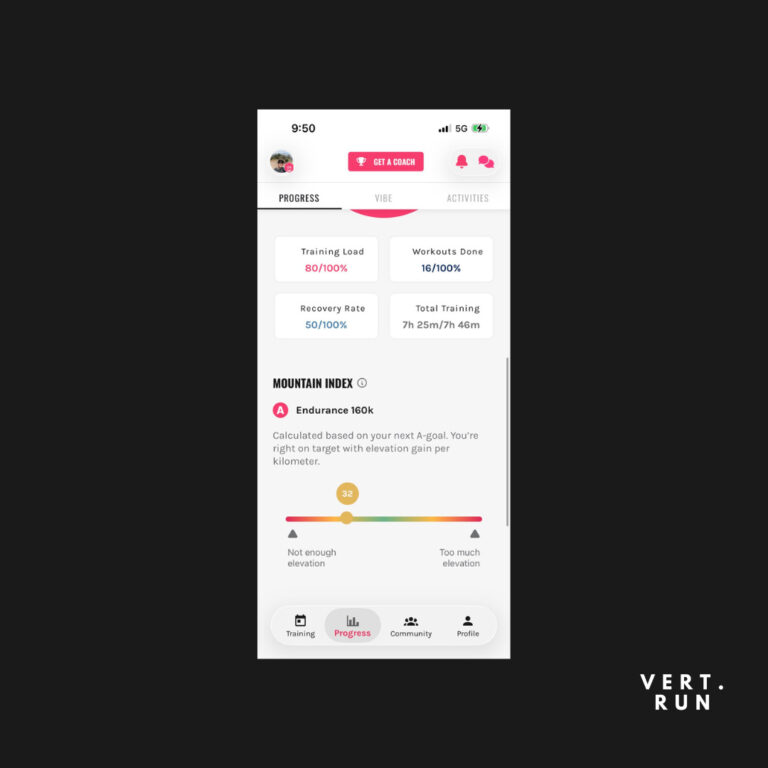
Your next A-goal race in the Vert calendar sets the reference point. The Mountain Index section in Progress then shows a weekly target range, or sweet spot, based on that race.
The point is not to chase the highest possible number. Too little climbing may leave you underprepared for a mountain race. Too much, too soon can take energy away from the rest of your training and make recovery harder. The green range is there to give your week context: enough specificity to move toward race day, without treating elevation as a competition.
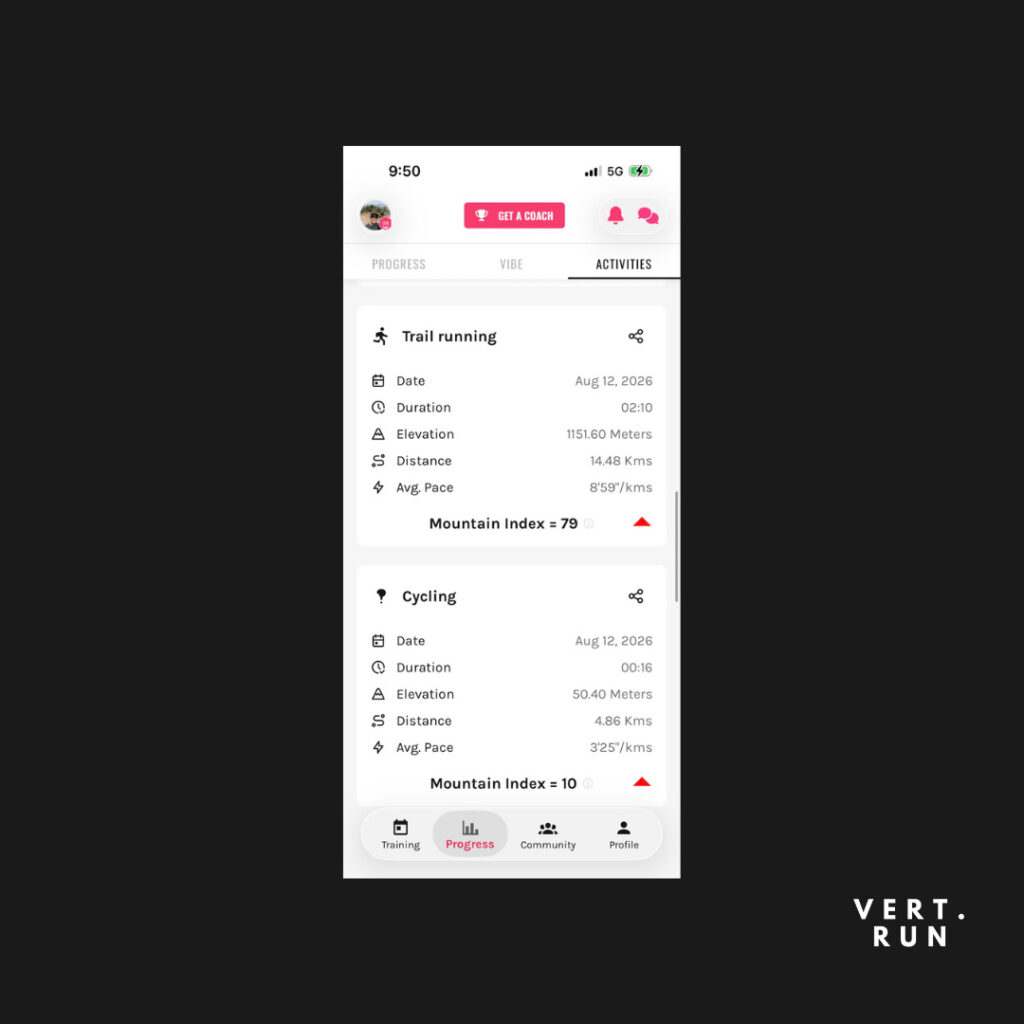
Each activity synced to Vert also carries its own Mountain Index. That lets you understand the character of a session after you have done it. A 14 kilometre trail run with 1,100 metres of climbing, for example, has a very different training stimulus from a 14 kilometre flat run, even if both took the same time.
There is one important distinction:
- Every synced activity can show its own MI.
- The weekly sweet spot currently uses running activities to assess your progress toward the next A-goal.
That keeps the weekly view focused on the running preparation for your race, while still letting you understand the terrain density of every activity you log.
Why Vert does not prescribe a fixed amount of vert for every session
“Run 400 metres of elevation today” can sound precise. Often, it is not.
Four hundred metres on a short, steep trail is different from 400 metres gained gradually on a smooth forest road. A muddy climb asks something different from a dry one. A technical downhill changes the muscular cost of the whole session. Even two runners on the same hill may be using it for completely different work: one may be doing short power intervals, while another is practising controlled hiking for a long ultra.
That is why the Mountain Index works best as a weekly guide, not as an instruction to manufacture an exact amount of elevation in every workout.
You still use effort. You still use the purpose of the session. For hill repeats, that might mean a controlled hard effort uphill with enough recovery to keep your form. For an easy trail run, it might mean staying conversational even when pace drops sharply on the climb. For a long run, it might mean choosing terrain that gradually looks more like your race.
Pace has not failed as a training tool. It simply cannot do every job on a mountain.
A better question than “Did I hit the pace?”
Trail runners often need to translate a pace-first plan themselves. They see a target on their watch, hit a steep climb, slow down naturally, and wonder whether the session still counts.
It does, if the effort and the purpose of the workout were right.
The better questions are:
- Was my effort appropriate for this climb and this session?
- Did this run give me useful exposure to the terrain my race demands?
- Across the week, am I moving toward enough climbing specificity for my A-goal?
- Am I still recovering well enough to train again?
The Mountain Index cannot replace judgement, a coach or your own awareness of fatigue. It gives that judgement a clearer reference. Rather than treating a slower uphill split as a failure, it helps you see the mountain work you are actually accumulating.
For more on using effort when pace becomes unreliable, read our guide to RPE for trail running and ultras.
What if you live in a city without hills?
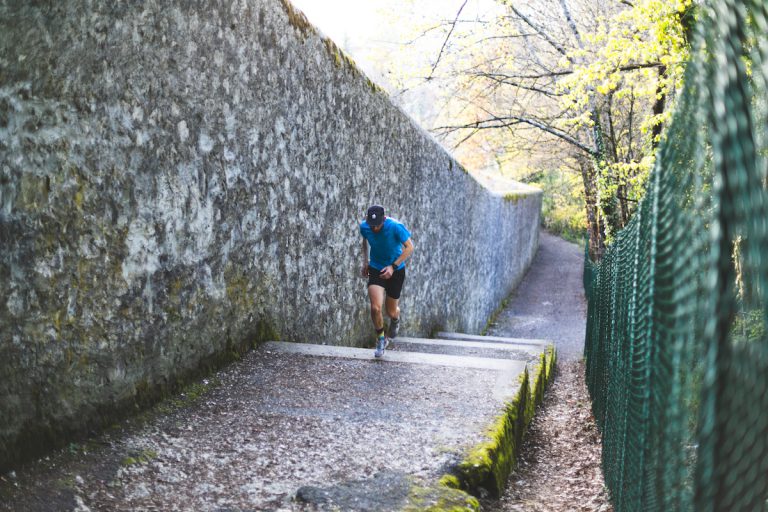
This is where honesty matters. If you live in a flat city, you cannot fully recreate a mountain race in your normal weekly runs. A treadmill incline can build climbing strength. Stairs can improve uphill durability. Strength work can make your legs more resilient. None of those perfectly replaces long climbs, technical footing or sustained descents.
That does not make city training useless. It means you should use the terrain you do get access to deliberately.
If you can reach real hills once or twice a week, make those sessions count. A long run or a focused hill day that moves closer to your race MI can be a powerful piece of preparation. You do not need every run to match it. In fact, trying to do that can leave you too tired to build the aerobic fitness, strength and recovery habits that also matter.
When a mountain trip is possible, use it with intent. Choose a route that is relevant to your goal race, practise hiking and descending, test your nutrition, and learn what the terrain does to your legs and pacing.
Our guides to training for hills without mountains and hill running training can help you build the rest of that preparation.
Using a treadmill as a planning guide
You can estimate the climbing from a steady incline session:
Approximate elevation gain (m) = speed (km/h) × time (hours) × incline as a decimal × 1,000
At 6 km/h and 15% incline, 30 minutes is roughly 450 metres of climbing. The same session covers about 3 kilometres, so its approximate Mountain Index is 150 metres per kilometre.
Treat this as a planning estimate, not a perfect substitute for outdoor terrain. Treadmill calibration and recorded distance can vary, and a steady incline does not prepare your downhill legs or technical footwork.
Important: indoor incline sessions do not yet automatically add their calculated elevation to Vert’s weekly Mountain Index. Use the estimate to make an intentional choice about the session; do not expect the weekly gauge to credit that vertical work automatically.
How to use MI through a training block
You do not need to train like it is race day from the first week. Build into the mountain work as your body gets stronger.
Early weeks: Keep the focus on consistency. Run regularly, build strength, and add some climbing when you can. Use MI to understand where you are, not to force the number up.
As the block builds: Make one or two runs each week more specific. That could be a hill session, a longer trail run, or a day in the mountains when you have access to them.
Closer to the race: Your key long runs should start to look more like the race. This is the time to practise long climbs, descents, hiking, fueling, and moving on tired legs.
During the taper: Do not chase vert. Keep a little feel for the terrain, but arrive with fresh legs.
For a first mountain 50K, that might mean one hill session during the week and a gradually hillier long run at the weekend. For a 100K or 100-miler, you may need more time on long climbs and descents, plus practice hiking and fueling on terrain that resembles the race.
The plan still has to fit your life, your experience, and how well you are recovering.
If you are choosing a goal race or trying to understand how its elevation changes the finish-time equation, use the Vert Race Time Predictor. For race-specific preparation, start with our 50K training guide, 100K training plan or 100-mile training guide.
The goal is not more vert. It is better preparation.
The Mountain Index is not a challenge to make every week bigger than the last. It is a way to connect your training with the race that matters to you.
Some weeks will be lower because work, travel, recovery or access to terrain changes. That is normal. Some sessions will be flat because they should be flat. A good trail plan makes room for all of it.
What matters is that, over time, your key running sessions give you enough exposure to the climbing demands of your next A-goal. You arrive knowing that a slower pace on a steep climb is not a failed session. It is part of the sport you are training for.
Frequently asked questions
What is a good Mountain Index for trail running?
There is no single good MI for every runner or race. A useful MI is one that helps you compare your training terrain with your next A-goal. A runnable trail race may have a much lower MI than a steep mountain ultra, so the relevant target is the race you are preparing for rather than a universal number.
Should I match my race Mountain Index on every run?
No. Most runners should use MI to guide their key hill sessions and long runs, not to make every run match race terrain. Easy running, recovery and strength work still need a place in the week.
How often should I train at a similar MI to my race?
For runners with access to hills, one or two purposeful running sessions each week can be a useful place to build race-specific terrain exposure. A long run is often the best opportunity. The right frequency depends on your experience, recovery and the demands of the race.
Can I use the Mountain Index if I live somewhere flat?
Yes. Use MI as a reference for the hill days, mountain trips and incline sessions you can create. Flat-city training cannot fully reproduce technical terrain or descents, but it can still build meaningful climbing strength and help you plan the specific opportunities you have.
Is the Mountain Index the same as pace or effort?
No. MI describes elevation density: climbing relative to distance. Pace describes speed, while RPE describes how hard the work feels. Trail runners need all three in the right context. MI helps you judge terrain specificity; RPE is often the better guide for effort on variable ground.
─ Vert Pro · Vert Coaching: Designed and approved by expert coaches.
Trust the training.
Then trust race day.