Hill training is not just about getting better at climbing. A good hill block teaches you to manage effort on the way up, move efficiently when running stops making sense, and arrive at the descent with legs that can still do their job.
For trail runners with access to real hills or mountains, the best approach is usually simple: train the terrain you are going to race on, build the load gradually, and keep enough easy running around it that the work actually sticks.
The quick answer
Most runners need one focused hill workout each week plus hill exposure in a long run when terrain allows. Start with short, controlled uphill intervals. Progress toward longer climbs or sustained power hiking as your race gets longer or steeper. Add downhill work slowly, because your lungs may feel ready before your quads are.
If your goal race is flat or runnable, hills are still useful for strength and economy. If your race is steep, hilly, or long, they become a central part of the plan rather than an occasional hard session.
This guide is for runners who can get to real hills. If you train in a flat city, use our guide to training for hills without mountains instead. Treadmills, stairs, and strength work are excellent substitutes, but they solve a different problem.
What hill training should build
The strongest hill runners are not always the ones who can sprint the hardest uphill. They are the ones who can repeat a sensible effort for hours, recover quickly after each climb, and keep control when the trail turns down.
Your hill training should develop four things:
- Uphill economy: relaxed posture, short steps, and an effort you can maintain.
- Power-hiking skill: knowing when hiking is faster overall than forcing a run.
- Downhill durability: quads, calves, and feet that can absorb repeated descents.
- Vertical-load judgment: the ability to add climbing without wrecking the rest of the week.
The mistake is treating every hill like a test. Save the very hard efforts for a specific phase of training. Most climbing work should leave you tired but capable of running well again in the next day or two.
Run or hike uphill?
There is no prize for running every climb. On a steep enough grade, hiking with purpose is often more efficient, especially in a 50K, 100K, or 100-mile race.
Use running when you can hold a smooth stride without pushing your breathing out of control. Shift to power hiking when your stride gets choppy, your effort spikes, or the grade makes running no faster than hiking. The important part is making the choice early, not waiting until you are already cooked.
Practice power hiking as a skill. Keep your torso tall, drive through the glutes, use short steps, and place your hands on your thighs only when the slope is steep enough to make that useful. If you race with poles, practice with them on terrain similar to your event and learn when they help rather than carrying them as decoration.
For a sense of what the course will demand, use the Vert Race Time Predictor. Comparing distance, elevation gain, and terrain before your block begins makes the right hill sessions much easier to choose.
─ Vert Pro · Vert Coaching: Designed and approved by expert coaches.
Have a race?
Tell us and we’ll build your training plan around it.

Six hill workouts that work
Choose one main workout each week. Keep the warm-up and cool-down easy, and start with the low end of each range if you are new to regular hill work.
1. Short uphill intervals
Run 8 to 12 repeats of 45 to 60 seconds uphill at a controlled hard effort. Walk or jog down easily.
This is a good early-block workout because it builds climbing coordination without a huge muscular cost. Look for a slope that lets you run with good form. If you are sprinting, the hill is too steep or the effort is too high.
2. Two- to four-minute climbing repeats
Run 5 to 8 repeats of two to four minutes uphill at roughly RPE 7 out of 10. Recover easily on the way down.
This workout bridges the gap between short power work and sustained climbing. It is useful for trail-marathon and 50K runners, and it can stay in the plan for longer distances as long as the rest of the week supports it.
3. Sustained uphill tempo
After a good warm-up, climb continuously for 20 to 40 minutes at a steady, controlled effort. Hike the steepest parts if that keeps the effort even. Descend easily.
This is a race-specific session for long climbs. The goal is not speed. It is learning how to settle into an effort you could repeat later in the race. For an ultra, this is often more useful than trying to force a fast interval pace on every hill.
4. Uphill hiking intervals
On a steep climb, alternate 5 to 10 minutes of strong power hiking with easy walking back down or on a flatter recovery. Start with three repeats and build to five.
Use this when your race includes sustained grades that most runners will hike. It is especially useful for 100K and 100-mile preparation. Keep the effort purposeful, but do not turn it into a weighted-pack sufferfest unless that is genuinely relevant to your event and already prescribed in your plan.
5. Rolling-trail fartlek
Run 45 to 75 minutes on rolling terrain. Press the climbs for one to three minutes at a steady strong effort, then let the flats and descents become genuinely easy.
This teaches you to change gears without losing control. It works well for runnable trail races where no single climb is decisive but the repeated up-and-down movement adds up.
6. Long run with vertical purpose
Make one long run each two to three weeks intentionally hilly. Do not simply chase the biggest elevation number. Pick a route that lets you rehearse your planned run-hike decisions, fueling, and descent pacing.
For longer events, a hilly long run is often the most important hill session you do. Keep it easy enough to finish with reasonable form. If it takes a full week to recover, it was too big for the current phase of your training.

How to run uphill with better form
Good uphill running usually looks quieter than runners expect. Shorten your stride, keep your cadence moving, and lean slightly from the ankles rather than folding at the waist. Let your arms help set rhythm, but keep the shoulders relaxed.
Do not stare at the top of the climb. Pick a manageable segment ahead, settle into a repeatable effort, and reassess when the grade changes. On long climbs, your breathing and leg strain matter more than the pace on your watch.
If you find yourself reaching forward with the feet or twisting through the hips, slow down. A sustainable climb is rarely dramatic. It is a series of patient decisions that keep you moving.
Downhill training: build durable legs, not reckless speed
Descending is where many trail races get expensive. You can climb within your aerobic limit and still lose the ability to run because your quads have absorbed more braking force than they were prepared for.
Start downhill work with controlled descents on moderate terrain. Keep steps quick, avoid heavy heel braking, and look several metres ahead so you can choose your line early. As confidence improves, use longer descents at an easy-to-moderate effort before adding speed.
Strength work helps here. One or two short sessions per week can include:
- Step-downs, slow and controlled
- Split squats or reverse lunges
- Single-leg calf raises
- Step-ups
- Romanian deadlifts or single-leg deadlifts
- Side planks and simple trunk work
Two or three sets is enough to begin. Eccentric work creates soreness quickly, so introduce it when you have room to recover. The goal is to finish your hill sessions with legs that are adapting, not legs that are too damaged to train.
For a complementary plan, see strength training for trail runners. The work should support your trail running, not compete with it.
A four-week hill-training progression
Progress duration and total climbing before intensity. That gives tendons, calves, and quads time to adapt alongside your aerobic fitness.
Week | Main hill session | Long-run terrain | Strength focus |
1 | 6 x 2 minutes uphill, controlled | Normal route with a few climbs | Step-ups and calf raises |
2 | 8 x 2 minutes uphill | Add 15 to 25% more climbing | Step-downs and split squats |
3 | 3 x 8 minutes sustained uphill or hiking | Hilly long run, easy effort | Maintain, do not chase soreness |
4 | 5 x 3 minutes uphill, lighter overall | Return to normal long-run load | Light mobility and calf work |
Repeat the pattern with slightly longer intervals or a more race-specific hill only when recovery is good. A lighter fourth week is not lost fitness. It is when you absorb the work.
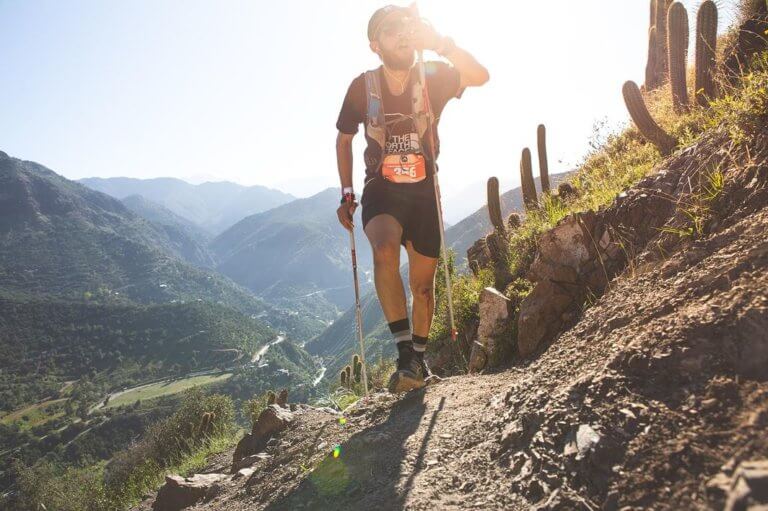
How to fit hill training into a normal week
Treat the hill session as your one main quality workout in most weeks. Put it after an easy or rest day, then leave at least one genuinely easy day before a long run. If the long run is already very hilly, reduce the interval session rather than stacking two big vertical stresses.
A simple week might look like this:
- Monday: Rest or easy walk.
- Tuesday: Easy run, plus short strength work if you are recovering well.
- Wednesday: Main hill workout; warm up and cool down easily.
- Thursday: Easy recovery run or rest.
- Friday: Easy run with a few relaxed strides, or rest before a demanding long run.
- Saturday: Long run; use rolling or hilly terrain when it fits your race.
- Sunday: Easy run, hike, or rest depending on how well you absorbed the week.
Keep the pattern flexible. The hill workout and hilly long run should make the week more specific, not turn every day into a test.
Match the work to your race
For a trail marathon or 50K, focus on efficient running climbs, short-to-medium intervals, and descending with control. You need strength, but you also need enough freshness to run the runnable sections well.
For a 100K, extend the climbing efforts and include more sustained power hiking. Back-to-back days can be useful when they fit the wider plan, especially if the second day teaches you to move well on tired legs.
For a 100-miler, build patience. Long climbs, hiking rhythm, fueling on the move, and recovery after descents matter more than winning a short uphill interval. Use the terrain to rehearse the decisions you will need late in the race.
How to use the Mountain Index for hill training
The Mountain Index (MI), available in the Vert.run app, is your race’s total elevation gain divided by its distance. It gives you the average vertical meters per kilometer—or feet per mile—that the course demands.
For example, a 50K with 3,000 meters (10,000 feet) of climbing has an MI of 60 meters per kilometer. That tells you more about the race than distance alone: it is a very different day from a runnable 50K with a low MI.
If you can train on real terrain, use the MI to choose routes for your key long runs and climbing sessions. As race day gets closer, let one or two long runs move toward a similar amount of climbing per kilometer as your event. You do not need to match it on every run, and you do not need to force it when the terrain or your recovery says otherwise.
Use the MI to make your most specific days count, not to chase a weekly elevation number. Vert uses it to help shape plans around the actual course rather than treating every hill workout as interchangeable.

How much elevation should you add?
There is no universal weekly vertical target. Your race profile, running history, terrain access, and current load all matter.
Instead of jumping straight to the vertical gain of your event, build one variable at a time. Add either more time climbing, more total ascent, a steeper route, or harder effort. Do not add all four in the same week.
Watch the simple signals: lingering quad soreness, poor form on easy runs, calf tightness that does not settle, or a long run that suddenly feels like a race. Those are signs to hold the load rather than prove toughness by adding more.
Common mistakes
Doing every hill hard. Most hill work should be controlled. Save all-out efforts for a specific purpose.
Ignoring the descent. A long race is not won at the top of the climb. Include progressive downhill exposure and strength work.
Only training short hills for a long mountain race. Short repeats build power, but they do not replace sustained hiking or long climbing rhythm.
Chasing elevation numbers. A huge vertical week that ruins the next ten days is rarely productive.
Using the no-hills guide when you have terrain. Stairs and treadmills are useful tools, but real hills teach pacing, footing, and descending in a way that indoor work cannot.
When you need a more individual plan
The best hill session depends on the race, your available terrain, and what the rest of your training is already asking from you. If you are preparing for a steep objective and want a plan that fits your week, start a free VertPro trial or find a trail running coach. A good plan should make the hills specific, not just make every week harder.

Frequently asked questions
How often should trail runners do hill training?
For most runners, one focused hill session per week is enough. Add another exposure through a hilly long run only when you are recovering well and it suits your race.
Should I run or hike uphill in trail races?
Run when you can keep a controlled, sustainable effort. Hike when the grade makes running inefficient or would cost too much for later in the race. Practice both before race day.
How do I train for downhill running?
Use gradual exposure to real descents, then support it with step-downs, split squats, calf work, and smart long-run terrain. Increase downhill volume slowly.
What is a good hill workout for trail runners?
Six to eight repeats of two minutes uphill at a controlled hard effort is a useful starting point. Recover easily downhill and build from there.
What if I do not have access to hills?
Use the flat-city hill-training guide for treadmill, stairs, and strength-based substitutes.
What is a good hill workout for trail runners?
Six to eight repeats of two minutes uphill at a controlled hard effort is a useful starting point. Recover easily downhill and build from there.
─ Vert Pro · Vert Coaching: Designed and approved by expert coaches.
Trust the training.
Then trust race day.