A good 50-mile ultramarathon training plan usually gives you 16 weeks to build from a consistent 50K-ready base. The step from 50K to 50 miles is not just another long run: you need more time on feet, steadier fueling, more durable legs, and enough recovery to repeat the work. Build gradually, make your long runs specific to the course, and practice the systems you will use on race day.
Is a 50-mile race the right next step after a 50K?
For many runners, yes. A 50-mile race is a natural next ultra when you can already train consistently, finish long trail days without a long recovery spiral, and have time to add race-specific work without forcing the calendar. It is not an automatic next step. If your 50K required a big training rescue, left you injured, or made you dread the long runs, another block building consistency is the smarter move.
The practical difference is time on feet. Thirty-one miles can be a long but contained day; 50 miles asks you to keep moving, eating, pacing and solving small problems long after the early excitement has gone. Your plan should train those skills, not simply chase a bigger weekly mileage number.
What base should you have before a 50-mile training block?
The specific 16-week block works best when it builds on training you can already repeat. Before week one, aim to be running or run-hiking consistently for several months, with an easy long effort that does not leave you unable to train for days. Many runners moving up from a 50K arrive with a dependable routine of four to six days of movement per week, a long run of roughly two to three hours, and some experience eating and drinking while moving.
The exact mileage is less important than the pattern. A runner who has trained steadily at a modest level for twelve weeks is usually better prepared than someone who has a single huge weekend in their legs. If you are returning from injury, only recently started running, or have no experience with long trail days, give yourself a longer base-building period before the specific block.
A practical readiness check is simple:
- You can complete your usual long run at an easy effort and feel able to resume easy training within the next few days.
- Easy running is genuinely easy; you are not constantly trying to turn ordinary days into workouts.
- You can make room for sleep, food and recovery as training becomes more specific.
- You have at least a basic understanding of how the race’s terrain, elevation, weather and cut-offs change the day.
If one of these is missing, do not panic or force the calendar. Spend four to eight weeks building consistency, hiking skill and strength first. The race date does not change because you try to compress the preparation.
─ Vert Pro · Vert Coaching: Designed and approved by expert coaches.
Have a race?
Tell us and we’ll build your training plan around it.
Choose the race before you finalise the plan
Two 50-mile races can ask for very different training. A runnable course with modest climbing may reward steady aerobic work and efficient pacing. A steep, technical course can turn the same distance into a much longer day, where uphill hiking, downhill durability and carrying the right kit matter more than a neat pace target.
Before you build key weekends, look at the course profile, surface, total ascent and descent, likely weather, aid-station spacing, cut-offs and expected time on feet. Then ask what you can realistically practise. You do not need a perfect replica of the race, but the closer your key sessions get to the demands that will decide your day, the more useful they become.
For a first 50-miler, a course with straightforward logistics and terrain you can train for is often a better choice than the most dramatic event on the calendar. A familiar race can still be a big goal; it simply lets your training solve the right problems instead of adding unnecessary travel and technical uncertainty.
What a 50-mile ultramarathon demands
Aerobic endurance you can repeat
Most of your training should still be easy running and hiking. The goal is not to win isolated workouts. It is to arrive at the next week able to train again. Use a pace and effort that leaves room for strength work, a long run and recovery.
Long efforts that match the event
The long run matters, but it does not need to become a race simulation every weekend. Use it to practise terrain, hiking, descents, kit and fueling. For a hilly race, time climbing and descending is often more useful than a flat mileage target. For a runnable course, include controlled steady running when you are already a little tired.
Fueling and hydration under fatigue
Start practising race-day intake early. Test what you can eat while climbing, when it is hot, and when familiar food becomes less appealing. The right plan gives you repeated chances to rehearse rather than one heroic nutrition experiment on race week. Use Vert’s Nutrition Planner to build a race-day starting point, then adapt it to your tolerance and course conditions.
Durable climbing and descending
Fifty miles magnifies small weaknesses. Include uphill hiking or running that resembles the race, controlled downhill exposure, and simple strength work for calves, quads, hips and trunk. If you live somewhere flat, use hills when available, stairs, incline treadmill work and strength; the aim is practical preparation, not a perfect mountain replica.
Weekly volume: train in time as well as distance
Mileage alone can hide the real load of trail running. A three-hour mountain outing and a three-hour flat road run can cover very different distances, but both ask your body to keep moving for the same length of time. Use distance as one useful record, but plan your key work around time on feet, elevation and recovery.
There is no universal weekly target. Your previous training, race profile and how long you expect to be out there matter more than a number copied from another runner. Build from the routine you can repeat, then let the foundation, build and specific phases add one main stressor at a time.
When a week goes badly—work, family, heat, travel or a minor niggle—protect the next useful session instead of trying to make up everything you missed. Consistency over months is the training stimulus. Squeezing in a missed long run on tired legs is usually just extra fatigue.
Use this as a check on whether the work is building toward race day:
Block | Typical emphasis | What to watch |
Foundation | Repeatable easy running, hiking and strength | Finish most weeks feeling capable of another steady week |
Build | Add time on feet, climbing or sustained running | Increase only one main stressor at a time |
Specific | Rehearse terrain, fueling and late-race demands | Useful key weekends without a recovery hole |
Taper | Reduce fatigue while retaining normal movement | Arrive fresh, not desperate for last-minute fitness |
Control intensity with RPE
For trail ultras, pace and heart rate are useful information but imperfect masters. Steep terrain, heat, altitude, technical footing and fatigue all change the number on a watch. Rate of perceived exertion (RPE) gives you a portable way to control the work.
- RPE 3–4: easy and conversational. This is where most easy running, recovery work and many long-run hours belong.
- RPE 5–6: steady and controlled. You can speak in short sentences, but the effort has purpose. This can be useful on runnable terrain or sustained climbs.
- RPE 7: comfortably hard. Use it sparingly for a structured uphill, tempo or progression session when you are recovering well.
- RPE 8–10: hard to maximal. These efforts have a place in some runners’ training, but they are not the foundation of a 50-mile plan.
The common mistake is letting easy days drift into moderately hard days. That feels productive in the moment but makes it harder to absorb the long run, strength work and quality session that actually build a durable block. On race day, RPE also helps you recognise when the opening pace is too expensive, even if the watch looks flattering.

Your 16-week 50-mile ultramarathon training plan
This is a framework, not a promise that every runner should follow the same weeks. The best volume depends on your current base, injury history, course, terrain and available time. If you are rebuilding or new to ultras, take longer rather than cramming the work into 16 weeks.
Phase | Weeks | Main job | Long-run emphasis |
Foundation | 1–4 | Build repeatable easy volume, hiking skill and strength | One steady long run; practise easy fueling |
Build | 5–8 | Add terrain-specific endurance and a quality session | Longer trails, climbing/descending and occasional back-to-back days |
Specific | 9–12 | Rehearse the course demands and race systems | Longest time-on-feet work, race kit and fueling rehearsals |
Taper | 13–16 | Absorb fitness and arrive fresh | Reduce volume while keeping familiar movement and short intensity |
Every fourth week does not have to look identical, but a lighter week is often useful after two or three building weeks. Recovery is part of the progression: if you cannot absorb the training, the calendar is moving faster than your fitness.
How the phases should feel
Weeks 1–4: establish the floor. Keep the long run controlled, rebuild simple strength habits and practise eating on easy long days. This is the time to fix footwear, pack and hydration issues before tiredness makes every choice feel harder.
Weeks 5–8: add the work that matches your event. For a hilly race, this may mean longer climbs, purposeful hiking and more descending. For a runnable event, it may mean longer continuous steady running. Add back-to-back work only when it has a clear reason and you can still recover.
Weeks 9–12: rehearse, do not race. This is where one or two key weekends can teach you the most: your expected time on feet, fuel timing, carrying setup, layers, poles if you will use them, and how you move when the legs are no longer fresh. The goal is confidence and information, not a training-day finish-line story.
Weeks 13–16: arrive with the work absorbed. Reduce volume, keep short familiar touches of intensity, and protect sleep. You should feel a growing desire to run by race week—not the panic that comes from trying to cram fitness into the final days.
A useful weekly structure
A 50-mile week should have a purpose for each session. Here is a flexible example for a runner training five to six days per week:
Day | Example focus |
Monday | Rest or easy recovery plus mobility |
Tuesday | Easy run with short hills, strides or controlled uphill work |
Wednesday | Easy aerobic run; add strength later in the day if it fits |
Thursday | Race-specific session: sustained climbs, steady trail running, or a moderate progression |
Friday | Rest or short easy run |
Saturday | Long trail run or hike-run with fueling practice |
Sunday | Easy run, hike, or a second shorter long effort when it has a clear purpose |
Back-to-back long days are a tool, not a requirement. Use them when they help you learn to move on tired legs, practise a multi-day training weekend, or prepare for a course with a lot of accumulated elevation. Keep the second day controlled. Two hard days that compromise the rest of the week are usually less useful than one good long run followed by consistent training.
Match your training to the course
The goal is not to reproduce every mile of the course. It is to identify its main demands and make sure training contains an honest version of them.
For a mountainous or technical 50-miler
Prioritise uphill hiking efficiency, controlled descents, foot strength, carrying the gear you need and moving well on uneven ground. A long session with meaningful ascent and descent may be more valuable than trying to hit a particular mileage number on flat paths. If you will use poles, learn their rhythm well before race day.
For a runnable 50-miler
Keep the long run easy enough to recover from, but include sustained steady segments and practise holding back early. The challenge may be less about technical skill and more about not spending too much energy before the final third.
For heat, altitude or remote logistics
Train the controllable parts. Learn your fluid and sodium plan in warm conditions where possible, allow extra time for travel, and make your kit decisions early. Do not pretend that a single hot run or a late arrival solves acclimation; build a conservative race plan around the conditions you actually have.
How long should your longest run be?
There is no magic 50-mile training run. Most runners do better arriving healthy after several well-executed long efforts than after one giant day that takes weeks to recover from. Build your longest work around time on feet, terrain, elevation and recovery capacity. A hilly five- to seven-hour effort may be more specific than a faster flat run of the same distance.
Finish long runs knowing you could train again in the following days. That is especially important if the race will include climbing, technical descents, heat, night running or a long travel day. Use the Race Time Predictor to pressure-test your expected time on course, then prepare for the systems that length of day requires.
Strength training for a 50-mile ultramarathon
Strength work does not need to become a second sport. Two concise sessions a week in the earlier and middle parts of the block can support the work you are already doing. Prioritise movements that make you more resilient for the terrain: single-leg control, calves, quads, hips, trunk and the ability to absorb downhill load. Keep it simple enough that it helps your running rather than leaving you too sore to do it.
Recovery is equally practical. Eat enough around demanding sessions, sleep whenever you can, and notice small problems while they are still small. A persistent change in gait, pain that worsens as you run, or fatigue that does not ease with an easier week is a reason to adjust—not a toughness test. The most successful 50-mile blocks are rarely flawless; they are the ones where the runner adapts early enough to keep training.
─ Vert Pro · Vert Coaching: Designed and approved by expert coaches.
Have a race date?
Tell us and we’ll build your training plan around it.
50K versus 50 miles: what changes?
A 50-mile plan keeps the 50K fundamentals—easy volume, long runs, terrain skill, fueling, recovery—but moves the emphasis toward durability and execution.
50K focus | Additional 50-mile focus |
Finish strong over a long trail day | Keep making good decisions for several more hours |
Build confidence with long runs | Add time-on-feet and selected back-to-back practice |
Learn to fuel | Rehearse fueling even when appetite, weather or fatigue changes |
Use course-specific hills | Prepare quads and feet for accumulating downhill fatigue |
Pace the early miles sensibly | Start conservatively enough to preserve the final third |
If you are not yet comfortable with the 50K basics, start with Vert’s 50K training guide. If you are already looking beyond 50 miles, the 100K guide helps explain the next set of demands.
Nutrition for a 50-mile ultramarathon
Nutrition is a training skill, not a race-week checklist. Use long runs and key weekends to practise a repeatable food-and-fluid routine, then learn how it changes when you are climbing, hot, cold or tired. Start early enough that you are not trying to recover from a deficit late in the day, and make one change at a time so you know what actually helped.
Your plan should account for aid-station spacing, expected weather, time on feet and what you can comfortably carry. Race-day numbers are individual, so begin with a sensible framework and test it rather than copying another runner’s plan. Use the Nutrition Planner to build a starting point, then adapt it in training.
A simple 50-mile race-day approach
Begin more patiently than your adrenaline wants to. The first hour should feel sustainable rather than impressive. Eat and drink before you are desperate for either, deal with small foot or clothing problems early, and keep checking whether your effort still matches the duration ahead.
Break the day into useful decisions: get to the next aid station steadily, refill what you need, then return to the same controlled effort. When fatigue arrives, avoid treating it as proof the day is going wrong—it is part of the distance. The skill is continuing to fuel, hike or run efficiently, and making the next sensible choice rather than chasing back every minute at once.

Night running: prepare if darkness is part of your race
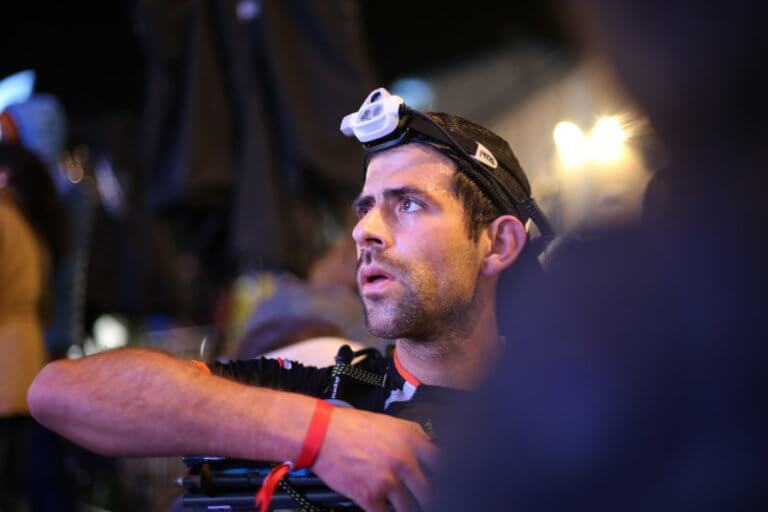
Not every 50-mile ultramarathon requires a headlamp, but do not leave it to chance. Check the start time, cut-offs, your realistic finish-time range and the course terrain. A long or technical day, an early or late start, weather delays, or simply moving more slowly than planned can mean finishing in the dark.
If darkness is possible, practise at least one or two runs with the same headlamp, battery setup and layers you will use on race day. Learn how the beam changes your footing, how your pace feels on descents, and where you will carry a spare battery or backup light. The goal is not to become a night-running specialist—it is to make the transition to darkness feel routine rather than stressful when you are already tired.
Gear and race-day systems
Your race plan becomes real in training. On long days, practise the foods, fluids, carrying setup, socks, shoes and layers you expect to use. Keep notes on what worked when you were cold, hot, climbing, running downhill or tired. Make one change at a time so you can learn from it.
Do not save the following for race week:
- eating and drinking on a schedule you can tolerate
- carrying, refilling and opening food while moving
- foot care and anti-chafe strategy
- hiking steep terrain efficiently
- descending with control rather than braking every step
- pacing the first hour below the effort that feels tempting
Taper for a 50-mile ultramarathon
The taper is not a final fitness block. Reduce volume gradually, keep a little familiar movement and short intensity, and protect sleep and nutrition. You should feel ready to run, not prove fitness in the final ten days. New shoes, new foods and a big catch-up workout all add risk without adding meaningful fitness.
When to use a coach or adaptive plan
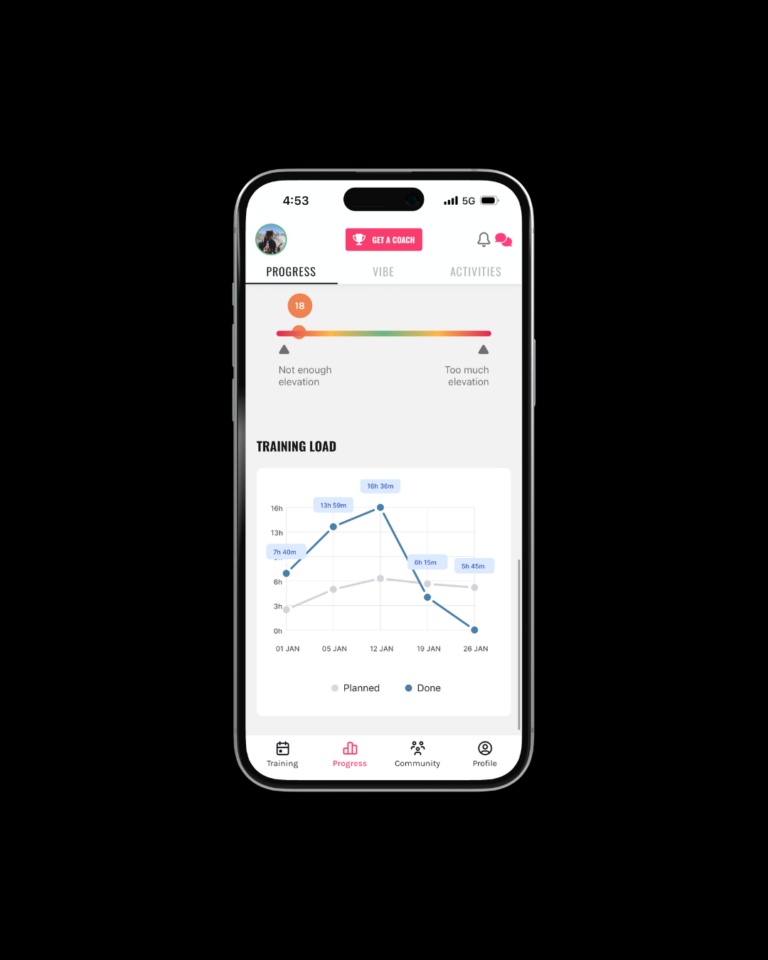
A generic plan is useful as a framework. It gets less useful when your training time, terrain, injury history, course profile or recovery are not average. Vert builds adaptive trail and ultra plans around your race, schedule and available terrain; it can also help you adjust when a work week or a missed session changes the plan. Build your 50-mile plan in Vert, or find a trail running coach for direct guidance.
Final take
A strong 50-mile training plan is not built around one heroic long run. It is built by stacking weeks you can absorb: easy aerobic work, terrain that matches the race, enough climbing and descending to make your legs durable, and repeated chances to practise fueling before fatigue makes every decision harder.
Use the 16-week framework as a guide, not a test of whether you can follow a perfect calendar. Adjust when life, weather or recovery calls for it, keep the easy days easy, and arrive at the start line with a plan you have rehearsed—not just fitness you hope will hold up.
If you have a race date, course profile and weekly schedule, build your 50-mile plan in Vert.
Frequently asked questions
How many weeks do I need to train for a 50-mile ultramarathon?
Sixteen weeks works for many runners who already have a dependable 50K-ready base. Start earlier if you are new to trail running, returning from injury, building climbing strength or moving up from shorter distances.
Can I train for 50 miles without mountains nearby?
Yes. Use the terrain you have, add hiking and incline work where practical, and strengthen for climbing and descending. Your plan should still account for the race’s elevation and technical demands.
Do I need back-to-back long runs for a 50-mile race?
Not always. They can be useful for time on feet and tired-leg practice, but they should fit your recovery and course needs. One strong long run plus consistent weeks is often better than forcing back-to-backs.
Should I run 50 miles in training before race day?
Usually no. Long training days should build confidence and specific skills without creating a recovery cost that disrupts the rest of the block.
How many days a week should I run when training for 50 miles?
Many runners use four to six days of running or run-hiking, with at least one real recovery opportunity. The right number depends on the routine you can repeat. Adding a day is only useful when it improves consistent easy volume rather than turning every week into a struggle to recover.
How much climbing should I do for a mountainous 50-miler?
Use the race profile to shape your key sessions, then build climbing and descending progressively. You do not need to match race elevation every week, but the closer you get to race day, the more useful it is for selected long outings to resemble the course’s uphill, downhill and time-on-feet demands.
What pace should I aim for in a 50-mile race?
Start with an effort plan rather than a rigid pace. Terrain, weather and fatigue can make pace misleading. Use a course-specific time estimate, begin conservatively, and adjust around the effort you can sustain while still eating, drinking and moving efficiently late in the day.
How long should I taper for a 50-mile race?
Many runners benefit from roughly two to three weeks of reduced volume after their last major specific weekend. Keep moving, retain a little familiar intensity, and avoid trying to earn extra fitness in the final days.
What should I eat during a 50-mile ultramarathon?
Practise a regular intake of food and fluids that your stomach tolerates on long training days, then adapt it to the race’s weather and aid stations. The exact products and amounts are individual; the important part is learning what you can consistently take in when you are climbing, warm or tired.
─ Vert Pro · Vert Coaching: Designed and approved by expert coaches.
Trust the training.
Then trust race day.