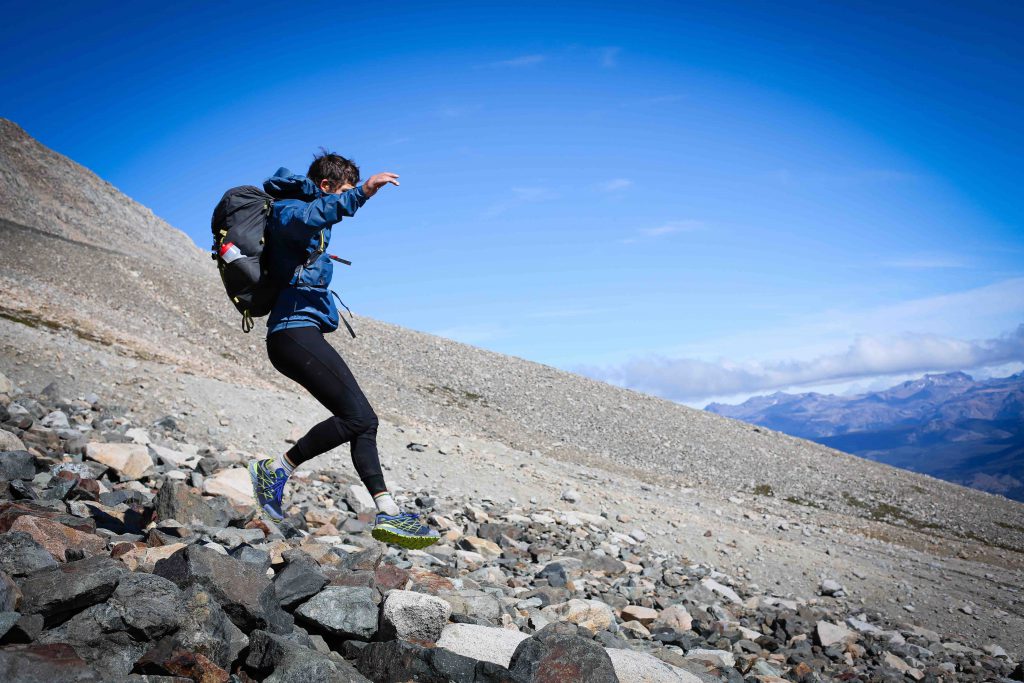
Why downhills hurt more than climbs
When you run uphill, your muscles shorten as they work. Downhill it’s the opposite: your quads work while they lengthen, braking your body weight on every step.
That braking (eccentric) work causes more muscle damage than climbing. It’s why you feel a descent so much the next day, and why your legs can be gone late in a race even when your fitness is fine. The steeper and faster the descent, the more it costs, and in a long race you might be coming down for hours.
The good news: your legs adapt fast
Your legs adapt quickly. The first hard downhill session does most of the damage, and after it your muscles protect themselves for the next ones.
So the goal is simple: that first hard session should happen in training, weeks before your race, never on race day. Then keep the protection by coming back to downhills regularly. A little, often.
Train it in the gym
Strength work is the easiest place to start, because you control every rep.
- Slow step-downs: stand on a box on one leg and lower the other heel to the floor in three seconds. Hips level, knee in line with your toes. Touch lightly and come back up. 3 sets of 6 on each leg.
- Split squats: long stance, lower slowly until your back knee nearly touches the floor, weight on the front leg. 3 sets of 6 to 8.
- Slow lunges: step forward and take three seconds to lower.
This is the same lowering your quads do on a descent, just controlled. Twice a week while you’re building, once a week closer to your race. Zeljko walks through the strength side in this video, and our strength training guide for trail runners has a full routine.
Train it on the trail
Then practise on real descents.
- Start with short, runnable descents: a few minutes of downhill at the end of an easy run.
- Over the weeks, make them longer and steeper.
- Put descents in your long runs too. Every metre you climb in your race, you also come down.
No hills where you live? Ramps, bridges, parking garages and any slope work. Run them back down in control. Our guide to training for the hills without mountains has more ideas, including treadmill options.
Downhill running technique
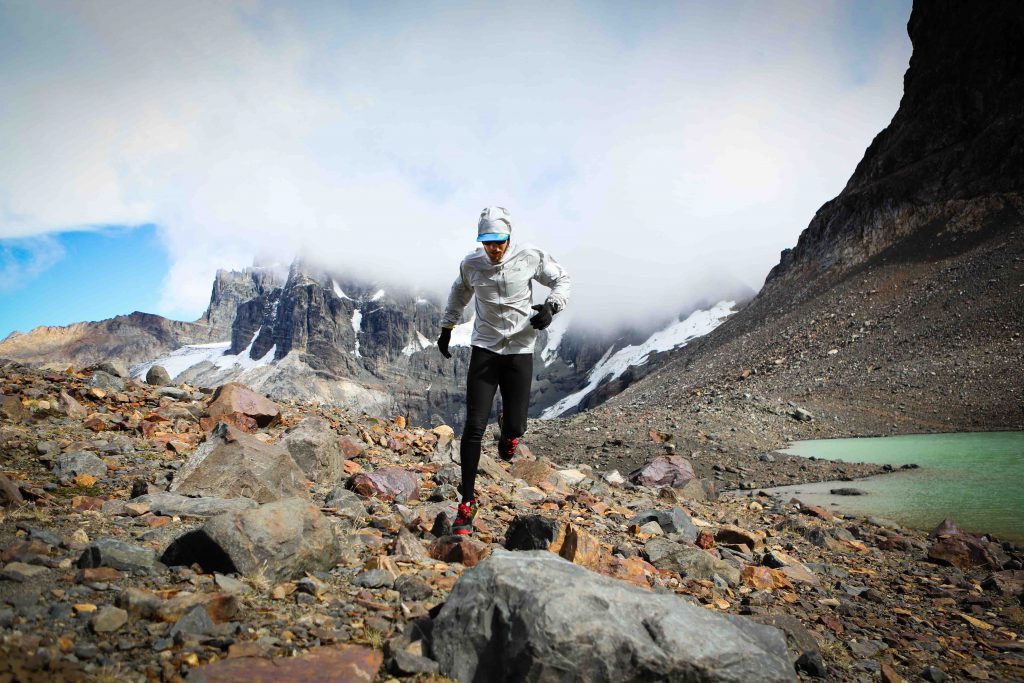
- Short, quick steps. Long steps mean big braking.
- Eyes three or four metres ahead, not on your feet.
- Lean slightly forward with the slope. Leaning back is what makes you brake hard.
- Arms a bit wider than on the flat, for balance.
On rocky ground, pick your line early and land lightly: think quick, light feet that barely touch. On switchbacks, slow down before the turn and speed up after it; braking in the turn costs more. And when it gets very steep, there’s no shame in walking down with small steps, or with poles if you have them. On the steepest descents, many good runners walk.
A drill to learn quick feet
Technique is a skill, so practise it like one. Find a gentle grassy slope you could run down without thinking. Run down it for about a minute, focusing only on short, quick steps and relaxed arms, then walk back up. Do it six times, once a week at the end of an easy run. Over the weeks, pick a slightly steeper or rougher slope.
How fast should you run downhill?
Your breathing tells you very little on a descent. Your heart rate drops, it feels easy, and that’s exactly why people go too fast. The cost is in your legs.
The rule: go only as fast as you can stay in control. If you couldn’t stop within a few steps, you’re going too fast. In training, run most descents at a relaxed, controlled speed. Once your legs are used to it, add a few faster runnable descents like the ones in your race. Fast downhill running is a skill you earn, week by week.
An 8-week downhill progression
| Weeks 1–2 | 2 to 3 minutes of easy downhill at the end of easy runs |
| Weeks 3–4 | 5 to 10 minutes of descents inside your long run |
| Weeks 5–6 | 15 to 20 minutes of runnable descents at race effort |
| Weeks 7–8 | Your long run on terrain as close to your race as you can find, then taper |
Every Vert plan also gives you a weekly Mountain Index target based on your race (metres climbed ÷ km), so your training gets closer to your race’s climbing and descending week by week.
Sore quads after a descent?
Sore quads after a downhill session are the adaptation happening. Keep moving with easy runs, flat if you can, and don’t do another hard downhill until the soreness is gone.
Know the difference, though. Soreness in both legs that eases within two or three days is normal. A sharp pain in one spot, a knee that hurts more every run, or pain that changes how you run is your signal to back off and get it checked.
Tired legs and the dark
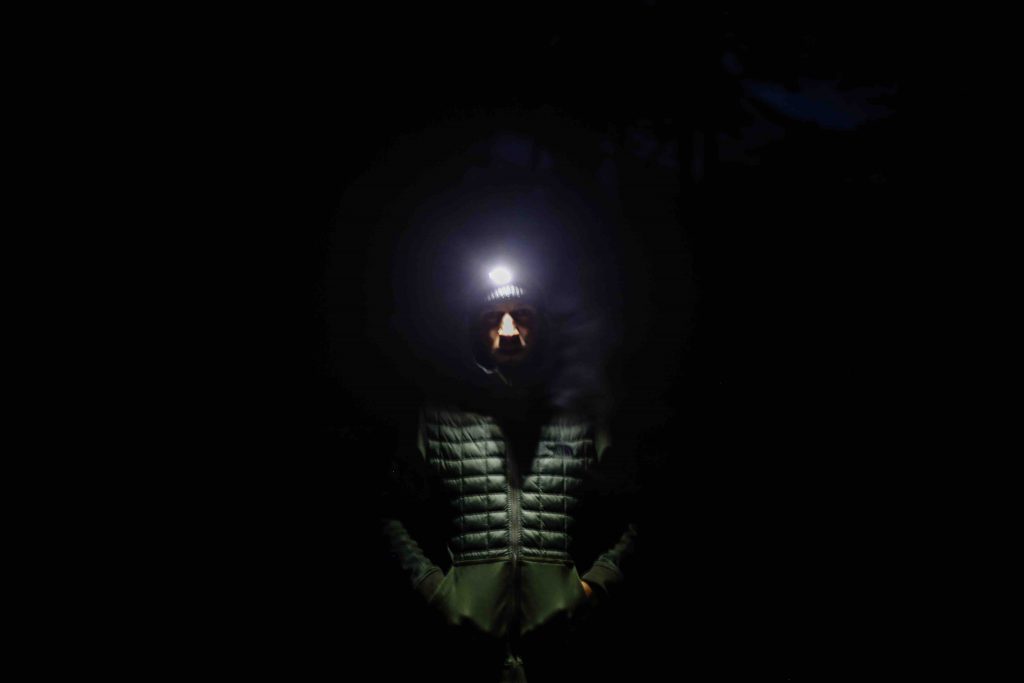
In a long race, the hardest descents come late: your legs are tired, and it may be dark. Practise that too. Put a descent near the end of your long run, when your legs already feel it. If your race goes into the night, do a few descents with your headlamp before race day.
Downhills on race day
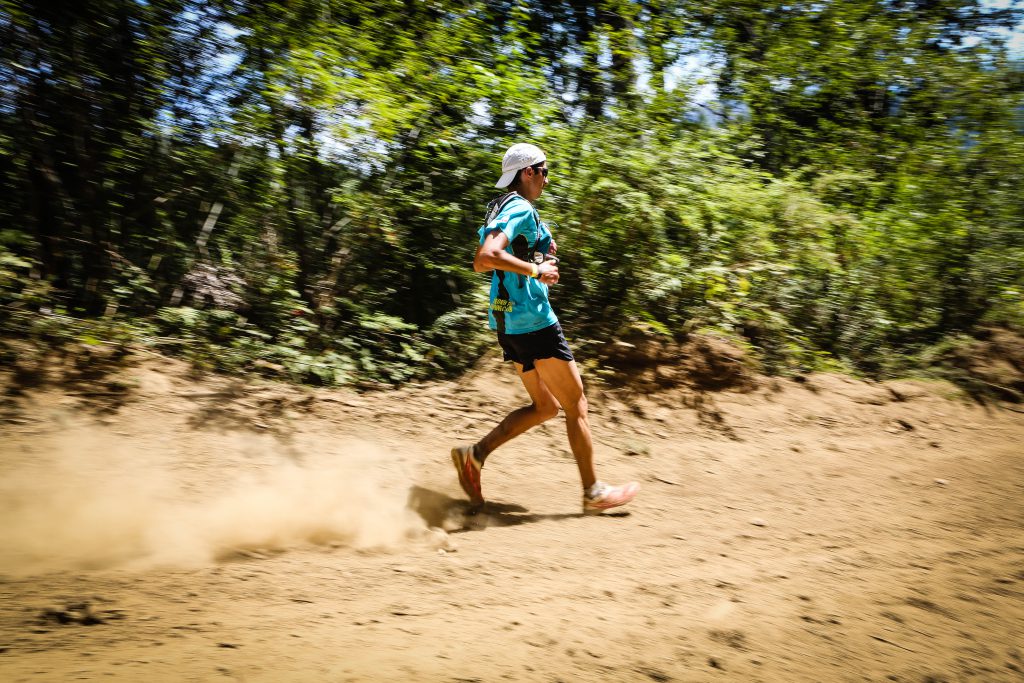
Don’t race the first descent. Everyone is fresh there and runs it too fast. Run it relaxed and controlled, and you’ll still have legs for the last one. On the climbs, keep your effort steady; on the descents, keep your steps short and your legs relaxed. The few minutes you give away early often come back in the second half, when other runners’ legs are gone. And no new downhill work in race week.
Shoes matter on steep, technical descents: grip and a secure fit help you land with confidence. Our guide to choosing trail running shoes covers what to look for.
Downhill running FAQ
Why do my quads hurt after running downhill?
Downhill running makes your quads brake your body weight while they lengthen (eccentric work), which causes more muscle damage than climbing. The soreness usually eases within two or three days, and your legs adapt quickly once you train descents regularly.
How do I run downhill without hurting my knees?
Take short, quick steps, keep your eyes a few metres ahead and lean slightly with the slope instead of leaning back and braking. Build descents up gradually and add slow step-downs and split squats to your strength work. If a knee hurts more every run, back off and get it checked.
How do you train for downhill running without hills?
Use slow step-downs and split squats in the gym, and run down whatever slopes you have: ramps, bridges, parking garages or a treadmill set to a decline if yours has one. Then add real descents whenever you can get to the trails.
How fast should I run downhill?
Only as fast as you can stay in control. If you couldn’t stop within a few steps, you’re going too fast. Speed on descents comes with practice, week by week.
Should I walk steep downhills?
Yes, when it’s very steep or technical. Walking down with small steps, or with poles, often saves your legs and is what many good runners do.