How long does it take to run 100 miles? For many runners, a 100-mile ultramarathon takes roughly 20 to 36 hours, but there is no useful single “average.” A runnable course, a strong ultra background and cool weather can put a finish well below 24 hours. A mountainous, technical or hot course—or a first 100—can make the race a 30-hour-plus problem.
The useful question is not “What is the average 100-mile time?” It is: what finish-time range is realistic for my course, my experience and the race cutoff? Start there, then make a plan that leaves room for aid stations, fueling, hiking, weather and the slower final third of the race.
If you already know the course, use Vert’s Race Time Predictor to create a starting estimate. Then compare it with the race’s cutoff schedule and recent finisher results.
How long does it take to run 100 miles on different courses?
Your target should be a range with an optimistic end and a conservative end. This prevents one aggressive pace number from turning into a bad race-day decision.
Course and runner situation | A sensible starting planning range | What to check before trusting it |
Runnable course; strong ultra experience; moderate weather | About 18–26 hours | Course profile, prior 50-mile/100K results, pace between aid stations |
First 100 or mixed terrain | About 24–32 hours | Cutoff schedule, climbing, hiking ability, fueling and night-running practice |
Steep, technical, hot, high-altitude or highly variable course | About 30 hours to the race cutoff | Elevation, footing, heat, aid-station spacing, daylight and weather plan |
These are planning ranges, not promises. A flat looped 100 and a mountainous point-to-point 100 are both the same distance but are not comparable pacing problems. Your race’s own result history and cutoff chart should always win over a generic range.
─ Vert Pro · Vert Coaching: Designed and approved by expert coaches.
Set a finish-time range.
Then train for the day.
Turn your course, elevation and realistic finish-time goal into a trail and ultra training plan you can actually execute.
Why 100-mile finish times vary so much
At shorter distances, a road pace can provide a reasonable starting point. At 100 miles, average pace tells only part of the story. A few minutes lost at every aid station, a long climb that turns into power hiking, a stomach issue or a cold night can reshape the entire second half.
Elevation and terrain
Vertical gain, steep descents and technical footing affect both speed and how much damage your legs accumulate. A course with long runnable climbs may reward steady hiking. A rocky or muddy course may slow everyone down even when the elevation total looks modest.
Use the Mountain Index guide to think about the weekly climbing load required for a mountainous goal race. It is more useful than pretending every mile of trail costs the same.
Your ultra background
Your most relevant evidence is not a road marathon personal best. Look at your longest trail races, your ability to keep eating late in a long day, your response to downhill running, and whether you have practiced moving when tired. A well-executed 50-mile or 100K race gives more useful information than a fast standalone marathon.
If 100 miles is still a big jump, compare the demands honestly with Vert’s 50-mile training plan and 100K training plan. A shorter ultra can be the better next step—not a consolation prize.
Heat, altitude and weather
Heat raises the cost of a pace that feels manageable in cool training conditions. Altitude, wind, mud and overnight temperature changes create similar problems. Do not use a finish time from a cool, runnable race as a direct prediction for a hot mountain course.
Your estimate should include a weather-adjustment plan: slower early effort, extra time at aid stations, a fueling plan you can tolerate in heat, and warm layers for the night.
Aid stations, navigation and time stopped
A 100-mile result includes more than running. Every refill, bathroom stop, shoe change, route check and crew interaction counts. A realistic estimate includes planned stopped time, particularly when the race has long gaps between aid stations or complicated crew access.
How to estimate your own 100-mile finish time
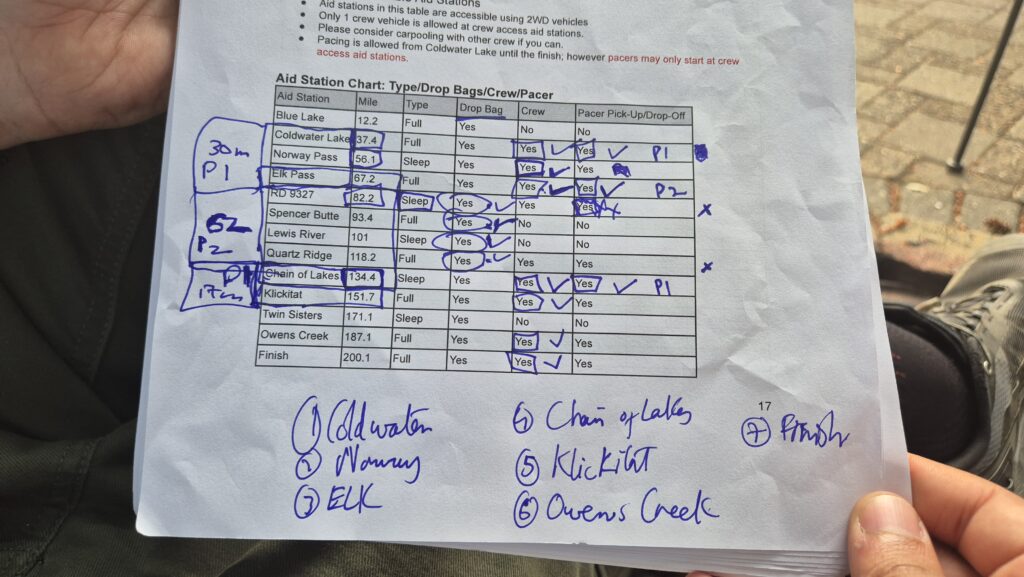
1. Read the race cutoff chart first
Find the overall cutoff and every intermediate cutoff. Work backward from those times. The goal is not to arrive at every station with seconds to spare; it is to understand where the course gets slow and where you need a buffer.
Write down the distance between aid stations, the climb or descent in each segment, and whether you will reach it in daylight or darkness. That is the beginning of a usable race plan.
2. Compare yourself with the right past finishers
Look at recent results from the exact race when they are available. Find runners with a similar finish level in a 50K, 50-mile or 100K event—not only the winners. Compare their total time, their halfway split if the race provides it, and how their second half changed.
Use this as a range check, not a prediction. You do not know their heat tolerance, preparation, injuries, fueling or course familiarity. But it is a better starting point than applying a generic pace chart.
3. Build a day-and-night plan
For most first-time 100-mile runners, the first half should feel more controlled than exciting. Your plan should state:
- the effort ceiling for runnable early miles;
- where you will power hike rather than force a run;
- the minimum fueling and fluid routine you have practiced;
- the aid stations where you will reassess shoes, layers and time buffer; and
- how you will simplify decisions after dark.
This is why an estimate needs a range. If the day becomes harder, you move toward the conservative end while protecting the chance to finish.
4. Test the inputs in training
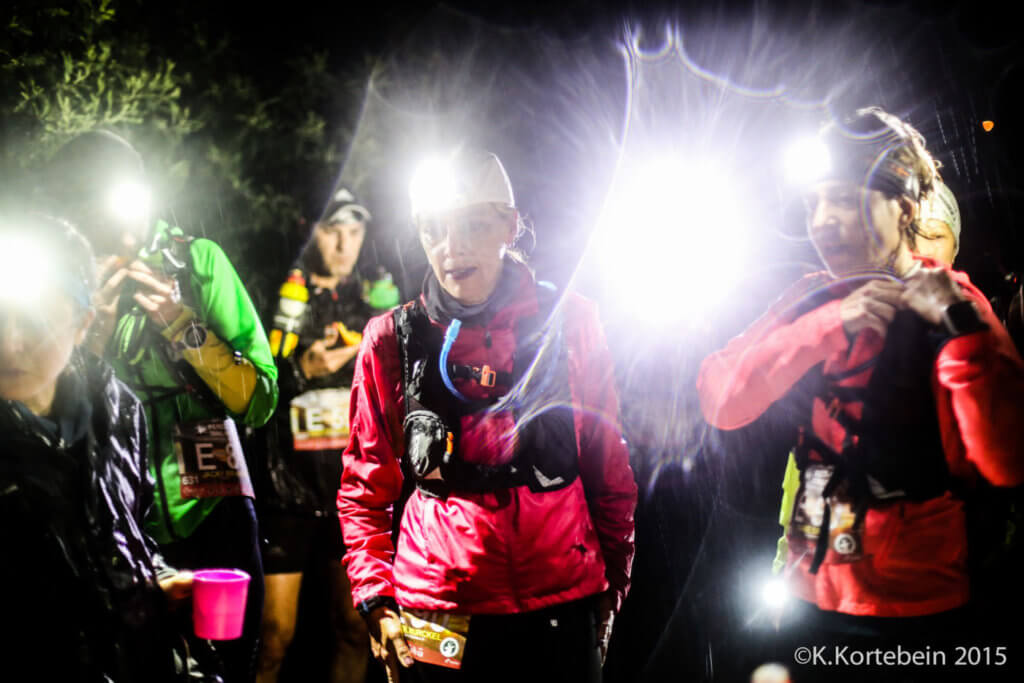
You do not need to run 100 miles in training. You do need to rehearse the pieces that make the time estimate believable: long runs on similar terrain, back-to-back days, hiking steep climbs, eating the fuel you intend to use, descending on tired legs and moving with a headlamp.
The back-to-back long-run guide explains how to use consecutive long days without turning every weekend into a recovery hole. For race fueling, build an hour-by-hour plan with the Nutrition Planner.
5. Recalculate when the course or your training changes
Your estimate should change if the forecast becomes hot, if a long training block is missed, if the course changes, or if your recent long runs show a problem with fueling or downhill durability. Adjusting the plan is good race preparation, not a lack of confidence.
A simple 100-mile time-planning example
Imagine a runner with one 100K finish and several 50-mile races. Their goal race has substantial climbing, a 32-hour cutoff and a long night section. Instead of declaring a single 26-hour target, they might use:
- Optimistic range: 26–28 hours if weather is good, fueling works and the first half stays controlled.
- Likely working range: 28–30 hours, with enough time for deliberate aid-station stops and a slower night section.
- Conservative finish range: 30–32 hours, focused on staying ahead of cutoffs and solving problems early.
That runner then maps each range against the race’s cutoff chart. If the conservative range misses a major cutoff, the answer is not to run the first 30 miles harder. It is to reconsider the race choice, improve the preparation, or get a course-specific plan from a coach.
Should you target a sub-24-hour 100?
A sub-24-hour finish is a meaningful benchmark at some 100-mile races, but it is not a universal standard. A course with more climbing, heat or technical terrain may make 24 hours an entirely different performance. Treat the race’s profile and cutoff schedule as the standard, not another event’s headline time.
If a time goal matters to you, set two goals:
- a process goal you can control—early effort, fuel intake, hiking discipline and aid-station routine; and
- an outcome range that can move when the day changes.
This approach gives you a better chance of finishing strong than chasing a pace that worked on a different course.
How your expected finish time should change your training
The longer you expect to be on course, the more important durability and execution become. A 20-hour runner and a 32-hour runner both need aerobic fitness, but their practical preparation can look different:
- More time on feet may matter more than adding a second hard workout.
- Hiking, descending, fueling and night practice become increasingly important as the day gets longer.
- A conservative time range can reveal whether your current weekly climbing, long-run structure and recovery are enough for the course.
Use the 100-mile training guide for the full training structure: base building, weekly volume, long runs, elevation, strength, nutrition, taper and race-day preparation. If you need a plan built around your course, time available and current fitness, meet Vert’s trail and ultra coaches.
Build a plan you can execute on race day
A finish-time estimate should make you calmer and more prepared, not more attached to one number. Use it to decide what early effort is sustainable, what buffer you need at cutoffs, how much fuel to carry and when to make a change before a small issue ends your race.
Ready to turn your course into a practical target? Get your estimate with the Race Time Predictor, then build the training that supports it with a personalized trail and ultra plan.
Frequently asked questions
How long does it take to run 100 miles?
Many 100-mile ultramarathon finishes take about 20 to 36 hours, but the realistic range depends on terrain, elevation, weather, course cutoff and experience. Use your exact race’s results and cutoff chart to make the estimate specific.
What is a good 100-mile time?
A good 100-mile time is one that fits the course and lets you execute well. A time that is exceptional on a runnable course may be impossible on a steep, technical or hot course. Compare yourself with finishers at the same event instead of using one universal benchmark.
Can I predict my 100-mile finish time from a marathon?
A marathon can show general fitness, but it is not enough to predict a 100-mile trail race. Your trail ultra history, hiking, climbing, descending, fueling and ability to keep moving at night are more relevant inputs.
How much slower is the second half of a 100-mile race?
Most runners slow in the second half, but the amount varies by course and execution. Build a range that allows for planned aid-station time, night running and problem solving rather than assuming even splits.
Should I use the race cutoff as my target time?
No. The cutoff is the latest allowed finish, not a pacing plan. Use it to understand the minimum progress you need, then build a safer range and buffers for key aid stations.
─ Vert Pro · Vert Coaching: Designed and approved by expert coaches.
Trust the training.
Then trust race day.