Quick answer: Your road-running fitness gives you a useful aerobic base, but trail running asks for different pacing, footwork, climbing strength, and patience. Start with easy, non-technical trails, run by effort rather than road pace, and add trail time gradually over six weeks. You do not need to abandon road running while you make the switch.
Moving from roads to trails can feel humbling at first. A pace that feels relaxed on pavement may feel hard on a rolling dirt path, and a short descent can leave your quads working harder than a much longer road run. That does not mean your fitness disappeared. It means the terrain is asking more of you.
The goal is not to turn every road run into a trail run overnight. Keep the road sessions that fit your life, then use a few purposeful trail runs each week to learn how effort, climbing, footing, and recovery change. If you are brand new to trails rather than already running consistently on roads, start with our beginner trail-running guide first.

What Transfers From Road Running — and What Does Not
Your aerobic base, consistency, and ability to pace an easy effort all transfer well. You can already handle the routine of training and recover from runs.
What changes is the cost of each kilometre. Hills, loose ground, turns, rocks, roots, mud, heat, and route-finding all make a trail run more demanding. A useful road pace is no longer the best guide. On trails, effort and time on feet are more useful than trying to match your flat-road splits.
For the first few weeks, expect to cover less distance in the same time, walk some climbs, slow down before technical descents, and feel more lower-leg, glute, and quad fatigue after a hilly route. Those are normal adaptations, not signs that you are doing trail running badly.
Choose the Right First Trail
Your first trail does not need to be remote, steep, or technical. Choose a route you can leave easily, with a clear surface, mild elevation, and reliable weather. A wide dirt path, park loop, fire road, or gentle local trail is a better classroom than a long mountain route.
Aim for 30 to 45 minutes at an easy effort. Use a route that lets you shorten the run if your footing, weather, or energy feels worse than expected. If you have only access to flat paths during the week, that is fine: build trail skills whenever you can and use our hill-training guide to prepare for climbing and descending.
Run by Effort, Not Road Pace
The quickest way to turn an enjoyable first trail run into a hard workout is to chase road pace. Instead, use a conversational effort: you should be able to speak in short sentences and feel in control.
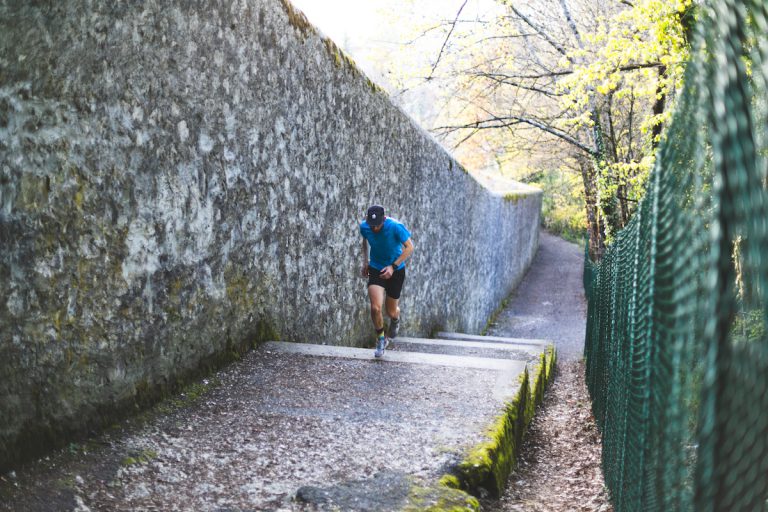
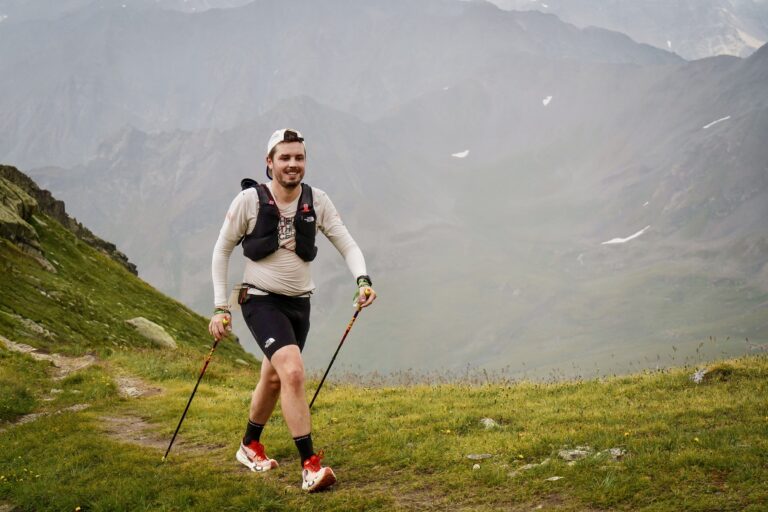
On a climb, shorten your stride and let your cadence rise naturally. When the grade becomes steep, power hiking is often the smartest choice, even for experienced runners. On descents, look a few steps ahead, keep your steps light, and let speed come from confidence rather than braking hard with every stride.
If you use a watch, record the route but do not judge the session by pace alone. Time, elevation, terrain, and perceived effort tell you much more. The Race Time Predictor can help you set realistic expectations when you choose a hilly trail race.
─ Vert Pro · Vert Coaching: Built for your first trails.
Turn your road fitness
into trail confidence.
A Six-Week Road-to-Trail Transition Plan
This plan assumes you already run consistently on roads. Keep your usual easy road runs and replace only one or two of them with trail-specific sessions at first. If pain becomes sharp or changes your stride, back off and recover rather than pushing through the plan.
Weeks 1–2: Learn the Surface
Run one easy trail session each week for 30 to 45 minutes. Choose smooth terrain and keep the effort genuinely easy. Walk short climbs as needed. Your job is to notice how your feet, calves, and hips respond to uneven ground.
Keep your long run on the road if that helps you control total load. Add a short strength session focused on calves, single-leg balance, glutes, and trunk stability. Our trail-running strength guide gives you a useful starting point.
Weeks 3–4: Add Hills and Time on Feet
Move to two trail runs per week: one short easy run and one slightly longer outing. Add gentle climbing, but keep the total effort easy enough that you recover well for your next road session.
Practise power hiking on steeper hills. It is a skill, not a failure to run. On descents, choose control over speed and avoid long, aggressive downhills before your quads are ready.
Week 5: Build a Trail Long Run
Make one weekly long run a trail run, starting around the same time duration as your normal road long run rather than the same distance. Bring water if the route, heat, or duration calls for it, and practise carrying what you will need rather than relying on shops or fountains.
Keep one road session for easy volume or controlled faster running. Road running can remain a valuable part of trail training; it is simply no longer the only terrain you use.
Week 6: Practise the Day You Want to Have
Choose a route that resembles the kind of trail run or first race you want next: similar surface, manageable elevation, and enough time to practise pacing, hiking, fuel, and gear.
Finish feeling that you could have continued. That gives you a better platform for a first trail race than one exhausting adventure that takes days to recover from.

How to Handle Climbs and Descents
Uphill: shorten the stride and protect the effort
Lean slightly from the ankles, not the waist. Take shorter steps, relax your shoulders, and keep the effort steady. When the grade becomes too steep to run comfortably, power hike with purpose. You will often move more efficiently and save enough energy to run again when the trail eases.
Downhill: stay controlled before trying to get fast
Look ahead rather than directly at your shoes. Keep a soft bend in the knees, take quick light steps, and avoid overstriding. If you feel yourself braking hard, slow down. Descending strength develops over repeated, sensible exposure; it does not arrive from one fast downhill.
Strength Work That Makes the Switch Easier
Two short sessions each week can make the transition safer and more comfortable. Prioritise single-leg calf raises for lower-leg durability, split squats or step-ups for climbing strength, slow step-downs for downhill control, single-leg balance for uneven terrain, and side planks or carries for trunk stability.
Start with bodyweight, clean movement, and enough rest to recover. Add load only when you can complete the exercises without compensating. For a fuller routine, use the trail-running strength guide.
Gear for Your First Trail Runs
You do not need to replace everything you own before your first easy trail run. For smooth, dry paths, your usual road shoes may be fine. Move to trail shoes when the terrain is loose, wet, rocky, rooty, or steep enough that you need more grip and protection.
Choose shoes for the terrain you actually run, not the most aggressive trail you might run someday. Use the Trail Running Shoe Finder if you want help narrowing the options.
For longer, hotter, or more remote runs, bring water, a charged phone, an extra layer where conditions can change, and enough fuel to finish the route. Tell someone where you are going when the route is unfamiliar or remote.

A Sample First Trail Week
- Monday: Rest or a short strength session.
- Tuesday: Easy road run.
- Wednesday: 35 to 45 minutes on an easy trail, run by effort.
- Thursday: Rest or strength work.
- Friday: Easy road run with a few relaxed strides if your legs feel good.
- Weekend: Longer trail outing by time, with walking on steeper climbs as needed.
Keep total running load close to what you already tolerate. The new stimulus is terrain, so give your body time to adapt before adding more distance, speed, or elevation at once.
When You Are Ready for a First Trail Race
Once you can complete a trail long run comfortably, recover normally, and handle a reasonable amount of climbing and descending, a short trail race or trail marathon may be a useful next goal.
Use our trail-marathon training plan if your next step is a longer trail event. If you want a plan built around your actual race, terrain, and available training time, explore the trail-running training-plan hub or start your free trial.
Frequently Asked Questions
Is trail running harder than road running?
Usually, yes, kilometre for kilometre. Terrain, climbing, descents, and uneven footing increase the effort. That is why trail runners use time and effort rather than road pace to guide many sessions.
How often should a road runner run trails at first?
Start with one easy trail run each week. After two comfortable weeks, add a second trail session if you are recovering well. Keep some road running while your lower legs and quads adapt.
Can I use road-running shoes on trails?
For smooth, dry, non-technical paths, often yes. Use trail shoes when grip, protection, or stability matter more because the route is loose, wet, rocky, steep, or technical.
Should I run every hill on a trail?
No. Power hiking is an efficient trail-running skill, especially on steep climbs. Hike when it lets you keep the effort controlled and return to running sooner afterward.
How long does it take to adapt from road running to trail running?
Most runners feel more comfortable after several weeks of gradual trail exposure. Descending strength, footwork, and confidence on technical ground continue to improve over months, so build patiently.
─ Vert Pro · Vert Coaching: Built around your first trail goal.
Ready to leave the road behind?
Start with your plan.
Tell Vert about your terrain, available time, and first trail goal. Get a personalised plan that helps you build confidence one trail run at a time.